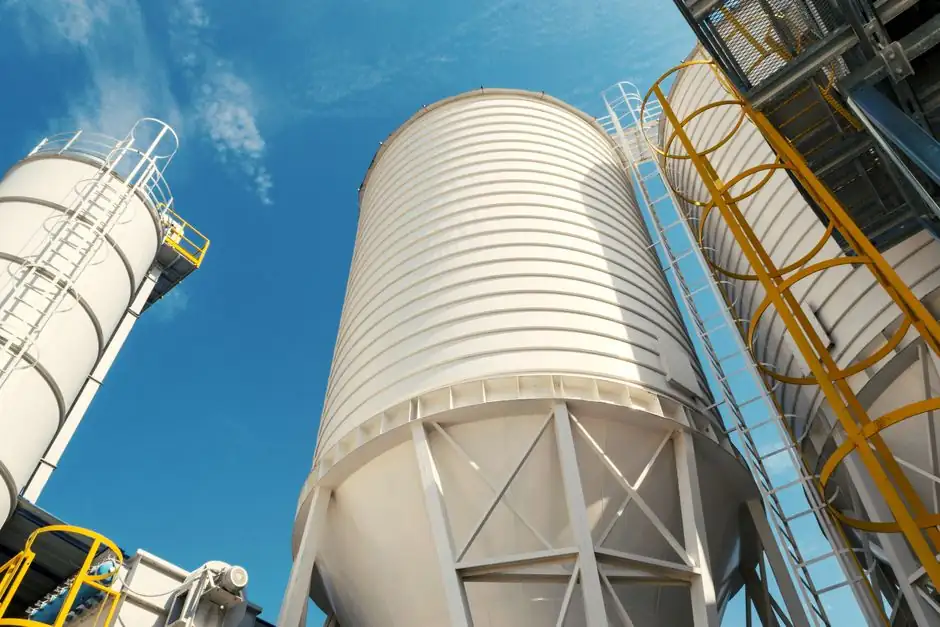
Mobile foundation-free concrete batching plants deliver 35-120 m³/h with 3.8-4.1 m discharge height and require no civil foundation, making them the default match for farm-site pours, irrigation canals, and seasonal feedlot slabs that move every 1-3 years [S2].
Agricultural buyers are usually weighing three plant formats: stationary inline-bin plants (such as the Advantage 250™ four-bin weigh-belt configuration installed in Wilson County, Texas in August 2026 [S1]), trailer-mounted mobile units, and containerized/insulated plants for cold-climate or dusty sites [S2][S3].
Output Class and Mixer Match for Farm Workloads
Type A high-discharge mobile plants cover 35-120 m³/h with twin-shaft compulsory mixers, while Type B low-discharge units cap at 90 m³/h and accept either twin-shaft or drum mixers depending on project class [S2]. Drum mixers carry lower capital cost and suit rural construction, simple foundations, and budget-tight farm lanes, but twin-shaft units remain the workhorse for bridges, highways, and any pour that has to meet strict engineering standards [S3]. For a typical 200-400 m³ dairy parlour slab, a 60-90 m³/h twin-shaft mobile plant sized to a 3.8-4.1 m discharge height will pour continuously into standard transit mixers without an auger or pump truck, which is the single biggest labour saver on remote sites [S2].
Stationary inline four-bin plants like the Advantage 250™ blend aggregate in ribboned layers on a common weigh belt, so every size is weighed simultaneously rather than sequentially, which the manufacturer describes as approaching central-mix consistency [S1]. That precision is overkill for a feedlot apron but well-matched to long-life agricultural infrastructure such as grain elevator pads, silage bunker walls, and processing-floor slabs where batch-to-batch strength variance directly controls crack control.
Site, Foundation, and Power Constraints on the Farm
Foundation-free mobile plants are explicitly engineered to skip civil works: arrive, set up, start producing, then relocate [S2]. This matters on farms where the pour site is pasture, harvested field margin, or an ungraded track that cannot accept a 30-45 day stationary installation. Lead time from order to dispatch on the mobile platform is published at 14 days, and overall production time across the supplier range sits at 15-45 days depending on capacity and customization [S2][S3].
Power supply is the silent gate on every agricultural specification. Plants can be wound for 380 V 50 Hz, 415 V 50 Hz, or 440 V 60 Hz to match local grid or generator output, and electrical components are selected per local conditions for safe, stable operation [S3]. Three-phase availability on a typical farm is the first thing to confirm; a 90 m³/h twin-shaft plant on single-phase will not start, and a diesel genset sized for that load is a six-figure add-on that often dictates whether a mobile or stationary configuration is the cheaper answer [S3].
Climate, Dust, and Wear-Part Realities
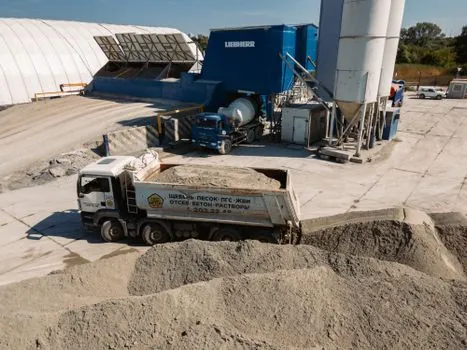
Containerized or insulated plants span 35-240 m³/h and add thermal insulation plus dust and noise suppression for harsh audits, with the same 3.8-4.1 m discharge envelope as the high-discharge mobile format [S2]. In grain-belt and feedlot districts where winter pours are routine or where neighbours are within earshot, that enclosure is not a luxury, it is the difference between running the plant in January or shutting down until April. Dust is the second climate variable: weighing accuracy drifts when aggregate bins are overloaded and leftover material presses on the hopper, so daily bin clean-out and monthly sensor calibration are the documented minimums to keep mix ratio error inside tolerance [S3].
Wear parts are the recurring cost line most agricultural buyers underestimate. Mixer blades and liners run 6-12 months, conveyor belts 1-2 years, and seals plus lubrication items need 3-6 month inspection cycles, all under normal use [S3]. Holding a small stock of blades, liners, belts, seals, and screw conveyor flights is the standard recommendation because unexpected downtime on a remote farm site usually costs more in lost-day penalties and rerouted trucks than the spare parts inventory itself [S3].
Decision Matrix: Stationary Inline-Bin vs Mobile Foundation-Free vs Containerized
Three configurations cover almost every agricultural use case. A stationary four-bin inline weigh-belt plant, exemplified by the Advantage 250™ in Floresville, Texas (installed August 2026), targets long-term high-volume regional ready-mix supply and gives the closest-to-central-mix blend quality at the cost of a permanent pad, civil foundation, and 30+ day install [S1]. A Type A high-discharge mobile plant covers 35-120 m³/h, needs no foundation, and dispatches in 14 days, which fits most farm pours and seasonal relocations [S2]. A Type C containerized plant extends to 240 m³/h and adds insulation plus dust/noise control for cold or regulated sites, at a higher unit cost that pays back only when the plant runs year-round in a sensitive location [S2].
Selection rule of thumb for agriculture: pick stationary inline-bin when the pour point is fixed for 5+ years and monthly volume justifies the civil works; pick mobile foundation-free when the site will move inside 3 years or the ground cannot accept foundations; pick containerized only when climate or environmental compliance overrides capital cost. Mixer choice follows the same logic, twin-shaft for any engineered slab, drum for low-spec mass pours where budget dominates [S3].
Who a Mobile Plant Is For, and Who It Is Not
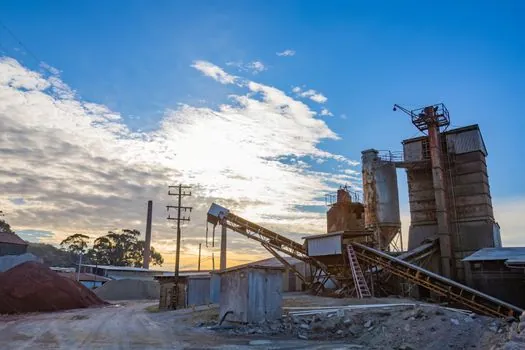
Mobile foundation-free batching plants are aimed at construction sites with high production efficiency requirements and frequent concrete mixer truck access, including commercial concrete sales and long-distance paving [S2]. For agriculture that translates to contractors running 2-4 jobs per season across a region, irrigation district depots that rotate between canal reaches, and large livestock operators building multiple parlours or bunker silos over a 3-5 year horizon. They are the wrong tool for a single on-farm pour under 500 m³ where mobilization, demobilization, and a 14-day dispatch premium outweigh the speed gain, and for any pour that must meet strict engineering standards using only a drum mixer [S2][S3].
For agricultural readers comparing adjacent equipment decisions, the same selection discipline of matching spec gate to duty cycle shows up in variable speed drive selection for mining and in helical gear reducer selection for pulp and paper, where voltage class, service factor, and duty cycle drive the call far more than brand.
Standards, Certification, and Sourcing Notes
Plants in the mobile foundation-free class carry EU CE and ISO certification, and OEM/ODM customization is available on mixer type (twin-shaft compulsory, planetary, drum), batching-machine hopper capacity, and bin count, with drawing-based manufacturing supported for special requirements [S2]. For North American farm buyers, that CE/ISO pair is the baseline; confirm whether the specific build also meets any state-level dust, noise, or emissions rules before purchase, and verify that the control system can be reconfigured for local PLC brand, interface language, and remote monitoring if the operator is not on-site daily [S3].
Watch the next two signals: (1) whether the 240 m³/h upper end of the containerized class starts to be quoted for cooperative-farm shared plants as diesel and labour costs rise, and (2) whether suppliers standardize on a single power-platform option (380 V 50 Hz, 415 V 50 Hz, or 440 V 60 Hz) that simplifies spare-parts inventory for buyers running mixed fleets [S2][S3].
Component reference pages worth checking: concrete batching plant, cement concrete, and concrete admixture.