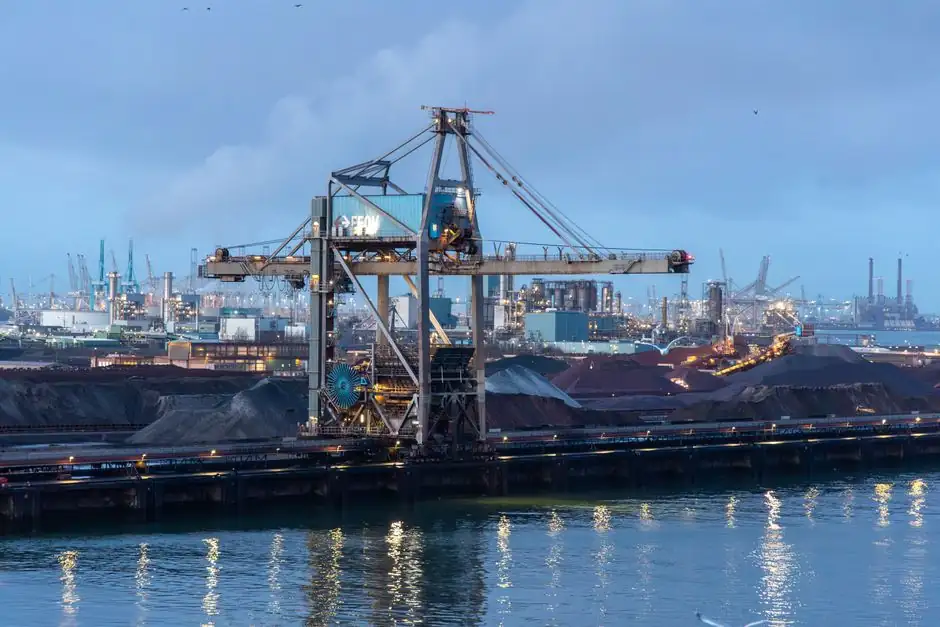
Port and terminal concrete pours demand stationary batching plants in the 90-180 m³/h output band, with twin-shaft JS-series mixers (JS1500 to JS3000), 3-4 aggregate bins, and marine-grade corrosion protection on structural steel and weighing hoppers to survive chloride-laden coastal atmospheres [S2][S3].
The selection envelope is narrower than general construction: a port project typically runs 0.5-2 million m³ over 18-36 months, with continuous pours for quay walls, caissons, and crane rails where downtime costs a tidal-cycle delay, not a daily penalty [S2][S10].
Output Band and Project-Size Mapping for Marine Concrete
Port facility concrete demand maps onto the upper-middle stationary output band: HZS90 (90 m³/h, JS1500 mixer, 4 aggregate types) suits a single wharf or small-craft harbor of 0.3-0.6 million m³, while HZS120 (120 m³/h, JS2000 mixer) and HZS180 (150-180 m³/h, JS3000 mixer, 3 m³ per-cycle discharge) cover container terminals and breakwater revetments of 1-2 million m³ [S3][S10]. An RCC (Roller-Compacted Concrete) variant at HZS50-RCC with 100-200 t cement silo capacity handles mass-concrete gravity base pours for caisson seating where low-slump dry-hard mixes are required [S9].
Below 60 m³/h, buyers should evaluate a concrete vibrator-anchored site-mix workflow, because aggregate and cement weighing tolerances in compact plants rarely hold ±2% under the continuous, high-throughput pour schedules that berth construction requires [S3][S10].
Mixer Selection: Twin-Shaft for Wet Structural, Planetary for Dry Mortar
Twin-shaft non-gravity mixers (JS1000, JS1500, JS2000, JS3000) dominate 60-240 m³/h plastic and structural wet concrete output, and are the only practical choice for marine-grade mixes that demand high-intensity homogenization of sulfate-resistant cement, GGBS, and silica fume [S3]. The HZS180 plant pairs a JS3000 with 2×45 kW motors (90 kW mixer drive) to sustain the 36-second mixing cycle that chloride-resistant marine concrete requires for full admixture activation.
Planetary (vertical-shaft) and single-shaft paddle mixers are restricted to dry-mix, mortar, and low-slump architectural applications; they cannot deliver the homogenization intensity marine concrete requires, and they should be excluded from any port or terminal specification [S3].
Marine Environmental Stressors and Equipment Specification
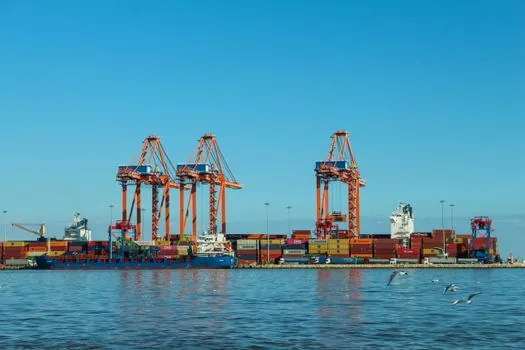
Port and terminal batching plants face salt-laden air, 80-95% humidity, tidal scheduling, and chloride-rich aggregates. Specification must therefore include hot-dip galvanizing or epoxy-coated structural steel on aggregate bins and conveyor trusses, IP65-rated control cabinets, and 316L stainless steel on water and admixture weighing hoppers to prevent chloride-induced pitting that destroys load cells within 18-24 months in unprotected installations [S2].
Dust suppression with sealed aggregate transfer, spill containment sized for the largest single admixture drum, and elevated foundations above the local 100-year tidal surge line are non-negotiable environmental features, not optional accessories, under standard marine environmental compliance regimes [S2].
Weighing Accuracy, Aggregate Bin Configuration, and Conveyor Sizing
Marine concrete spec gates require aggregate weighing tolerance of ±2% and cement weighing tolerance of ±1% to hold the water/cement ratio within the 0.38-0.42 band that sulfate-resistant mixes need for long-term durability [S3][S4]. A 120 m³/h plant moves roughly 300 t/h of aggregate, which means a standard 800 mm belt at 1.5 m/s (≈200 t/h capacity) is already at 150% of design capacity and must be upsized to 1000 mm or 1200 mm width to prevent spillage, tracking errors, and premature belt wear [S6].
Aggregate bin count is a real engineering number: HZS60 supports 3 aggregate types with 80 mm max aggregate size, while HZS75-HZS100 step up to 4 aggregate types with 3×15 m³ bins, which is the minimum configuration for the multi-size aggregate gradation that ACI 318 and most marine spec sheets require for abrasion-resistant quay surfaces [S3].
Power, Footprint, and Foundation Engineering for Coastal Sites
Power draw scales roughly linearly with output: HZS60 needs 130 kW, HZS75 needs 165 kW, and HZS100 baselines at 140 kW excluding the screw conveyor and cement silo; the 120 m³/h commercial hub therefore lands in the 160-200 kW total connected load band once a 100 t silo and 9 m screw conveyor are added [S3][S8]. Foundation-free (skip-hoist quick-install) plants are available in the 25-180 m³/h envelope, but the frame-structure mounting trades long-term vibration tolerance for relocation speed, and is not the right answer for a fixed 5-year port terminal where continuous operation under seismic and tidal load is the design driver [S1].
For a permanent quay-wall build, the stationary HZS belt-conveyor class with engineered foundation, conveyor truss, and aggregate pre-bin pit is the correct procurement; for a 24-month harbor expansion with 3 sequential berths, a mobile YHZS90 or YHZS120 trailer-mounted unit with 4×6 m³ aggregate bins and 2×100 t powder silos delivers the relocation speed the project schedule demands [S1][S4].
Port Plant vs General Construction Plant: A Criteria Comparison
A side-by-side comparison makes the selection clearer. Standard construction plants optimize for mobility and low foundation cost; port plants optimize for chloride resistance, continuous duty, and tidal-window pours. The four decision criteria below line the two classes up directly: [S2]
Output capacity: general construction HZS60-HZS90 (60-90 m³/h) is adequate for building frames and roads; port and terminal work needs HZS120-HZS180 (120-180 m³/h) to pour quay walls and caisson seating within tidal windows [S3][S8].
Mixer class: general construction can use JS1000 twin-shaft at the 60 m³/h level; port work needs JS2000-JS3000 (2.0-3.0 m³ per cycle, 2×37-45 kW motors) to homogenize sulfate-resistant, low w/c marine mixes [S3].
Corrosion protection: general construction ships with painted mild steel; port plants require hot-dip galvanizing, epoxy-coated bins, and 316L stainless weighing hoppers to survive salt-laden atmospheres [S2].
Mobility: general construction favors foundation-free FHZS skip-hoist units (25-180 m³/h, no foundation needed) for rotating sites; port and terminal work favors fixed HZS belt-conveyor plants on engineered foundations for 5+ year service life [S1][S7].
Cement Silo, Admixture Dosing, and Aggregate Heating Options

Powder silo capacity on HZS100 is selectable at 50, 100, or 200 t, a 4× swing that drives both footprint and truck-fill cycle, so port buyers running 24-hour continuous pours should spec the 200 t silo to halve the daily cement-delivery truck count on congested quayside access roads [S3]. Additive dosing systems must include separate calibrated pumps for plasticizer, retarder, and air-entraining agent because marine concrete routinely uses 3-4 admixtures to meet sulfate resistance, freeze-thaw, and workability targets simultaneously [S2][S4].
Aggregate heating (steam or hot-water fed) is required in cold-climate ports where ambient temperatures drop below 5°C during winter pours, and the heated aggregate bin and water line should be specified at the procurement stage rather than retrofitted, because retrofit heating on a 4-bin HZS plant typically requires partial conveyor disassembly [S2].
Procurement Gates and Trackable Next Signals
Three verifiable procurement gates close the selection: the plant must carry a published HZS model designation with a JS-series mixer code, a published aggregate weighing tolerance of ±2% or tighter, and a documented corrosion-protection specification for coastal service; any quotation missing one of these three is incomplete [S1][S3]. Trackable signals to watch through the next procurement cycle include: (1) the 2026 China B2B catalog price band for foundation-free quick-install plants at US$12,450-40,000 per set, against which port-grade stationary HZS180 quotes should be benchmarked at roughly 3-5× that figure once marine-protection options are added, and (2) the increasing OEM bundling of mobile and twin-shaft product lines by Henan-based suppliers, which compresses lead time on JS2000-JS3000 replacement mixers to 30-45 days ex-works for the port after-sales channel [S3].
Component reference pages worth checking: concrete batching plant, terminal block, and construction machinery and equipment.
This topic is covered further in FACP selection for work-at-height sites: loops, IP, and mounting-height rules.