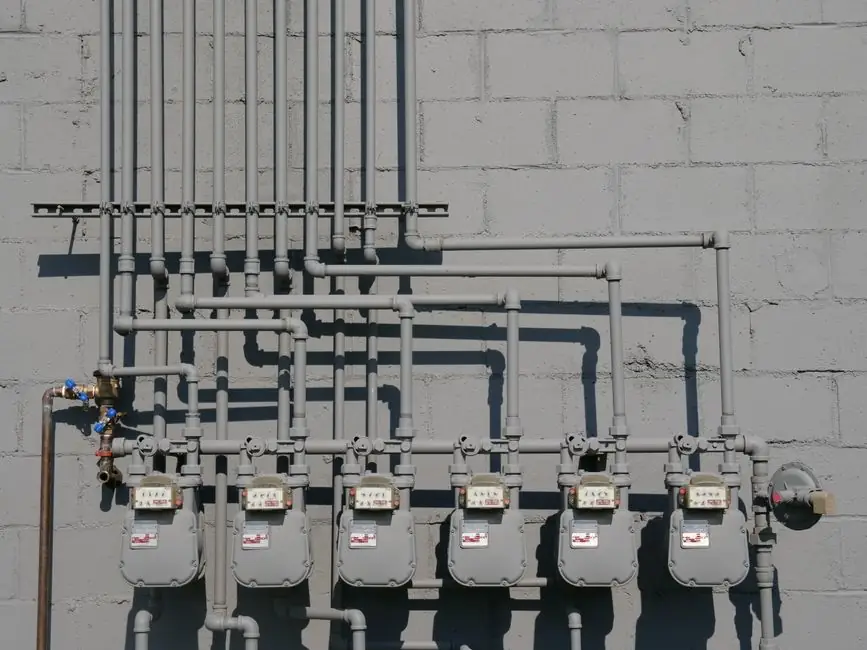
Plumbing rough-in on masonry walls is driven by a narrow band of machine specs: dual parallel diamond blades, 125-133 mm diameter, 20 mm arbor, 1500-4800W motor, and 0-40 mm adjustable depth with 8-42 mm channel width [S1][S2].
Wall chasers (also called groove cutters) replace hammer-and-chisel work by cutting two parallel slits in brick, concrete, cement block, or plaster, after which the web between is knocked out to form a uniform channel for water supply, drainage, or heating pipe [S1][S3]. The trade-off versus concrete groove cutter angle grinders is straightness and finish; the trade-off versus marble cutter dry-cut saws is dust control and channel geometry.
Dual-Blade Geometry and Why It Matters for Pipe Chases
A wall chaser runs two diamond or carborundum blades on a single spindle, separated by spacer rings, to cut the two sides of a channel in one pass; the material between is then chipped out with a chisel [S1]. Channel width is set by spacer count, depth by a baseplate adjuster, and the user-visible spec on mainstream 2026 models is a max depth of 1.61 in (about 41 mm) and max width of 1.65 in (about 42 mm), with a default fitted width of 0.98 in (25 mm) using the 5 blades supplied [S2].
For plumbing, that geometry must clear the pipe OD plus 5-10 mm of bedding and a falls-tolerant tolerance, so a 20-25 mm nominal channel suits 15-22 mm copper or PEX, while 32-42 mm widths are needed for 32-40 mm PP-R or PVC soil branches [S1][S2]. The 20 mm arbor (with a 7/8 in adapter supplied) is not a regional quirk, it is a non-standard size outside Asia, so spare-blade stocking is a known pain point on North American sites [S2].
Motor Power, RPM, and Circuit Demand
Mainstream 2026 wall chasers in the plumbing power band ship with all-copper universal motors rated 1500-1700W continuous with peak draws of 4000-4800W under load, and no-load speeds of 6500-6800 RPM [S1][S2]. The peak figure is the one that trips breakers, because starting inrush plus a stalled blade in aggregate can briefly exceed 20A on a 120V circuit [S2].
For circuit planning, one verified 2026 spec sheet calls out a 20A load current, a recommended 20A breaker, and a minimum 12 AWG (3.3 mm²) supply cable, with verified users reporting nuisance trips on 15A household breakers when cutting at full width in industrial concrete [S2]. On commercial sites the practical rule is to run a dedicated 20A circuit per chaser and to keep extension leads short, since voltage drop at 50 ft of 14 AWG cord can drop no-load RPM and stall the blade in dense aggregate.
Blade Selection by Wall Material and Pipe Run
Standard wall chaser blades are dry-cut diamond or carborundum wheels in 125 mm (5 in) and 133 mm (5.24 in) OD with 20 mm bores, and 2026 retail kits ship 5 blades covering a default 25 mm channel width [S1][S2][S3]. For abrasive cured concrete and rebar-prone pours, segmented diamond lasts longer; for brick and AAC block, continuous-rim carborundum cuts cleaner with less chipping [S1].
Plumbers running long horizontal chases for hot/cold risers should match blade count to pipe layout, since each extra blade adds 4.2 mm of channel width at the spacer set shipped with one 2026 model (133 x 20 x 4.2 mm per blade) [S2]. For dense concrete with rebar, expect 3-5 m of channel per blade set before segment loss; for clay brick, that figure typically doubles. Abrasive dust is the limiting factor on dry cuts in enclosed rooms, which is where water feed enters.
Dust Control: Water Feed vs. Vacuum Extraction
Two parallel slits throw fine concrete dust radially, and respirator-grade silica exposure is the binding occupational hazard on plumbing rough-in [S1]. The lower-cost 2026 wall chasers add a water-assist hose that floods the cut zone and turns dust into slurry, which one verified product page ties to reduced airborne dust and adds leakage protection on the motor housing for electrical safety [S2].
Dry-cut workflow uses a HEPA vacuum coupled to the dust port plus a Type P2/FFP2 minimum respirator; wet-cut workflow uses a GFCI on the supply, splash guard, and a wet-dry vac for slurry. On interior renovation with finished floors, wet cutting wins on dust but adds a containment step; on exterior masonry, dry cutting with extraction is faster and avoids the slip hazard.
Cutting Depth, Width Adjustment, and Depth-of-Cut Limits
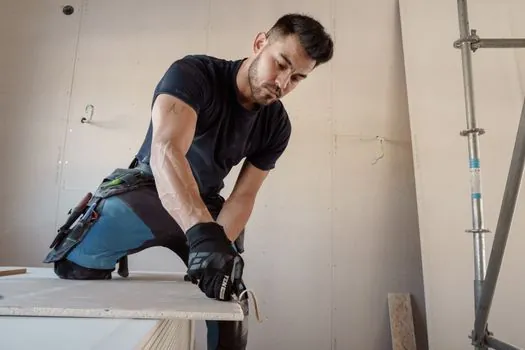
Depth is set by a screw or rack adjuster on the baseplate, and the 2026 mainstream spec band is 0-30 mm shallow to 30-41 mm deep, with the 1.61 in (41 mm) max quoted on one Canadian-listed model covering most residential masonry walls and most non-load-bearing partition chases [S1][S2]. Going past 40 mm in a single pass loads the motor and accelerates blade wear, so operators step-cut in 10-15 mm increments on dense concrete [S1].
Width is set by stacking spacer rings between the two diamond blades; the default 5-blade stack on one 2026 model delivers 0.98 in (25 mm) and expands to 1.65 in (42 mm) with the full spacer set [S2]. For plumbing, set the width to pipe OD plus 6-10 mm of clearance so the pipe beds cleanly without hammering; narrower channels bind the pipe and the bedding compound, wider channels waste material and reduce wall cover over the pipe.
Site Power, Water, and Laser Guide Setup
Beyond motor power, the binding 2026 product spec is the laser guide: a sub-1 mW Class 2 line module projects the cut path on the wall and is the single biggest accuracy upgrade over hammer-and-chisel layout [S2]. Combined with a chalk line snap and a wall scanner for rebar and conduits, the laser guide keeps a long plumbing chase on grade so the pipe falls toward the stack at the design slope without re-cutting.
Set the circuit first, then the water feed, then the depth: a 20A dedicated breaker on 12 AWG cable, GFCI protection for wet cutting, a shutoff valve on the feed hose, and a depth stop set to 5 mm below the required channel depth to leave room for bedding compound [S2]. For multi-storey jobs, plan a temporary 1/2 in water tap at each floor; carrying 20 L jerry-cans up stairs burns more time than the cuts themselves.
Failure Modes: When to Stop and Re-Blade vs. Replace
Three failure modes end a wall chaser shift: glazed blades, motor overload, and chipped or cracked wheels. Glazing shows as a polished rim with no cutting dust, motor overload shows as a stalled blade and a tripped breaker, and chipped rims show as visible segment loss or radial cracking on the wheel [S1][S2].
Dress a glazed blade by cutting into an abrasive block (old concrete or a dressing stone) for 5-10 seconds; replace a chipped or cracked wheel before the next pass, because segment loss at speed throws high-velocity fragments. Replace the tool when arbor runout exceeds 0.1 mm or when the spindle bearings heat up under no-load, both signs the machine is past the dress-reblade point. For a working plumber, budget one blade set per 80-120 m of 25 mm channel in cured concrete, and double that in clay brick or AAC.
Standards, Operator Safety, and Sourcing
Operator-side requirements for wall chaser work flow from silica-dust and electrical-safety rules rather than from a chaser-specific product standard: EN 60745-2-22 covers handheld cut-off machines, IEC 61029 governs stationary site tools, and on wet cutting a residual-current device (RCD, 30 mA) is the binding supply-side control [S1]. Eye protection to EN 166, hearing protection above 85 dB(A), and an FFP2/P2 respirator are baseline PPE for concrete dust [S1].
For a 2026 sourcing shortlist, verified retail offerings include a 4800W-peak, 6800 RPM, 1.61 in depth, 1.65 in width, 133 mm blade, water-assist Canadian-listed model [S2], and 125 mm-blade kits marketed specifically to plumbers and electricians for pipe and conduit channeling [S3]. Pair either with a 20A GFCI circuit, a 12 AWG cord under 50 ft, a laser guide, and spare 125-133 mm diamond blades, and the same machine handles both plumbing and rebar cutter rebar-clearance cuts on a single rough-in shift.
Trackable signals for the next spec refresh: revised EN 60745-2-22 dust extraction clauses, blade-arbor standardisation away from the 20 mm / 7/8 in split, and brushless 1100W-class models with longer continuous-duty ratings [S1][S3]. For related process-equipment selection outside the wall chaser scope, see rotary drilling rig specs for tunneling and waterproofing membrane selection for commercial builds.