
Concrete groove cutter acquisition cost represents only 20-30% of total cost of ownership, with fuel, maintenance, blade replacement, and unplanned downtime absorbing the remaining 70-80% across a typical 5-10 year service life [S4].
The global market for these machines reached USD 720.6 million in 2026 and is forecast to grow at a 5.5% CAGR to USD 1,230.9 million by 2036, with highway rehabilitation and joint restoration generating recurring saw work during short traffic-closure windows [S1]. Walk-behind units hold a 31.0% share of the 2026 machine-type split, the 5-10 mm cutting width band holds 38.0%, and gasoline or petrol power holds 38.0% on the strength of dispersed outdoor worksites [S1].
Five-Category TCO Model Applied to Groove Cutters
A complete TCO model breaks equipment cost into five categories spanning the full asset lifecycle, from purchase order to final disposal, and each category carries a different weight depending on machine type and production criticality [S2]. For a concrete groove cutter, acquisition (purchase, delivery, commissioning, training) typically represents 25-40% of lifetime cost, maintenance 30-45%, downtime up to 40-60% on schedule-critical highway jobs, and disposal USD 50K-200K depending on engine type and fluid recovery [S2].
The remaining energy share varies sharply by power source: gasoline or petrol units carry recurring fuel and lubricant costs that scale with operating hours, electric units shift the burden to kWh draw and cable infrastructure, and diesel or hydraulic units sit in between. In a worked comparison of two machines on the same duty over a ten-year lifecycle, a USD 70K higher upfront price for the more reliable, energy-efficient option delivered USD 136K in total savings, an 18.8% net reduction in ownership cost [S2].
Blade Width, Power Source, and Application Cost Trade-Offs
Walk-behind groove cutters are estimated at 31.0% of 2026 market share owing to portability across recurring pavement and slab work, while the 5-10 mm cutting width band holds 38.0% as contractors balance groove control with material removal [S1]. Gasoline or petrol systems are projected at 38.0% in 2026 due to self-contained power across dispersed outdoor worksites, with electric, diesel, and hydraulic splitting the balance [S1].
Road or pavement grooving leads the application category at 29.0% of 2026 demand, where long parallel cuts must keep width and depth stable across concrete pavement exposed to heavy traffic; Iowa DOT's April 2026 specification requires diamond grooving on concrete pavement with grooves 1/8 inch to 3/16 inch deep, a tight tolerance window that penalises machines with poor depth repeatability [S1]. A criteria-based comparison: walk-behind gasoline units win on portability and rental-fleet flexibility but lose on fuel cost per metre and silica-dust load; electric walk-behinds win on indoor air quality and lower per-hour energy cost but lose on cable management and outlet dependency; ride-on and multi-blade units win on linear-metre productivity for airport runways and highway decks but lose on first-cost and trailer mobilisation. For a deeper look at how another finishing tool handles its operating-cost stack, see the Power Trowel TCO breakdown for concrete-finishing fleets.
Consumables, Silica Controls, and the Hidden Operating Drain
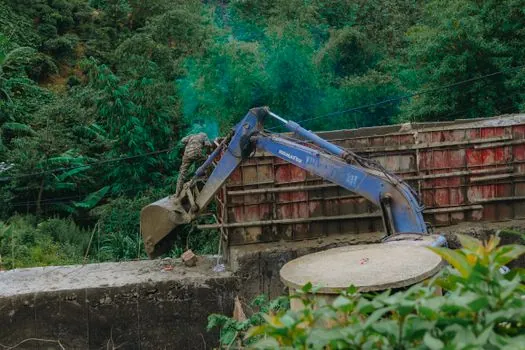
Silica controls and blade replacement costs are expected to pressure equipment economics by adding setup work and recurring consumable expense, a trend that pushes the maintenance share of TCO toward the upper end of the 30-45% band for any cutter used on silica-bearing concrete [S1]. A diamond blade on a 5-10 mm groove cut typically yields a finite linear-metre life before segment wear forces replacement, and premature wear from dry-cutting or insufficient water suppression compounds that cost directly. Fuel, maintenance, and repairs across a worked 8,000-hour backhoe lifecycle ran about USD 170,000 against a USD 100,000 purchase, or roughly 60.71% of lifetime cost, and groove cutters sit in a similar ratio once blade consumables are folded into the maintenance line [S4].
Downtime is the most expensive and least visible TCO component, and the category most often left out of procurement comparisons entirely because it does not appear on any vendor quote [S2]. On a highway-renewal closure, every hour of unplanned cutter stoppage cascades into crew standby, traffic-management extension penalties, and resequenced concrete pours; getting downtime weighting wrong is the single most common reason a TCO model produces a recommendation that procurement later reverses [S2]. For adjacent reading on variable-cost stack design in a different cutting tool, the Circular Saw TCO analysis maps the same trade-off space.
Depreciation, Financing, and the Fixed-Cost Layer
Heavy construction equipment typically loses 20-40% of its value in the first year, and insurance runs 1-5% of machine value annually, with storage and yard costs of USD 500-1,000 per month sitting on top [S4]. For a USD 25,000 walk-behind gasoline groove cutter held for eight years, first-year depreciation alone is USD 5,000-10,000, and the cumulative insurance bill approaches USD 5,000-10,000 over the same window before any fuel, blade, or labour line is added. Financing charges and property taxes extend the fixed-cost layer further, so procurement teams that score only the sticker price routinely underestimate the true first-year carrying cost by a factor of 1.4-1.8 [S4].
Residual value offsets part of that burden, but only if the machine is maintained to a level that supports resale or trade-in; machines without consistent spare-parts access often incur inflated repair costs or forced early replacement, eroding the salvage line that procurement originally counted on [S3]. A groove cutter with documented blade-change logs, engine service records, and depth-calibration history typically commands a stronger residual than an identical hours-on-machine unit with patchy paperwork, a delta that can swing TCO by 5-8% over the asset life [S3].
Building the Model Before the Purchase Order
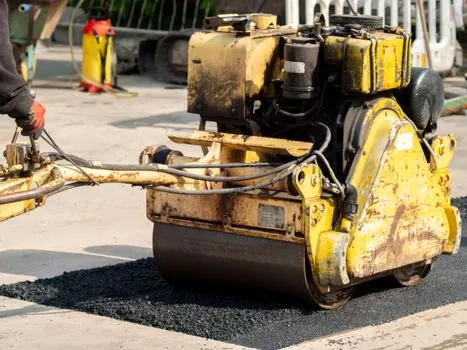
A usable TCO model does not need to be complex, but it does need to be built before the purchase order is signed, since retroactively discovering a hidden cost category after installation defeats the purpose of the analysis [S2]. The five-step build: define a 3-10 year lifecycle window matched to the asset class; collect acquisition and installation quotes from each vendor including delivery, commissioning, and training; model annual operating and maintenance cost using energy consumption, spare parts, preventive labour, and expected corrective repair frequency; weight downtime by criticality with a higher factor on process-critical equipment than on assets with backup capacity; and add disposal cost net of expected salvage value [S2].
For a concrete groove cutter, the realistic lifecycle window is 5-8 years or 4,000-6,000 operating hours, whichever lands first, because diamond-blade spindle bearings and engine vibration mounts typically reach fatigue limits inside that envelope on production fleets. The same machine purchased at a USD 5,000 discount but burning 15% more fuel and suffering 25% more downtime typically loses the apparent savings inside year three.
Where the Real Money Goes: A Verifiable Pass-Through
The purchase price is typically only 20-30% of a machine's total cost of ownership; the remaining 70-80% that comes from owning and operating the asset (fuel, maintenance, repairs) are costs that accumulate quietly over years and are far harder to see than the sticker price [S4]. That ratio is the single most quotable line for any fleet-side TCO conversation, and it holds across backhoes, groove cutters, and other diesel or gasoline-powered surface equipment because the cost categories that drive it (energy, consumables, downtime) are structurally similar.
Strong after-sales systems reduce diagnostic time, prevent unnecessary replacements, and extend service life, and machines supported by responsive service networks consistently demonstrate lower lifetime costs [S3]. For procurement teams writing a groove-cutter specification in late 2026, the trackable signal to watch is the maintenance-to-acquisition ratio on shortlisted bids: anything north of 1.0 over an 8-year model should trigger a closer look at the downtime weighting, and any vendor that cannot supply blade-life data, service-interval cost, or residual-value history should be downscored before the quote comparison begins. A complementary read on operating-cost breakdown for a different machine class is the Hydraulic Motor TCO cost driver analysis.
For the relevant spec sheets and selection criteria, see concrete groove cutter, total station, and marble cutter.