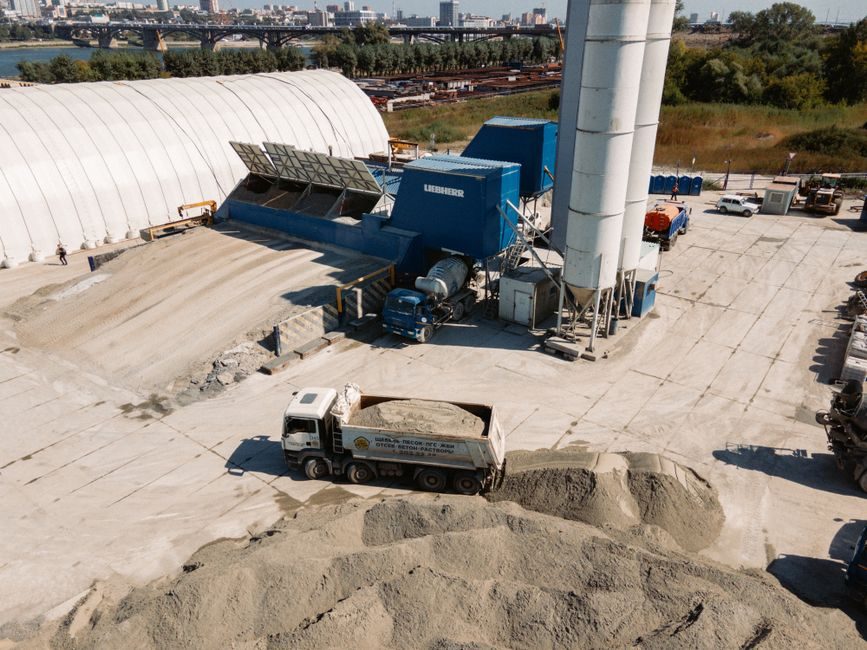
In the 2026 export market, a new truck-mounted concrete pump is typically sold in 37 m, 42 m, 47 m, 52 m and 63 m vertical-reach classes, with truck concrete pump 47-ton models and 38 m 6×4 chassis variants dominating the mid-tier build sheets on Okorder listings published 2026-04 to 2026-06 [S4].
For a buyer, the spec sheet breaks into four blocks: reach geometry, hydraulic pump output, chassis axle/weight class, and wear-part standardization (DN125 delivery line, 90°/45° elbows, R275/R1000 bends) — each block carries a different supplier population and a different failure cost, so the spec gates must be locked before any RFQ goes out.
Boom Reach Classes and Job-Site Geometry
Reach is the single most expensive line on the quote, and it scales with the boom material and folding scheme — Klein GmbH's mobile truck-mounted concrete pump KBZ 24-4 documents a 24 m baseline in the manufacturer's published 4-section roll-and-fold family, with Klein ranges spanning 24 m to 58 m on the OEM product page [S1]. Mid-volume Chinese export builds add a 36.8 m / 8.5 m unfold-height class (model TP37R5U) and a 52 m Mercedes-Benz Actros 3341 chassis configuration, both surfaced on supplier catalogs dated 2026-04 to 2026-06.
Buyers should match boom length to the tallest column line plus hose length, not the average slab: a 38 m 6×4 truck can pour a 10th-floor deck; a 63 m unit earns its premium on industrial chimneys and bridge pylons where ground set-up is restricted. Per the box-structure four-section roll-and-fold geometry widely used on these machines, high-strength steel plate keeps the dead weight of the boom package low enough to fit the chassis payload window [S2].
Pump Output: Twin-Pressure, Concrete Cylinder, Hydraulic Drive
Output on 2026-spec export units is quoted as a twin-pressure pair — 70/120 m³/h on the TP37R5U — meaning a low-pressure/max-volume mode and a high-pressure/reduced-volume mode sharing one hydraulic circuit. This dual rating is the practical spec to compare across vendors; a "70 m³/h" headline from one maker and a "120 m³/h" headline from another are often the same machine on different gear. [S1]
The driving elements of the hydraulic system on mainstream export units are sourced from Germany and other developed countries, and the S-valve / wear-plate changeover is hydraulically piloted — a configuration that has been continuously refined on Chinese export lines since the late 1990s, with DN125 delivery bends exported since 1998 per supplier records [S2][S3]. Buyers who plan continuous pours above 80 m³/h should confirm the hydraulic proportional valve package supports self-locking on boom extension, a safety feature standard on the four-section roll-and-fold boom designs [S2].
Chassis Payload, Axle Layout and Total Vehicle Weight
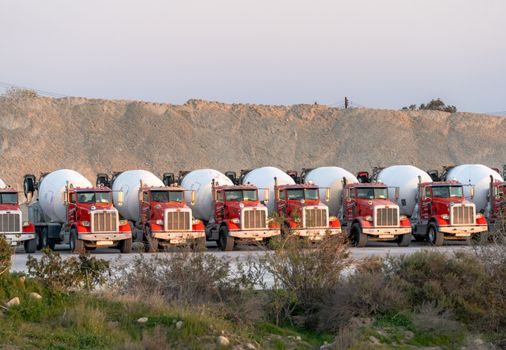
The chassis block is a hard gate, not a soft preference: 38 m class pumps typically use a 6×4 manual-transmission diesel chassis with a 20 t payload rating (model HDT5350THB), while 47–52 m classes step up to 47 t gross vehicle weight, often on a Sinotruck / Dongfeng / Isuzu / few-OEM base supplied in 1 PCS minimum order quantity at 1500 PCS/month capacity [S4]. Higher-reach 63 m units typically require a 4-axle heavy chassis such as the Mercedes-Benz Actros 3341 paired with a Zhonglian 52 m boom package — a configuration actively listed on Made-in-China 2026 supplier catalogs.
For a cross-reference on the chassis/drum side, see the concrete mixer truck buying guide 2026 — the axle and engine choices on a pump truck largely mirror those of a 6×4 or 8×4 mixer, so spec discipline carries over. Buyers in markets with weight-station enforcement should request the gross-vehicle weight on the type plate, not the curb weight; 47 t GVW will route differently from 38 t on most European and Gulf-state road regimes.
Wear Parts: DN125 Bends, Elbows and Flange Standardization
After-purchase, the recurring cost line is wear parts: DN125 / R1000 / 45° bends, R275 / DN125 / 148-flange / 90° cast bends, and 15° single- or double-layer elbows (the double-layer design uses a separate inner liner, with a supplier capacity of 290,000 pieces/month from Tianjin as of 2026-06) [S3][S5]. Standardize on DN125 from day one and the global aftermarket opens up; deviate to DN150 or proprietary flanges and the bend inventory becomes a captive spare.
The standard delivery line on most export 2026 units is DN125 with a 148 mm cast-flange termination; inner-layer elbow material is 42CrMo on the wear surface per the TRUEMAX-supplied build, a material choice that materially extends the change-out interval on abrasive mixes. Maintenance planners should expect to stock R275 / R1000 / 45° / 90° / 15° geometries in roughly a 4:3:2:1 ratio based on a typical 12-month pour profile, with MOQ 100 PCS and 10,000 PCS/month supply for the DN125 R1000 45° bend family [S3].
Price Bands and Supplier Geography in 2026
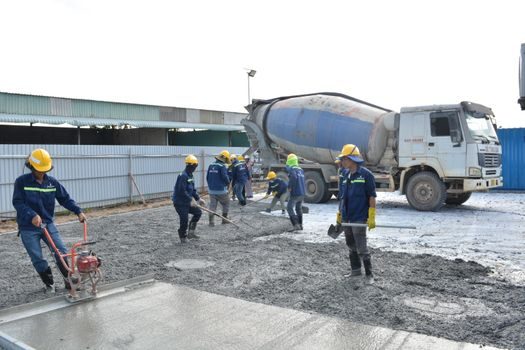
Posted 2026 export prices on Made-in-China and Okorder define a clear spread: a small ZCJK concrete pump starts around US$ 4,000 per set at MOQ 1; used Zoomlion 63 m units list at US$ 45,000–49,000 per unit; and a Sanny heavy-truck concrete pump on Actros chassis is listed around US$ 69,000 per piece, with the 47 t truck pump tier bracketed in between [S6]. Within that envelope, Sinotruck- and Dongfeng-chassis 47 m / 52 m units sit at the value end; Mercedes / Isuzu / higher-axle builds sit 30–60 % above on the same boom length.
For a deeper dive into Chinese heavy-machinery sourcing — Hebei / Hunan cluster dynamics, ancillary pricing, and payment-term patterns — the shield machine suppliers 2026 reference applies the same supplier-mapping logic to tunnel equipment. Pump-truck buyers should treat Shanghai as the dominant export port and TT or LC as the standard payment pair, both confirmed across 2026-04 to 2026-06 supplier listings [S4].
Selection Criteria: Who the Pump Truck Is, and Is Not, For
A truck-mounted concrete pump is the right tool for vertical construction (columns, cores, decks above 4 storeys), bridge piers, and tunnel-lining pours where ground set-up is constrained; it is the wrong tool for low-rise slab work where a trailer pump or a concrete mixer truck plus boom-less line pump is cheaper per cubic meter. The reference concrete pump truck entry covers the machine family, while the truck-mounted concrete pump page drills into the carrier-integrated subclass that dominates 2026 export orders. [S2]
Decision-matrix gate, in this order: (1) max vertical reach ≥ tallest column + 3 m hose allowance; (2) GVW and axle count compatible with the delivery route's weight and bridge-class limits; (3) hydraulic output in twin-pressure rating (low / high m³/h) matching peak pour cadence; (4) chassis OEM (Sinotruck / Dongfeng / Isuzu / Mercedes / Foton) supported by a local service dealer; (5) delivery-line standard (DN125 with 148 mm flange) so the bend inventory is interchangeable with the regional hire-pool. A line item that fails any of the first three gates should be dropped regardless of sticker price.
Certification, Documentation and Aftermarket Sourcing
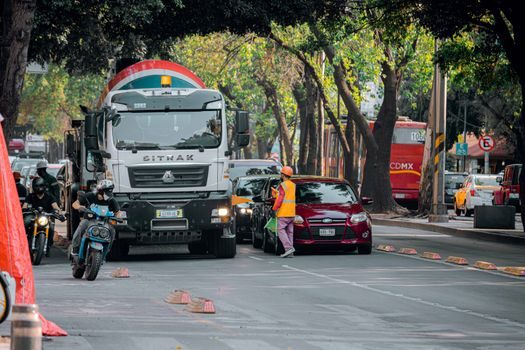
Mid-tier export units commonly ship with ISO 9001:2000 build certification, plus ISO 9000 / CCC / EEC coverage on the 6×4 38 m class and CE-marked chassis on European-bound units [S4]. Buyers exporting to the EU should request the Declaration of Conformity for both the carrier and the pump subassembly; the carrier usually carries its own CE file, and the boom/pump module needs a separate file from the boom manufacturer.
For sourcing-adjacent decisions on complementary heavy-machinery categories — for example VFDs that drive the hydraulic auxiliaries on the carrier — the VFD 2026 price and cost guide maps the same MOQ/incoterm logic onto electrical components. The cross-cutting rule holds across all of these categories: lock the spec gate, then negotiate the price, never the reverse.
Trackable signals to watch through Q3 2026: a second wave of 63 m used-unit listings out of Hunan as fleets refresh, and any revision to the 148 mm cast-flange dimension that would invalidate the existing DN125 / R275 / R1000 bend inventory — both of which would shift aftermarket pricing for 12–24 months.