Connector Industry 4.0 adoption is now a board-level procurement question, not a futures-deck slide: the global contactless connector segment is projected to climb from US$0.3 billion in 2024 to US$1.8 billion by 2035 at a 17.5% CAGR (2025-2035), with Industry 4.0 explicitly named as a structural demand driver [S2].
Adjacent segments are moving in the same direction at very different slopes. North America's wider connector market sat at US$25.83 billion in 2024 and is tracked to US$43.71 billion by 2033, a 6.02% CAGR anchored on 5G base-station buildouts, IoT endpoints, and EV electronics [S3]. The narrower EV connector niche is the steepest: US$204 million in 2025 toward US$894.86 million by 2033, a 20.3% CAGR driven by 800V architectures, liquid-cooled high-current charging connectors, and the transition to standardized NACS interfaces and zonal E/E architectures [S4].
Definition and Scope: What "Connector Industry 4.0 Adoption" Actually Means at the Spec Level
Contactless connectors are defined as interconnects that transmit power and data via magnetic, radio-frequency, capacitive, or inductive coupling, with no mechanical mating interface, eliminating wear from vibration, dust, moisture, and repeated mating cycles [S2]. In an Industry 4.0 stack, that maps directly onto the four data-plane assets that drive spec changes: robotic cells, IIoT sensor nodes, PLC backplanes, and Ethernet-APL field segments.
For traditional pin-and-socket connectors, the Industry 4.0 spec shift shows up as higher pin counts at higher data rates, higher current density per contact, and tighter signal-integrity budgets. The North American segment is dominated by the US, with 5G access covering more than 300 million Americans per FCC data cited in the regional outlook, and the telecommunications slice alone accounting for roughly 22% of regional connector demand in 2023 [S3].
Selection Criteria: Four Numbers That Drive a Buy Decision
Four spec values dominate connector selection under Industry 4.0 load cases: contact current rating (amps per position), data rate per lane (Gb/s), mating-cycle endurance (cycles), and environmental sealing (IP code). Each maps to a different application cluster, and each cluster pulls a different technology family [S1][S2].
Selection logic, in order: (1) define the data rate and protocol (single-pair Ethernet vs. high-speed backplane vs. wireless/coupling); (2) define continuous current and short-circuit withstand for the power contacts; (3) define the mechanical duty, mating cycles, vibration, and ingress; (4) define the certification envelope, including UL, CE, and where applicable IEC 60079-series for hazardous areas. The wrong step-one decision (e.g. specifying a contact connector where a contactless link would survive the duty cycle) is the most common source of avoidable downtime [S1].
Comparison of the Main Connector Families Under Industry 4.0 Loads

Four families compete for the same smart-factory dollar, and the decision tree is much sharper when the criteria are laid side by side. The comparison below is grounded only in the published research [S1][S2][S3][S4].
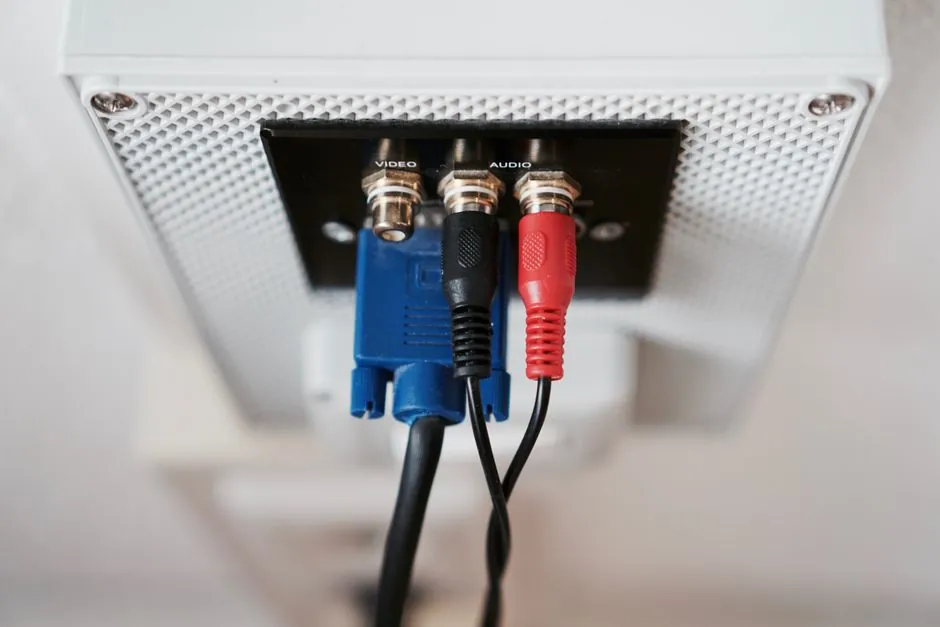
Traditional pin-and-socket (e.g. rectangular I/O, D-sub, modular jacks): lowest unit cost, broadest supplier base, but finite mating cycles and degradation under continuous motion; remains the volume leader in regional connector demand at 6.02% CAGR [S3]. High-speed board-to-board / RF / coaxial / fiber optic: required for 5G base stations, edge nodes, and data-center fabrics, where FCC-cited 5G coverage of 300+ million Americans drives the volume; Amphenol, TE Connectivity, and Molex have publicly expanded RF, coaxial, and fiber-optic lines for 5G [S3]. High-voltage EV connectors (800V, liquid-cooled, NACS-compatible): highest growth corridor at 20.3% CAGR through 2033, with one 2025 thermal-management design showing up to 24.4% lower cable-core temperature under high-power operation [S4]. Contactless (magnetic, RF, capacitive, inductive coupling): zero mechanical wear, ideal for moving robotic cells and EV powertrains; market projected from US$0.3B (2024) to US$1.8B (2035) at 17.5% CAGR, with Industry 4.0 named as a primary driver [S2].
Who This Adoption Wave Is For, and Who Should Stay on Legacy Stock
Smart-factory greenfield sites, EV powertrain and charging-infrastructure programs, and 5G fronthaul are the three clear winners. Each combines high data rates, continuous motion or vibration, and a maintenance cost that is high enough to justify contactless or premium high-cycle alternatives [S1][S2][S3][S4].
Lower-mix, lower-motion cabinets, fixed I/O in control panels, and price-sensitive consumer assemblies are not the target. For those, the legacy pin-and-socket catalog still wins on cost, and the 6.02% regional CAGR already absorbs the modest spec creep from IoT endpoints and edge analytics [S3]. A connector production capacity planning spec map is the right starting point if a plant is being retooled around a new connector family rather than a new line.
Real Use Cases Pulling 2026 Connector Demand
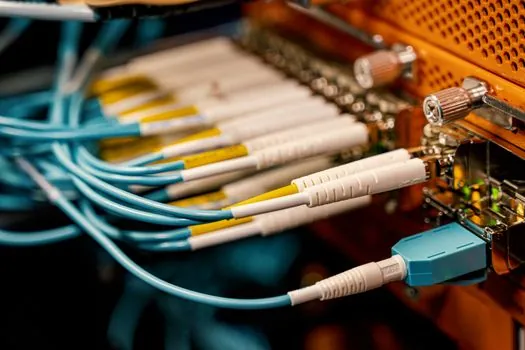
EV powertrains and charging: 800V+ architectures, liquid-cooled high-current connectors, and NACS standardization are the design pivots; the average modern vehicle now contains more than 1,500 connectors, with EVs carrying significantly more for powertrain and infotainment loads [S3][S4]. Industrial automation and robotics: traditional connectors suffer degradation from continuous movement, contamination, and mechanical stress, which is the exact failure mode contactless coupling eliminates; this is the headline use case in the Industry 4.0 thesis [S2]. 5G and edge: small cells, distributed antenna systems, and edge nodes need compact, durable, high-frequency interconnects, with the telecom segment alone at roughly 22% of North American connector demand in 2023 [S3].
Limitations, Failure Modes, and Sourcing Constraints
Three failure modes keep showing up in field data and in the published research. First, mechanical wear on legacy contacts in continuous-motion cells, which contactless designs remove but do not retro-fit cheaply into existing harnesses [S2]. Second, thermal stress on high-current charging connectors, which is why 2025 liquid-cooled designs targeting up to 24.4% lower cable-core temperature are now a procurement spec, not a nice-to-have [S4]. Third, regional supply concentration: China holds more than 65% of global public charging points and produced nearly 75% of global electric cars, so any single-region sourcing strategy inherits that exposure [S4].
Standardization risk runs the other way. NACS adoption, bidirectional V2G, and zonal E/E architectures are still in flux, so connector SKUs specified today may need a second design pass within the program life. Regional investment commitments are large, with identified US and Indian charging commitments exceeding US$7.7 billion, but commitments are not the same as energized assets, and connector buyers should track build-out before locking multi-year supply [S4].
Sourcing and Standards: What to Put on the Datasheet
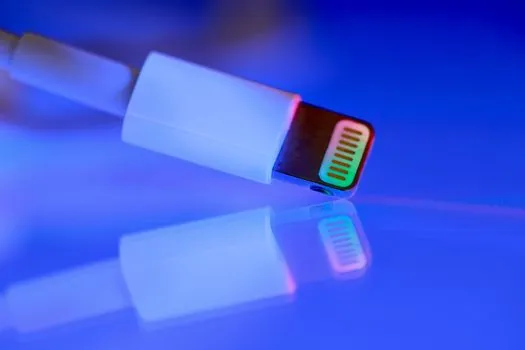
Minimum datasheet line items for an Industry 4.0-grade connector buy: current rating per contact with derating curve; data-rate per lane with the protocol family named (e.g. SPE, PCIe, USB, NACS); mating-cycle endurance with the test standard cited; IP code and operating temperature range; compliance with UL, CE, and, for hazardous-area deployments, the relevant IEC 60079 part. For EV charging, NACS conformance and liquid-cooled cable ratings should be explicit, not implied [S4].
Supplier landscape, as published: TE Connectivity leads the EV connector ecosystem with roughly 21% share, followed by Amphenol, Aptiv, Molex, and Yazaki; in 5G and high-speed interconnects, Amphenol, TE Connectivity, and Molex are publicly named as having expanded RF, coaxial, and fiber-optic lines [S3][S4]. Competitive intensity is highest in high-voltage, thermally managed, and interoperable platforms, which is where spec-driven buyers should focus their RFQ effort.
Trackable signals for the next planning cycle: (1) NACS rollout pace in North America and whether bidirectional V2G is included in the connector spec; (2) liquid-cooled high-power connector designs hitting the 24.4% cable-core temperature reduction benchmark at scale; (3) contactless connector share gain inside robotic cell retrofits, where the wear-elimination case is most quantifiable [S2][S4].
Spec-level background on the components involved: pressure transmitter, and flow meter.