
For typical US residential post-tensioned foundations, slabs-on-grade, and beam reinforcement, ASTM A416 Grade 270 seven-wire 15.24 mm unbonded strand is the dominant specification, with factory FOB prices from Tianjin-based mills ranging US$400-700 per metric ton at 25-tonne minimum order quantities as of 2026-08 [S4].
Residential concrete work uses prestressing strand in two distinct ways: bonded strand grouted inside ducts for ground beams and transfer slabs, and unbonded strand sheathed in grease-filled HDPE for monolithic slabs-on-grade and PT foundations common in Texas, Arizona, and coastal Southeast US builds. Wholesale catalogues for both forms remain active on Made-in-China.com, with multi-mill listings for 1x7 and 2-wire 2.9 mm configurations at US$600-1,100/t [S2][S4].
ASTM A416 Grade 270 vs Grade 250: Tensile Thresholds
ASTM A416 Grade 270 strand carries a minimum ultimate tensile strength of 1,860 MPa (270,000 psi) on a nominal 15.24 mm diameter, while Grade 250 sits at 1,725 MPa (250,000 psi) on the same diameter, a roughly 8% delta in capacity that dictates tendon spacing in residential PT slabs [S4]. Grade 270 is the de facto residential default in post-tensioned slab-on-ground designs because the higher allowable jacking force (typically 0.80 fpu, or about 1,488 MPa) lets engineers reduce strand count per tendon from four to three in many waffle-slab layouts.
Low-relaxation strand, stress-relieved at 350-380 deg C during manufacture, holds the 70% GUTS relaxation limit under ACI 318 / PTI tabbed requirements, a value worth verifying on the mill cert before coils leave the dock [S2]. The 7-wire versus 19-wire choice is a second gate: 7-wire strand is standard for residential PT, while 19-wire remains a niche product for special long-span applications and shows up in the same wholesale listings as a US$600-700/t line item [S2].
Bonded vs Unbonded: Residential Trade-offs
Tianjin RuiTong and Yuanxian both list unbonded 15.24 mm ASTM A416 product at US$400-700/t with MOQs of 1-25 tonnes [S4].
Bonded (grouted) strand still owns niches where future restressing or corrosion-fatigue resistance under saturated soils matters: below-grade beams in flood-zone foundations, coastal pile caps, and any slab specified with a 75-year design life. Trade-off is straightforward, unbonded is cheaper and faster to install; bonded trades that speed for redundancy, since the grout column transfers stress to surrounding concrete even if a single wire fails. For slab-on-ground work in Texas-style expansive soils, unbonded is the path of least resistance.
Diameter and Configuration: 12.7 mm, 15.24 mm, and 2-wire Strand
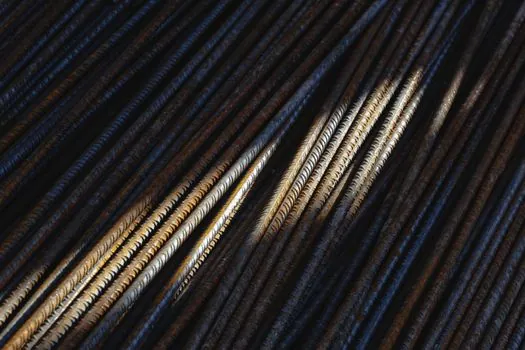
Nominal 15.24 mm (0.6 in) diameter is the residential industry baseline, with 12.7 mm (0.5 in) used where minimum cover or congestion around rebar mats is a concern. A 2-wire 2x2.9 mm PC strand per ASTM A910 appears in the same wholesale channels at US$900-1,100/t with a 1-tonne MOQ, aimed at thin T-beam and slab flanges in residential transfer structures [S4].
Concrete cover drives the diameter choice more than capacity. ACI 318 residential PT slab cover rules (typically 25 mm minimum to the sheath) plus rebar mat thickness often preclude 15.24 mm strand in thin topping slabs under 200 mm, forcing the spec down to 12.7 mm with a corresponding reduction in allowable jacking force per strand. The 2-wire 2.9 mm product is a separate branch, used in precast hollow-core plank and some pre-tensioned T-beam residential floor systems rather than cast-in-place PT.
Where Residential PT Strand Is NOT the Right Answer
Light wood-frame and cold-formed steel residential construction does not use prestressing strand at all, those systems rely on shear walls, hold-downs, and conventional rebar for lateral and gravity paths. Strand enters the picture only when the structural system is concrete, either cast-in-place post-tensioned slabs, PT beams, or pre-tensioned precast elements. A residential GC building a 200 m2 slab-on-grade home in Phoenix or Houston will spec hundreds of metres of unbonded 15.24 mm strand; the same builder doing a 200 m2 wood-frame home in Atlanta will not order any. [S4]
Conventional rebar (#4 to #8) remains the right answer for residential footings, stem walls, and grade beams in non-PT foundations, and mixing rebar with bonded PT in the same element requires careful anchorage-zone detailing per ACI 318 to avoid bursting failures behind the dead-end anchorage.
Specification Gates and What to Put on the Mill Cert
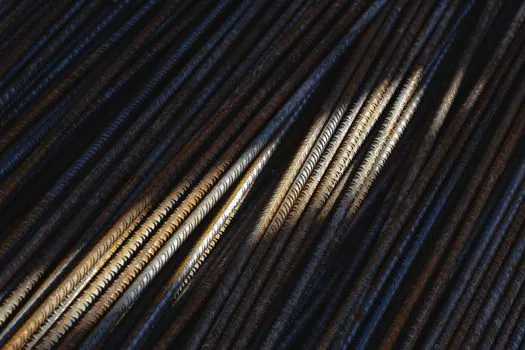
Grease weight per metre and sheath thickness (typically 1.0-1.5 mm HDPE) should also be on the cert for unbonded product. [S4]
Buyers sourcing from Tianjin-area mills should expect 25-tonne MOQs for the lowest US$400-700/t pricing and 1-5 tonne MOQs at higher unit prices [S2][S4]. The detailed sourcing workflow for China-mill PC strand, including how MOQ and lead time shift unit price, is the same pattern that drives Rebar cutter selection for bridge construction procurement on the rebar side. For PT contractors stepping into larger infrastructure work, the spec gates broaden considerably; the construction-tooling envelope around PT stressing jacks, chairs, and bursting reinforcement is covered in the construction tools reference. Strand metallurgy itself, including the difference between stress-relieved low-relaxation and as-drawn wire, is laid out in the steel strand encyclopedia entry, while the broader post-tensioning system with anchorages, ducts, and grout is treated in the prestressing strand reference.
Failure Modes and Inspection Holds
Three failure modes drive residential PT strand rejection at site: (1) visible corrosion pitting on the sheathing or, for bonded product, on the bare wire, (2) sheath damage exposing the grease layer to concrete pour moisture, and (3) relaxation test results outside the 2.5% at 1,000 hours, 70% GUTS, 20 deg C envelope required by ASTM A416. Storage on dunnage off the ground, sheltered from rain, and a 6-month maximum outdoor exposure window are common residential PT subcontractor practice. [S4]
Trackable signals to watch through 2026 Q4: any mill price moves on Tianjin FOB strand (the US$400-700/t band is the current floor [S4]), ACI 318-25 commentary updates on residential PT cover rules, and any code shifts in hurricane-coastal states (Florida, Texas, South Carolina, where contractors like Joco Construction have built PT-supported homes for 20+ years [S3]) that might push bonded strand adoption over unbonded.