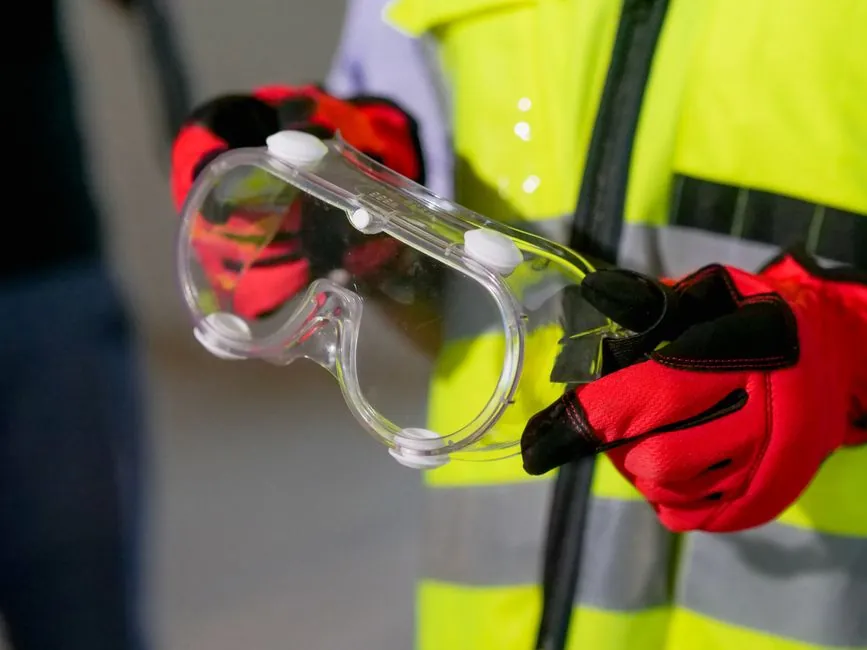
For a typical US general-contractor jobsite in 2026, the practical glove stack is cut-resistant ANSI/ISEA 105 Level A4–A6 (HPPE shell with PU or nitrile palm) for framing and rebar work, latex-crinkle coated cotton/polyester for material handling, and a dedicated leather or aluminized welding glove for hot work, with pricing on the wholesale market starting near US$0.14 per pair for commodity shells and reaching US$0.60–1.20 per pair for HPPE cut-resistant builds [S1].
The decision is driven by three documented axes: the ANSI/ISEA 105 cut level matched to the sharpest credible hazard on the task, the coating chemistry matched to the wet/oil/dry condition of the material, and the EN 388 mechanical rating (abrasion, cut, tear, puncture) for the day-to-day wear envelope [S1][S2].
Hazard Mapping: Which Glove Goes to Which Trade
Cut-resistant HPPE (high-performance polyethylene) shells with PU palm coating are now the default specification for carpenters, ironworkers, and rebar handlers, with wholesale transactable pricing reported in the US$0.60–1.20 per pair band on OEM portals as of June 2026 [S1]. Latex-crinkle coated polyester shells in the US$0.17–0.21 per pair band are the workhorse for general material handling where cut risk is low but grip on dry or slightly wet surfaces matters [S1].
For utility and survey crews, ANSI 107 / CSA Z96 Class 2 and Class 2/3 high-visibility vests are specified alongside reflective traffic-control gloves, with the Class 2 design providing visibility up to approximately a quarter mile at night from headlights, per vendor documentation [S4]. Stainless-steel mesh gloves, sometimes referenced for cut protection, are explicitly limited to short-duration use on guarded machinery; they cannot replace machine guards and will be cut by a running high-speed blade if the machine does not stop in time [S2].
ANSI/ISEA 105 and EN 388: The Two Scorecards That Matter
ANSI/ISEA 105 rates cut resistance on an A1 through A9 scale, where A1 is the lowest cut score and A9 is the highest, and this scale is the primary reference for selecting cut-resistant HPPE or steel-mesh styles on US sites [S2]. EN 388 covers the European mechanical-risk envelope with four-digit codes for abrasion, cut, tear, and puncture, plus an optional EN ISO 13997 letter for higher cut levels; both schemes co-exist on global vendor data sheets and many contractors dual-spec to satisfy both US and EU projects [S2].
Selection should follow the highest credible hazard on the task, not the average. A rebar tying crew working with unprotected cut wire should sit at A4 or above; a masonry block layer handling cured concrete typically needs only A2 with abrasion class 2 or higher; a glazier handling sheet glass or metal trim should be specified to A5–A6 with PU or nitrile palm for grip and dexterity [S1][S2].
Coating Chemistry vs Site Condition
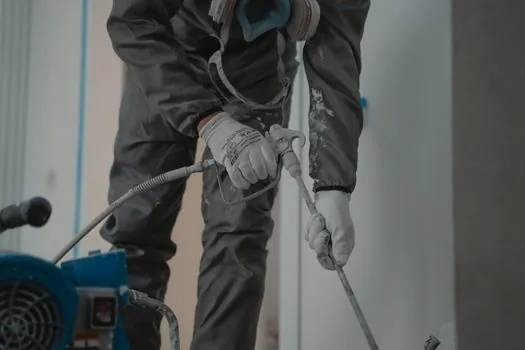
Coating choice is a separate gate from cut level and is the dominant driver of grip, dexterity, and lifespan. Latex crinkle gives the best dry-to-slightly-wet grip and remains the cheapest coating at US$0.17–0.26 per pair wholesale for palm-coated and full-coated constructions [S1]. Nitrile provides better oil and hydrocarbon resistance and is the default for fuel-handling, lube bays, and oily rebar; PU is the thinnest coating and preserves fingertip dexterity for small parts and fastener work but degrades faster on abrasive surfaces [S1].
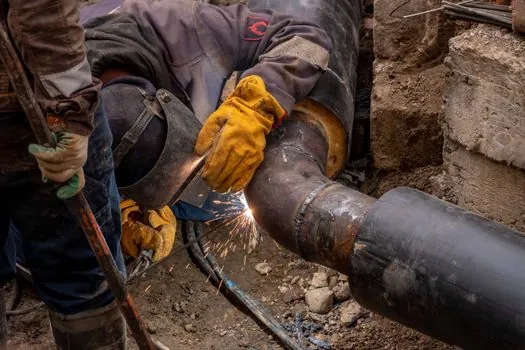
For cold-weather or cold-chain sites, insulated knit shells with a latex or nitrile coating are listed alongside heated jacket and glove systems, and the same vendor channel carries heated gloves as a separate category rather than as a coating upgrade [S3]. Welding and hot-work tasks require a dedicated leather or aluminized glove, not a coated knit, because the coating chemistry will char or melt under spatter [S3].
Comparison: Common Construction Glove Builds Against Selection Criteria
A criteria-based comparison of the four most common constructions on a US jobsite in 2026, against cut level, wet/oil grip, dexterity, and indicative wholesale cost, lines up as follows [S1].
Latex-crinkle polyester shell, ANSI A1–A2, best on dry and slightly wet surfaces, dexterity rated good, US$0.17–0.21 per pair wholesale. Nitrile-foam HPPE shell, ANSI A4–A6, best on oily/wet surfaces, dexterity rated fair, US$0.60–1.20 per pair wholesale. PU-palm HPPE shell, ANSI A4–A5, best on dry surfaces with high dexterity, US$0.60–1.20 per pair wholesale. Leather welding glove, cut level not ANSI-rated, best on hot work and spatter, dexterity rated low, sold as a specialty line [S1][S3].
Limitations, Misconceptions, and Failure Modes
Coated knit gloves are not cut-immunity devices; the HPPE shell resists slicing but the coating can be abraded through in days on rough masonry, after which the underlying fibers take the wear [S1]. Stainless-steel mesh gloves sold for meat and sheet-metal work are explicitly described as limited protection; on unguarded high-speed cutting machinery they are a temporary barrier only and will be severed if the machine does not stop in time, so they are never a substitute for a fixed machine guard [S2].
Size also matters for safety: a glove that is too large snags on rotating shafts, and a glove that is too small restricts blood flow and reduces grip force, so procurement should spec by both ANSI/ISEA 105 level and the S/M/L/XL sizing carried on the retail channel, where medium is the most stocked SKU [S3].
Sourcing, Standards, and Lead-Time Signals
Procurement teams should anchor the spec sheet to three documents: ANSI/ISEA 105 for cut score, EN 388 for the four mechanical ratings, and where applicable, the customer-specific ANSI 107 / CSA Z96 Class 2 or Class 3 high-visibility requirement for survey and traffic-control crews [S2][S4]. Wholesale pricing on the OEM portal sampled in late June 2026 shows HPPE cut-resistant builds at US$0.60–1.20 per pair, latex-coated general-purpose shells at US$0.17–0.26 per pair, and commodity 10-gauge flat-latex working gloves at US$0.20–0.22 per pair, which gives a defensible cost band for tendering [S1].
Two signals worth tracking into the next quarter: shifts in HPPE fiber pricing, which will move the US$0.60–1.20 per pair band, and any revision to ANSI/ISEA 105 cut scoring methodology, which would re-rank every A-level glove currently on the shelves [S1][S2]. For adjacent tooling decisions on the same site, the rebar cutter selection criteria for steel construction sites and the steel plate spec gates for warehouse builds follow a similar hazard-first selection pattern, and broader hand-protection framing is covered in the safety gloves reference page.
Component reference pages worth checking: construction tools, and fire safety.