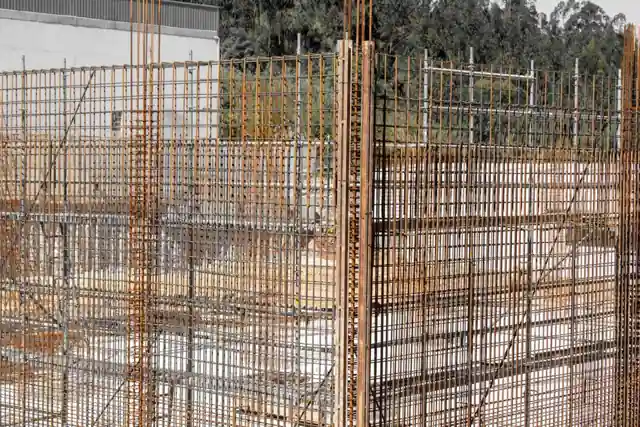
For steel construction work, a portable rebar cutter is normally selected by three numbers: maximum bar diameter, blade drive (hydraulic versus electric versus manual), and cycle time per cut. Mainstream portable hydraulic and electric models cover the #4 (13 mm) to #8 (25 mm) rebar range that dominates slab, footing, and column cages [S7].
Carbon-steel rebar for construction is stocked in diameters from 5.5 mm to 40 mm and standard lengths of 6 m, 9 m, or 12 m, so a jobsite almost always needs a machine rated well above the heaviest single bar called up on the drawing [S5]. Specification drift toward higher-grade 500 MPa and 550 MPa rebar, plus stainless-clad and basalt-FRP alternatives, has changed the cut profile and pushed buyers toward hydraulic heads for cleaner ends.
Drive Type and Power Source: Manual, Electric, Hydraulic
Manual lever cutters handle #3 (10 mm) and #4 (13 mm) Grade 40/60 bar at zero cycle-time cost, but operator fatigue sets in past about 80 cuts per shift, so they remain a trim and tie-fix tool rather than a primary production cutter [S7].
Portable electric rebar cutters in the 1.5-3.0 kW class run on 110 V or 220 V single-phase and cut #4 to #6 (13-20 mm) bar in 2-4 seconds per cut; a 5.5 HP walk-behind power-trowel class motor on a portable hydraulic head extends that envelope to #8 (25 mm) bar without stalling on the higher yield-strength 550 MPa stock [S7]. For diameters above #8, contractors typically step up to a 380 V three-phase hydraulic shear or outsource cutting to a fabrication shop such as Men of Steel Rebar's Bensalem, PA facility, which stocks "all types and grades of rebar" and ships cut, bent, bundled, and tagged material to site [S2].
Capacity, Blade Geometry, and Cycle Time
Rebar diameter capacity, not motor wattage, is the binding spec, because cutting energy scales with bar cross-section and yield strength. A machine rated for #6 (20 mm) at Grade 60 (~420 MPa) will often stall on the same diameter in Grade 80 (~550 MPa); the conservative move is to size the cutter to your heaviest bar at 1.2x the nominal diameter or buy a hydraulic head with adjustable relief pressure. [S5]
For high-volume slab-and-mat pours, cycle time compounds: a 2.5 s cut means 1,440 cuts in an 8-hour shift, easily covering a 10,000 ton rebar project that fabricators like Men of Steel Rebar handle with their fleet [S2]. Blade geometry matters as much as speed: four-edge reversible blades in tool steel (typically HRC 58-62) keep cut-end deformation under 1-2 mm of flare, which preserves cover and lap-length tolerance at splice sleeves. Bestbar's "Cut and Bend" service, offered alongside their mesh and accessory lines for Australian builders and concreters, shows that pre-shop cutting with industrial shears still beats jobside portable heads on dimensional consistency for mesh and accessory schedules [S8].
Cutting the Range: 5.5 mm Wire through 40 mm Bar

Construction-grade carbon-steel rebar ships in diameters from 5.5 mm up to 40 mm in 6 m, 9 m, or 12 m stock lengths, per current supplier catalogs, so a single tool never covers the whole range [S5]. Below 10 mm, the bar is essentially tie wire and is cut with a bolt cutter or the shear accessory of a rebar-tier tool, not a rebar cutter.
Between 10 mm and 25 mm (#3 to #8), the portable hydraulic or electric rebar cutter is the workhorse, and that is the size band where most jobsite cutting happens. Between 29 mm and 40 mm (#9 to #12), you are in structural heavy-rebar territory used in bridge piers, dam thrust blocks, and high-rise shear walls; here, a stationary hydraulic shear at the fabrication shop is the only practical cutter, and portable electrics drop out of the specification. For owners weighing an alternative to steel, basalt-FRP rebar is now covered under the ASTM FRP standard specification updated in 2023 and is described as "tougher and stronger than steel with a higher tensile strength" while weighing about a quarter of the same-size bar, which lets a smaller cutter (or a diamond abrasive wheel) handle the same nominal diameter [S6].
Selection Comparison: Manual, Electric, Hydraulic, Outsource
The decision matrix below lines the four common paths up against bar diameter, cycle time, capital cost, and the projects they fit: [S2]
Manual lever: #3-#4 (10-13 mm) bar, ~5-8 s/cut, lowest unit cost, suited to trim work and small repair crews [S7].
Portable electric (1.5-3.0 kW): #4-#6 (13-20 mm) bar, 2-4 s/cut, mid cost, suited to residential and small commercial slabs where 110 V or 220 V single-phase is available [S7].
Portable hydraulic (gas or 5.5 HP class): #4-#8 (13-25 mm) bar, 3-5 s/cut, higher unit cost, suited to bridge decks, mid-rise columns, and 550 MPa rebar stock where electric units stall [S7].
Stationary shop shear or outsourced cut-and-bend: #3-#18 (10-57 mm) bar, 1-3 s/cut, no on-site capital cost, suited to projects of 100 tons and up where Men of Steel Rebar's "1 pound to 10,000 tons" range applies, or to remote sites that benefit from Bestbar's "Steel Reinforcement On Site, On Time" delivery model [S2][S8].
When a Portable Cutter Is the Wrong Tool

Portable rebar cutters are a poor match for three common cases: high-tensile 550 MPa and Grade 80 bar above 25 mm, stainless-clad rebar, and FRP bar including the basalt alternative. [S5]
Stainless and FRP bars need abrasive cutting (diamond or carbide wheel), not shear blades, because shear geometry produces delamination and burring on the cut face. Bellis Steel's 50-plus-year track record in Southern California rebar fabrication and the broader Bellis catalogue show that most high-volume work still goes through a fabricator's shop, where abrasive saws, hydraulic shears, and CNC bender-cutters are already aligned to the chemistry of the bar [S1]. Cold-weather pours below about -10 deg C also push jobsite hydraulic fluids outside their operating window, which is another reason northern-climate contractors pre-cut and bundle in a heated shop. For a deeper look at how a companion bender is sized for plumbing-rough-in and light-commercial work, see our rebar bender spec map for plumbing installation.
Sourcing, Standards, and What to Confirm on the Datasheet
Before you buy, lock four datasheet numbers: maximum rebar diameter at the bar's actual yield strength (not the marketing number, which is usually Grade 60 / 420 MPa), cycle time per cut at that diameter, blade material and HRC, and hydraulic relief setting if it is a hydraulic head [S7].
Confirm the bar standard the machine was tested against: ASTM A615 for carbon-steel rebar, ASTM A706 for weldable low-alloy rebar, and the ASTM FRP standard that now covers basalt rebar after the June 2023 update [S6]. Lengths of 6 m, 9 m, and 12 m remain the global default for 5.5-40 mm carbon-steel rebar, so a portable machine's hold-down and feed length should accept at least a 12 m bar without a second handling pass [S5]. For projects above 100 tons, the dollar-per-cut math almost always favors a cut-and-bend purchase order with a regional fabricator such as Bestbar or Men of Steel Rebar over a fleet of jobsite shears [S2][S8].
Two signals worth tracking into Q4 2026: wider stocking of 25 mm and 29 mm 550 MPa rebar by mills in Asia and the Middle East, and a slow but visible shift of bridge-and-transit specs toward basalt-FRP in deck slabs, which would shrink the addressable market for #5-#8 portable hydraulic cutters and move demand toward abrasive-wheel cutters rated for FRP [S6]. For broader equipment context on plate and sheet handling that often pairs with rebar prep in warehouse builds, see steel plate selection for warehouses: 2026 spec gates.
Component reference pages worth checking: rebar cutter, construction tools, and steel rebar.