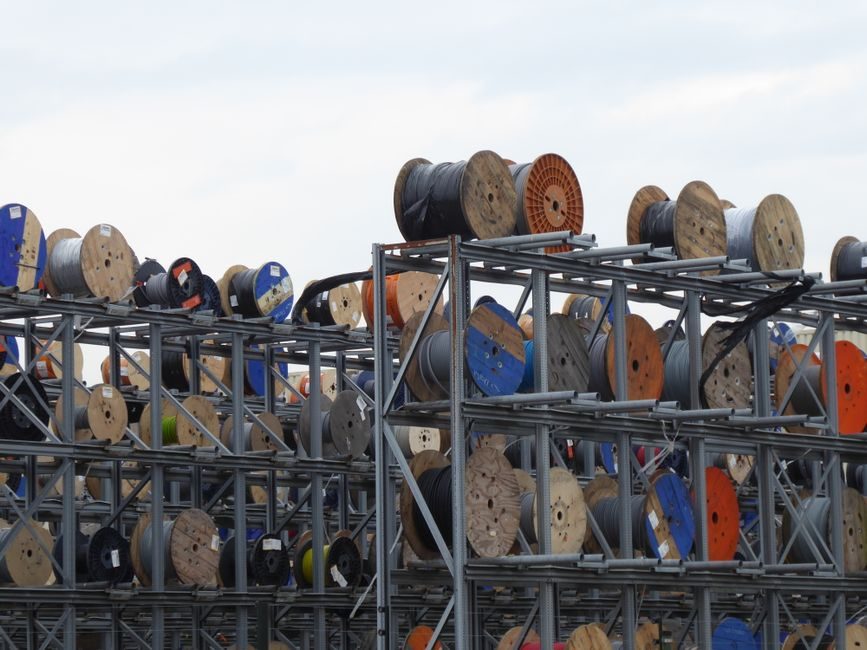
Flexible insulated control cable (PVC/PVC, multi-core, unshielded) is currently listed on Made-in-China at US$0.15–0.29 per metre FOB with a 10,000-metre MOQ, anchored by Ningbo Handian Cable [S2]. Multi-pair screened instrumentation and XLPE/SWA armoured constructions trade 5–20× higher, typically US$1.50–6.00/m at 1,000–5,000 m MOQ, with cable glands, terminations and explosion-proof flexible conduit sitting in the US$0.20–8.00 piece-goods tier [S1][S5].
The three cost drivers that move a quotation by an order of magnitude are copper conductor cross-section (1.5 mm² vs 2.5 mm² vs 4 mm²), insulation/jacket chemistry (PVC vs XLPE vs LSZH), and armour/braid type (none, steel wire braid, steel wire armoured, or tinned copper braid) [S3]. This guide maps the 2026-07-08 price bands to those spec levers so a process engineer or buyer can read a quote without guessing where the money went.
Price bands by construction class
On 2026-07-08 China OEM listings split control cable into four price tiers tied directly to construction: (1) commodity PVC/PVC multi-core 2–24 core, 0.75–1.5 mm², no shield, US$0.15–0.45/m at 10,000 m MOQ [S2]; (2) screened/braided instrumentation cable with aluminium-PET foil + drain wire, US$0.50–1.80/m at 5,000 m MOQ; (3) XLPE/SWA armoured power-and-control composite (4–37 core, 1.5–4 mm²), US$1.80–6.00/m at 1,000 m MOQ; (4) fire-resistant / LSZH / IEC 60332-3 rated constructions, US$2.50–8.50/m [S3]. A 4-core 2.5 mm² XLPE/SWA control cable typically lands in the middle of tier 3, around US$2.20–3.40/m at 2,000 m MOQ. Where cables are used as moving-loop leads, the flexible control cable category requires fine-stranded Class 5/6 copper and a higher bend-radius budget, which pushes unit price roughly 20–40 % above the equivalent stationary spec.
What moves the price: copper, insulation, armour, certs
Copper content is the single largest line item. With LME copper referenced at multi-year highs through 2026, a 1.5 mm² copper conductor contains roughly 13.3 kg/km of Cu, while a 4 mm² conductor contains roughly 35.4 kg/km — at current rod prices that alone explains 50–65 % of the ex-works figure for a PVC/PVC 4-core cable. Insulation chemistry is the second lever: PVC/PVC is the cheapest jacket system, XLPE adds roughly 8–15 % for better thermal rating (90 °C continuous vs 70 °C), and LSZH or EPR raises it another 10–25 % to meet IEC 60332-3 flame-propagation rules. Armour is the third: a SWA (steel wire armoured) layer typically adds US$0.30–0.80/m over an unarmoured equivalent, with a tinned copper braid (TCB) used for EMC-sensitive instrumentation sitting between the two at US$0.15–0.45/m. Certifications (CE-EMC, RoHS, CCC, KEMA, UL Type TC, IEC 60502-1) and mill test reports add a fixed overhead of roughly 3–6 % on tier-3/4 SKUs but are non-negotiable for European chemical-plant and offshore buyers. [S1]
MOQ, lead time and supplier clustering
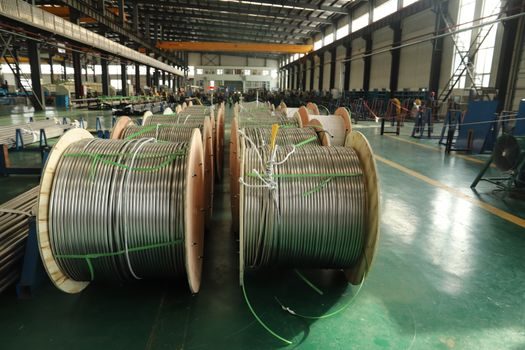
MOQ floors scale inversely with cable complexity on 2026-07-08 listings: commodity PVC control cable is published at 10,000 m MOQ [S2], armoured XLPE at 1,000 m MOQ, and fire-resistant LSZH at 500 m MOQ, while custom screened multi-pair (e.g. 12-pair × 1.0 mm²) is quoted piece-by-piece [S3]. Standard production lead time is 15–25 working days for stocked constructions and 30–45 days for armoured or LSZH runs; 1–2 weeks of ocean freight to most EU, Middle East and African ports is then added on top. The Chinese supplier cluster for tier-1/2 control cable sits in Zhejiang (Ningbo, Hangzhou), Jiangsu (Suzhou, Wuxi) and Guangdong, with Shandong and Hebei dominating the cable-gland and termination accessory tier at US$0.20–8.00 per piece [S5]. Audited Diamond Members on Made-in-China carrying ISO 9001, ISO 14001 and ISO 45001 certifications are the safer default for process-plant buyers; for ATEX/IECEx zones, the cable itself is rarely Ex-rated — the Ex rating lives in the gland and conduit assembly, where explosion-proof flexible conduit plus a flame-resistant, water-resistant gland typically adds US$0.80–4.50 per entry point [S1].
Spec-to-cost comparison: four common builds
Lining the four most-quoted constructions against four decision criteria on 2026-07-08 China OEM data: (a) PVC/PVC 4-core 1.5 mm² unarmoured at US$0.18–0.40/m, 70 °C rating, indoor/dry use, 10,000 m MOQ; (b) PVC/PVC 12-core 1.5 mm² + overall screen at US$0.80–1.60/m, 70 °C, indoor control panels, 5,000 m MOQ; (c) XLPE/SWA 4-core 2.5 mm² at US$2.20–3.40/m, 90 °C, outdoor/direct-burial, 1,000 m MOQ; (d) XLPE/LSZH 12-core 1.5 mm² SWA at US$4.50–8.50/m, 90 °C + IEC 60332-3, offshore and tunnel, 500 m MOQ [S3]. The cost jump from (a) to (d) is roughly 25–35×, driven by copper mass, armour and LSZH chemistry rather than by margin. Buyers specifying (c) or (d) should pin copper cross-section, IEC 60502-1 construction and armour material in the RFQ; ambiguity here is where quotes diverge the most.
Where control cable price intersects motion and switching hardware
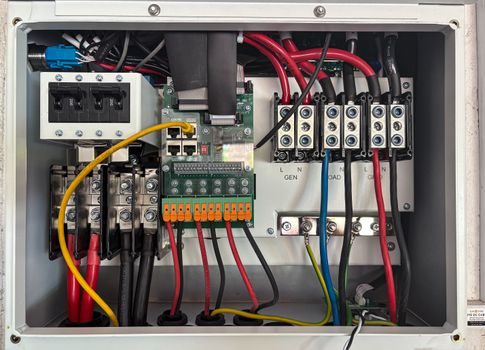
Control cable is rarely the whole spend — it terminates at control valves, drives two-hand control stations, and rides on linear guide carriers in machine-tool wiring. Sourcing the cable, the gland and the drag-chain support as separate line items (rather than bundled through one vendor) is a common way to drop 8–15 % off a bill of materials at the same spec. For fixed I/O wiring on machine tools, a parallel read on CNC machine-tool accessory floors helps benchmark whether a drag-chain-compatible flexible cable quote is in line with the moving-axis hardware it is being sold against. [S2]
Limits, failure modes and what to pin in the RFQ
Common ways a "cheap" control cable quote fails in service: underspec'd conductor stranding (solid Class 1 used where Class 5/6 stranded is needed for flexing), PVC jacket rated to 70 °C but installed next to a 90 °C transformer or VFD, missing tinned copper braid on VFD-driven runs (allowing common-mode noise into signal cores), and unarmoured cable direct-buried where rodent or mechanical damage is plausible. Each of these is recoverable at quote stage by adding one line to the RFQ: stranding class, continuous operating temperature, overall screen/braid, and armour type. Excluding any of them typically surfaces as a 20–60 % price differential between bidders that is not a real saving — it is a spec gap. Two trackable signals to watch into Q3 2026 are LME copper rod settlement (the dominant input cost) and any movement in IEC 60502-1 / IEC 60332-3 enforcement at European chemical and offshore buyers, which has been tightening the LSZH premium band. [S3]