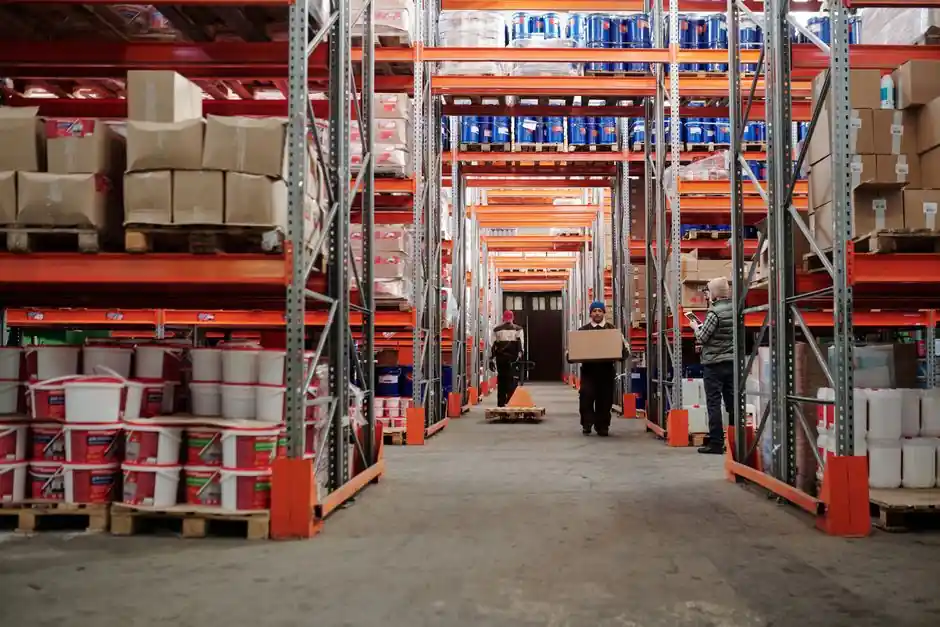
Specifying a conveyor sorting line for a finished-goods pharmaceutical distribution centre (DC) comes down to three numbers: peak throughput in units/h, maximum carton mass in kg, and the divert angle range in degrees. The Transnorm SmartSort LineSplitter posts 50 kg maximum load, 2.0 m/s conveyor speed, sorting capacity above 7,500 units/h, and a diverting angle of −45° to +45° on a central-drive swivel wheel architecture [S1].
The supplier landscape for pharmaceutical conveyors on DirectIndustry now lists 70 manufacturers and 168 products, a broad enough base that buyers should lock down three parameters (material grade, sorter type, throughput class) before shortlisting any vendor [S2]. General-line US integrators such as Conveyor-Sales and Conveyor & Automation Technologies focus on pre-engineered belt, roller, and chain driven live roller (CDLR) modules rather than pharma-specific hygienic builds, which changes the integration route entirely [S3][S4].
Hygienic Build Requirements for Pharma Carton Handling
Pharma secondary packaging (cartons, blister wallets in shippers, serialized totes) sits between primary aseptic filling and the DC, so the conveyor must support washdown, tool-free belt removal, and 304 or 316 stainless steel contact surfaces; European buyers should also confirm food-grade contact compliance with EU Regulation 10/2011 for any plastic belt or scraper [S2]. The screw conveyor lines flagged for pharmaceutical use (CX, TX, TXF series) carry full component traceability under European Regulation (EC) certification, a documentation pattern worth mirroring on any belt sorter datasheet [S2].
Pharma DC integrators are not usually working in classified cleanroom space, but they do ship into zones where the same product may have been touched in a GMP area, so the spec language should require smooth, non-absorbent contact surfaces, no hollow catch-points, and drive covers that lift without tools for cleaning validation. The FlexLink X45 chain conveyor platform, listed for products from a few grams up to 8 kg and a 60 m/min standard chain speed, illustrates the modular plastic-belt format common in pharma secondary packaging [S2].
Throughput and Load Classes: Matching Sorter to SKU Mix
Sortation capacity must be sized to the peak shift rate, not the daily average, because DC contracts are penalized on late dispatch. The SmartSort LineSplitter at above 7,500 units/h and 2.0 m/s is the working benchmark for medium-throughput pharma parcel DC [S1]. The Transnorm TS 1200 belt conveyor at 50 kg maximum load and 2.5 m/s is the standard discharge / timing belt, and pairs to the TS 2960 inclined roller alignment conveyor (50 kg, 2.6 m/s) used in parcel distribution centres [S2].
Heavier unit loads call for a different sorter family. Transnorm's TS 1600-090 belt conveyor reaches 90 kg maximum load at 2.5 m/s with a patented belt guiding system and conical drums for running smoothness, and a low-tension drive across the full belt width to extend service life [S2]. For the heaviest SKU classes typical pharmaceutical DC rarely sees, but contract packaging operations do, the heavy-duty pallet conveyor lines that complement end-of-line wrappers should be considered instead of a sorter [S2].
Sorter Architecture: Swivel Wheel, Sliding Shoe, Cross-Belt, or Steerable Roller
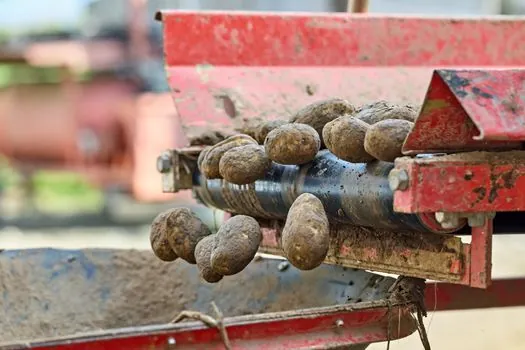
Choosing a sorter body comes down to the divert angle needed, the carton footprint, and the in-feed angle. The SmartSort LineSplitter is a central-drive swivel wheel sorter with a -45° to +45° divert range, which covers most pharma DC lane assignments without forcing a 90° cross transfer [S1]. Transnorm's vertical divider TS 6610 handles distribution discharge; the horizontal transfer TS 2733 and the belt diverter TS 6510 cover the short, low-inertia moves between induction and sortation [S1].
For higher divert angles and tighter carton pitches, a sliding shoe or cross-belt sorter is the next architectural step, but those have not appeared in the current Transnorm pharma-tagged catalogue excerpts, so a direct comparison number should be sourced from the vendor's own datasheet [S1]. The TS 4800 roller conveyor family, including the Compact Sorter TS 4800C for pharmaceutical, chemical, and logistics duty, and the TS 4810 optical conveyor, are the parallel options from the same vendor [S1].
Layout, Power, and Controls Integration
Pharma DC sorters need a clean separation between the conveyor zone and the controls cabinet, and the distribution cabinet feeding motors and VFDs should be on a dedicated MCC segment with surge protection and a UPS feed, not tapped off a general lighting panel. [S1]
Cable routing inside a pharma DC conveyor should follow the same rules as any cable distribution cabinet layout: VFD output cables shielded and separated from encoder and network runs, and any explosion-proof distribution feeds used only where the line passes into a solvent or alcohol-based washdown zone. For projects that include sortation adjacent to a packaging line drawing from a shared power distribution bus, harmonic distortion on the VFD bus should be measured before final commissioning, not after, because retrofits are expensive once the line is live.
Comparison: Four Sorter Bodies Against Decision Criteria
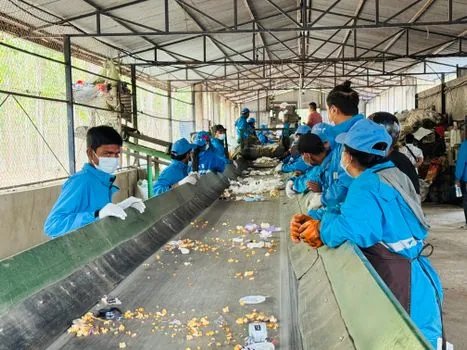
The four sorter bodies pharma DC buyers actually compare are lined up below against the criteria that drive a 2026 specification: max unit load, throughput envelope, divert angle range, and hygienic build feasibility. The SmartSort LineSplitter (swivel wheel) takes the medium-throughput lead with 50 kg, above 7,500 units/h, and a ±45° divert range on a stainless-frame build [S1]. The Transnorm TS 1600-090 belt conveyor covers 90 kg at 2.5 m/s but is a transport conveyor, not a sorter, so it belongs upstream of the sortation node [S2]. The FlexLink X45 chain conveyor handles sub-8 kg product on a 60 m/min standard chain width of 45 mm, best for induction and accumulation rather than final sort [S2]. The CX/TX/TXF screw conveyors are excluded from sortation duty altogether; they are specified for bulk powder and granulate transfer inside the same facility, with EU Regulation (EC) traceability documentation [S2].
For a pharma DC that needs to sort serialized cartons above 7,500 units/h, the practical baseline is a central-drive swivel wheel sorter on a 304 or 316 stainless frame with EU 10/2011 food-grade contact documentation, fed by belt conveyors in the 50 kg / 2.5 m/s class. Heavier 90 kg SKUs route via the TS 1600-090 family upstream of the sorter; sub-8 kg induction and buffering on an X45-class chain conveyor; powder and granulate upstream of the DC on certified screw conveyors [S2].
Limitations, Failure Modes, and What to Verify on Site
Three failure modes show up repeatedly in pharma DC sorters: belt mistracking on long horizontal transfers, swivel wheel bearing wear in washdown environments, and encoder feedback loss on long VFD cable runs. The TS 1600-090 addresses the first with conical drums and a patented belt guiding system; buyers should still ask for a documented mistracking alarm tied to the line-stop circuit, not just a visual indicator [S2]. Swivel wheel bearing life in washdown is a function of seal design, not just material grade, so datasheet language specifying "sealed-for-life" bearings should be treated as a starting point and qualified with the MTBF figure from a similar installed line.
Encoder feedback loss on VFD cable runs longer than 50 m is solved with a VFD-rated cable, proper grounding, and a 24 V DC isolated supply; the same conveyor sorting line is otherwise stable, but undersized power distribution on the upstream MCC will trigger nuisance trips during peak shift, so harmonic and voltage-drop calculations belong in the bid set, not the as-built. For a deeper comparison of the food-grade build rules, the parallel spec map for food and beverage conveyor sorting lines covers hygienic construction, throughput, and washdown rating in more detail.
Next node: request a vendor FAT (Factory Acceptance Test) plan that includes a 4-hour continuous run at nameplate throughput with the reject lane loaded to 100% divert rate, and ask for the same MTBF and MTTR figures in writing for the sorter body, the VFD, and the encoder feedback loop. Track two signals over the next two quarters: a) regulatory guidance on serialization sorter interfaces (track through the GS1 and FDA DSCSA working groups, as the conveyor side has to follow whatever standard the upstream labeler settles on), and b) the European Hygienic Engineering and Design Group (EHEDG) update cycle for conveyor cleaning validation, since EU 10/2011 and EHEDG Doc. 2 are the two reference documents most pharma DC conveyor specs are audited against [S2].
This topic is covered further in Gantry crane selection for urban infrastructure projects.