
A conveyor sorting line for chemical shipping must combine a sorter class, a corrosion-resistant mechanical build, and a hazardous-area electrical spec in one engineering package, not three separate quotes, as emphasized in 2026 system-builder guidance [S1][S3].
The current best practice pairs a sorter conveyor (carton/case) or a chain/sliding-shoe sorter (drum/tote) with stainless frames, IP65/NEMA 4X controls, and ATEX/IECEx zone-rated motors, since chemical plants operate under dust, vapor, and washdown exposure that punish mild steel [S3][S4].
Sorter Class Options: Cross-Belt, Slide, Pop-Up Wheel, Pusher
Cross-belt sorters route each load on its own short belt perpendicular to the main line and are typically specified for high-speed operations reaching 200+ sorts/minute in distribution centers [S4].
Slide sorters and vertical sorters use gravity- or powered-arms to divert product at crossings, which the Dalian Jialin reference describes as a random, destination-based material handling system, with the vertical sorter noted as a cost-effective ergonomic solution for low-to-mid throughput [S2].
Pop-up wheel sorters, sliding shoe sorters, and pusher sorters are the three most common diverter types in modern sortation systems, and they differ in contact method, footprint, and suitable load profile [S4]. For chemical shipping, pop-up wheels suit cartons and totes on roller conveyor, sliding shoes suit heavier cases on belt conveyor, and pusher sorters suit irregular pallet loads where gentle contact is not required.
Selection is driven by load geometry: a Tianjin Master sorter conveyor is designed for tray and box delivery with standardized versatility, while a chemical shipping line carrying drums or IBC totes typically needs chain-driven live roller (CDLR) or sliding-shoe hardware, not a tray-style sorter [S3][S4].
Mechanical Materials and Corrosion Resistance
For chemical exposure, conveyor frames, side guards, and diverter arms in 304 stainless steel cover most indoor chemical-shipping aisles, while 316 stainless is specified where chloride-rich cleaners, salt-air dock doors, or caustic washdown are present [S3].
Belt materials must be matched to chemical contact: food-grade modular plastic belts, oil-resistant nitrile, and antistatic (conductive/dissipative) compounds are standard options, with antistatic belts specifically required when Zone 1/Zone 2 ATEX or IECEx classification applies [S4].
Bearings and shafts in sealed stainless units (e.g., 440C or equivalent) outlast zinc-plated mild steel in wet or chemical-vapor service, and the conveyor builder should be asked to confirm bearing ingress protection (IP) rating, not just frame material, as a separate line item [S1].
A conveyor sorting line that carries packaged chemicals should also specify low-friction UHMW slider beds at diverter points, since accumulated residue from leaking containers is the most common root cause of jams.
Electrical, Controls, and Hazardous Area Compliance
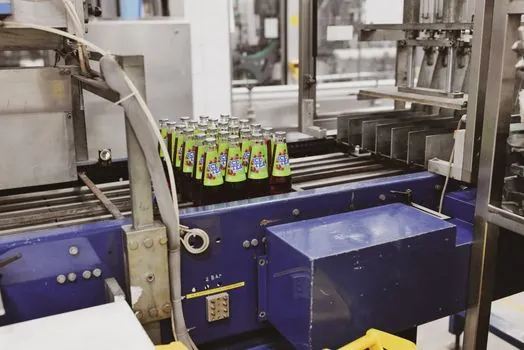
Chemical shipping areas are typically classified Zone 1 or Zone 2 (gas) and Zone 21 or Zone 22 (dust) under IEC 60079 / IECEx, and the conveyor motor, encoder, and solenoid valves must carry the matching Ex d, Ex e, or Ex tb rating for the zone of installation. [S2]
Control panels should be specified to NEMA 4X (or IP65 equivalent) stainless enclosures with conformal-coated PCBs, and motor starters or VFDs should be located outside the classified area when the line layout allows it, with intrinsically safe (IS) barriers on the in-zone sensors [S1][S3].
Identification layers typically use 1D/2D barcode scanners or RFID at the infeed station to receive the destination or handling instruction, and the control system routes each load to the correct discharge; this identification-plus-routing logic is the working core of any sorting system [S2][S3].
Network backhaul should default to industrial Ethernet (Profinet, EtherNet/IP) rather than legacy fieldbus for new builds, but HART remains the standard 4-20 mA maintenance protocol on individual instruments and must not be conflated with the digital control bus.
Throughput Targets and Layout Geometry
Modern high-speed sortation systems are commonly specified up to 200+ sorts/minute for distribution-center-scale operations, with the actual rate gated by infeed singulation, sorter indexing, and discharge lane length [S4].
For chemical shipping, throughput must be de-rated versus a general parcel sorter: drum and IBC totes run 10-30 sorts/minute, while case-level hazmat cartons run 60-120 sorts/minute, so a single throughput number should never be quoted without defining the unit load.
Layout geometry matters: cross-belt sorters occupy straight-loop floor space, slide sorters need vertical clearance, and a chemical shipping aisle with low ceilings and existing piping often forces a slide or pusher sorter instead of a cross-belt, even when throughput would otherwise favor the latter [S2].
For pharmaceutical-adjacent lines, the sorter also has to fit a cold-chain or contamination-controlled envelope, which a related spec guide covers for cold-chain sorting conveyor selection and for pharma distribution conveyor sorting under similar throughput and hygiene constraints.
Comparison: Which Sorter Class Fits Which Chemical Load
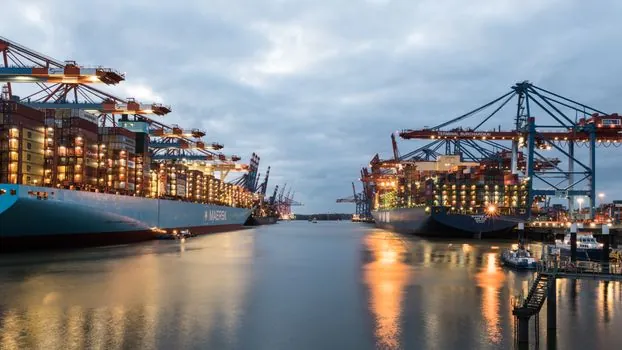
For cartonized chemicals (paint cans, adhesive cases, sealed cleaner bottles), a cross-belt or sliding-shoe sorter on a modular plastic belt at 60-120 sorts/minute is the default spec, with antistatic belt and Zone 2 motor. [S4]
For drum and IBC tote lines, a chain conveyor feeding a pusher or heavy-duty slide sorter at 10-30 sorts/minute is the correct fit, with 316 stainless guards, sealed bearings, and Zone 1 Ex d motors at the diverter.
For mixed-SKU distribution warehouses, a pop-up wheel sorter on a CDLR line is the most flexible mid-throughput option, with sort rates commonly in the 80-150 sorts/minute band and gentler contact than a sliding shoe [S4].
Three decision criteria should drive the final pick: (1) unit load type and weight, (2) hazardous-area zone, and (3) target sort rate per minute, with footprint and ceiling height as tiebreakers, and the sorter OEM should be asked to confirm all three on the same drawing.
Failure Modes and Common Sourcing Mistakes
Most chemical-shipping sorter failures trace to three root causes: incorrect hazardous-area certification of a sub-component (a VFD, a photo-eye, a solenoid), wrong belt material for the chemical actually being conveyed, and undersized discharge lanes that cause backpressure jams [S3][S4].
A frequent sourcing mistake is to specify a general-purpose distribution sorter and then add ATEX as a line item, when in practice the frame, motor, panel, and sensor list must be re-engineered for the zone, which adds cost and lead time but cannot be skipped.
Another common error is treating a chemical anchor or a chemical reagent load profile as identical to a general dry-goods load; aggressive solvents, oxidizers, and acid drums demand 316 stainless wetted surfaces, not the 304 default that suffices for most packaged cleaners.
Buyers should require the sorter OEM to publish a hazardous-area compliance matrix listing every line item (motor, encoder, sensor, panel, junction box) with its zone rating, because partial certification is the most common audit finding and the most common cause of site rework.
Standards, Documentation, and What to Ask the Vendor
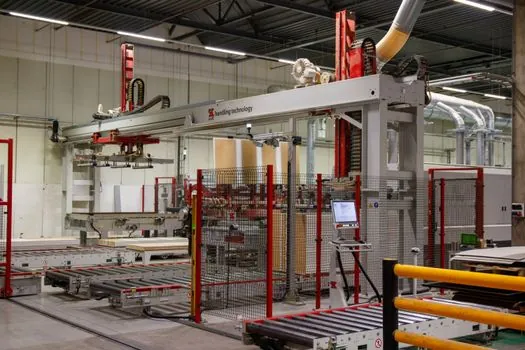
For a chemical-shipping sorter, the relevant standards are IEC 60079 (explosive atmospheres) for the electrical and motor spec, IEC 60529 (IP codes) for enclosure and bearing ingress, and the regional equivalents (ATEX 2014/34/EU in the EU, NEC Class I/II/III in North America); the sorter OEM should provide a declaration of conformity listing each clause. [S5]
Documentation to request with every quote: full bill of materials with material grades, ATEX/IECEx certificates for each in-zone component, mechanical drawings with loads and dynamic forces, and a control architecture diagram showing the network, safety, and identification layers [S1][S3].
For comparison, conveyor types outside the sorter family (gravity, screw, pneumatic, chain) are not substitutes here: a gravity conveyor moves fixed-route loads with no power, a screw conveyor handles bulk powders and grains, and a pneumatic conveyor moves loose material through tubes, none of which performs the identify-route-divide function a molding line or a chemical shipping sorter requires [S5].
Trackable next signals: (1) confirm whether the site is Zone 1/2 gas + Zone 21/22 dust before sizing motors, and (2) lock the unit load geometry (carton, drum, or IBC) on the RFQ, since each one shifts the sorter class, the belt material, and the throughput target together.