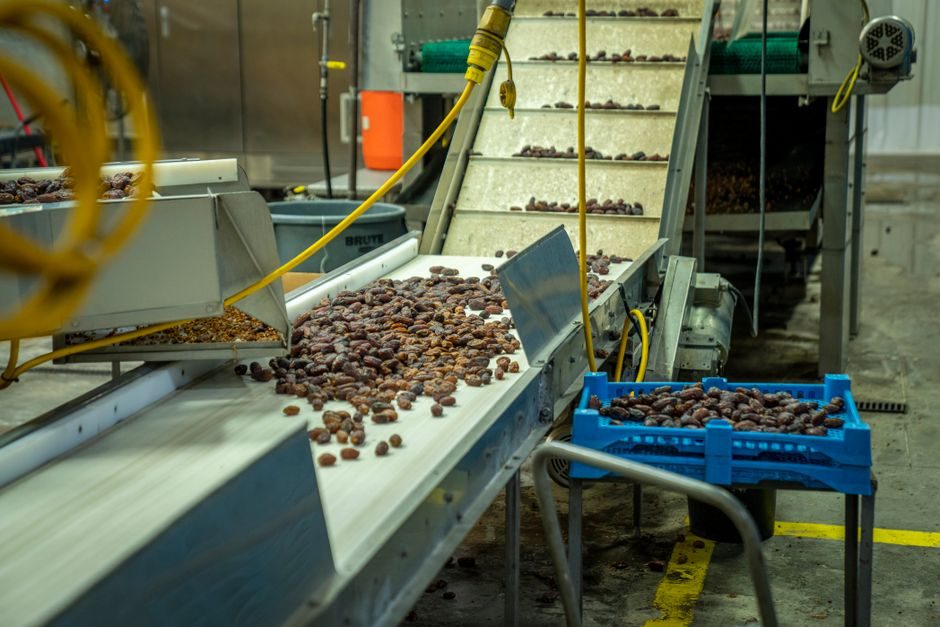
A 10-year TCO model for an industrial conveyor sorting line typically bundles five cost lines: acquisition capex, energy, preventive and corrective maintenance, spares, and operations labor; the rule of thumb from comparable automated-handling installs puts acquisition at 30-40% of lifecycle spend, energy at 15-25%, and maintenance-plus-spares at 20-30%, with the remainder absorbed by controls retrofits, downtime loss, and end-of-life dismantling [S6][S7].
The exercise matters because integrator quotes only price the line on day one; the real number a finance team signs off on is the sum of those five lines over the depreciation window, and that number is usually 2.0-2.6x the purchase order for sortation equipment operating two shifts [S5][S6].
Cost Line 1 — Acquisition Capex and What Is Usually Hidden in the Quote
Acquisition capex for a sorter line covers the conveyors, the cross-belt or sliding-shoe diverters, the induction/discharge zone, the controls panel, and the installation labor; on a representative 50-station sorting system the mechanical modules run 55-60% of the quote, controls and software 15-20%, and installation/commissioning the balance [S5][S6].
What integrators understate is the upstream and downstream interface: catwalk, mezzanine, fire suppression tie-ins, and the electrical drop from the MCC to each drive; if these are not on the BOM they reappear as change orders at 8-15% uplift [S6]. The other silent line is the controls layer — PLC, HMI, line scanner network, and the WCS/WMS handshake — which is where you either pay now or pay later in retrofit bills.
Cost Line 2 — Energy and Drive Selection
Energy on a two-shift sorter typically runs 15-25% of 10-year spend, dominated by the conveyor drives, the air supply for pneumatic diverters, and the lighting in the sortation mezzanine; variable-frequency drives on the main merge and the induction belts cut that bill by 20-35% versus across-the-line starters, and IE3/IE4 motor efficiency is now the default in any serious spec [S5][S6].
Cost Line 3 — Maintenance, Spares, and Divert Wear

Sorter-specific consumables deserve their own line: polyurethane belt coatings, divert-shoe wear plates, encoder wheels, and the WCS license renewal. Spares held on shelf typically cost 3-5% of capex per year and that is the cheap part; the expensive part is the unplanned stoppage, where a missed parcel at peak can cascade into carrier penalties that dwarf the repair invoice [S6]. A related decision is whether to standardize on a single automatic molding line type of bearing and encoder across the plant so the spares pool is shared, not duplicated per line.
Cost Line 4 — Controls Retrofits and Software Subscriptions
The other line item here is cybersecurity and remote-access hardware; a sorter line that ships with a default password and an open VPN is a liability, and the post-2024 IEC 62443 push in logistics hubs is forcing plant IT to demand network segmentation, managed switches, and signed firmware on every drive — a spec line that did not exist in 2018 quotes and now adds 3-6% to the controls scope [S7].
Cost Line 5 — Labor, Training, and End-of-Life
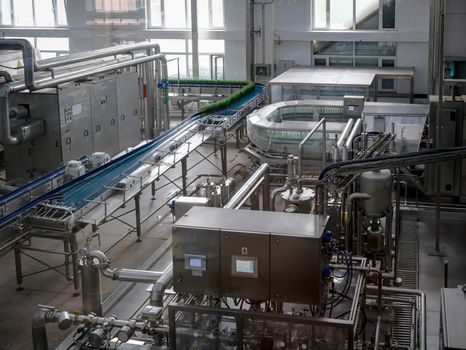
End-of-life dismantling and disposal is the line nobody prices: conveyor belting is a mixed-polymer waste stream with disposal cost that has moved with the oil price, and the steel structure has scrap-credit offset; net dismantling typically lands at 1-3% of original capex and should be booked into a decommissioning reserve, not absorbed at year ten [S6][S7].
Side-by-Side: Belt vs Cross-Belt vs Shoe Sorter on 10-Year TCO
Cross-belt, sliding-shoe, and tilt-tray diverters behave very differently across the five cost lines and the right answer is driven by parcel profile, not by integrator preference; the table below lines up the three mainstream options against the criteria that matter at the finance review [S5][S6].
Cross-belt: highest capex per divert (1.0-1.4x baseline), best energy per parcel handled, lowest wear on the sorter body, best fit for fragile/oversized. Sliding-shoe: lowest capex per divert (0.7-0.9x), highest compressed-air energy draw, fastest divert cycle, best fit for uniform parcels. Tilt-tray: middle capex, higher controls complexity, best fit for very high throughput at low mix. Over a 10-year window, the capex gap shrinks and the operating-cost gap widens, which is why the LCC-weighted spec rarely picks the cheapest quote.
What TCO Analysis Catches That a Quote Never Will
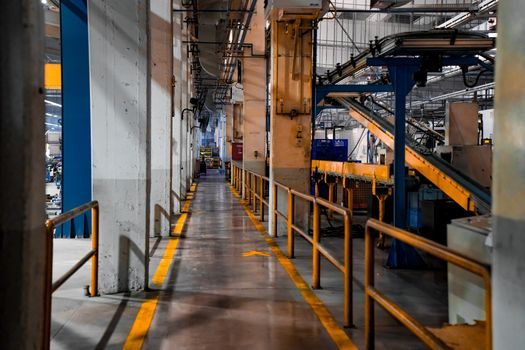
A disciplined TCO model surfaces three signals the integrator quote hides: first, throughput degradation as the line ages — a well-maintained sorter loses 1-2% of rated throughput per year and that drift alone can trigger a capacity-expansion capex in year six if it is not modeled [S5][S6].
Third, the option value of modularity: a molding line-style standard conveyor section that can be reconfigured in a weekend has a TCO benefit no quote will price, but it shows up in the avoided cost of the next peak season.
For a cross-vendor TCO benchmark on sortation equipment, the Sorting System TCO: Five Cost Lines That Drive 10-Year Spend reference applies the same five-line model to the broader sorter category, while the Conveyor Sorting Line Types: Line vs Loop Sorter Classification Spec Map piece maps which sorter topology each divert technology pairs with. Adjacent TCO logic for capital equipment also shows up in Rebar Bender TCO 2026: Five Cost Lines That Drive 5-Year Spend, where the same five-line framework is applied to a 5-year depreciation window.