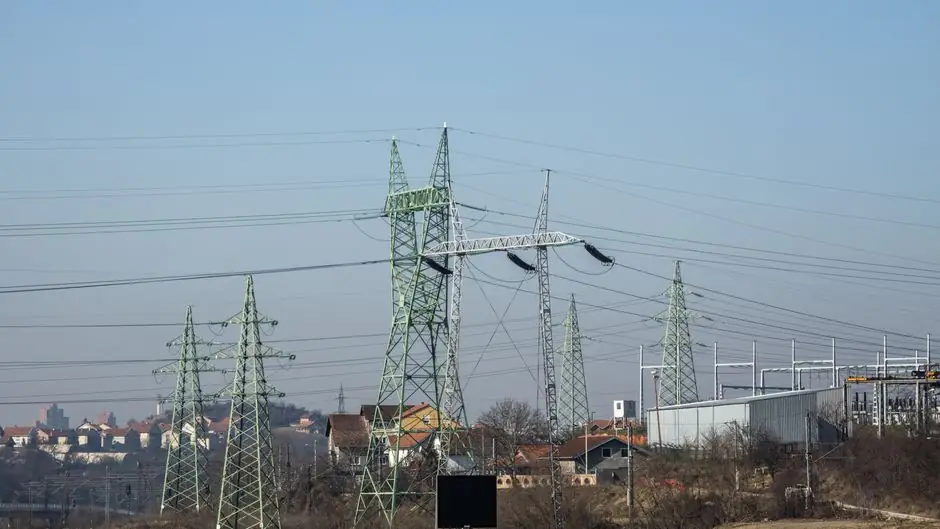
Average lead time for a large power transformer reached 128 weeks in the second quarter of 2026, with individual units stretching out to four years on capacity-constrained ratings [S7]. Distribution transformer lead times climbed from a pre-2020 norm of 3-6 months to 12-30 months by 2023, and the market has not normalised since [S1].
US demand for new large power transformers was roughly 750 units in 2019 and is projected to reach about 900 units by 2027, while over 70% of in-service large power transformers are already 25 years or older, putting the fleet squarely in the replacement window [S5]. With power transformer factories running near saturation, utilities have shifted from a buy-and-stock model to a portfolio of procurement, engineering, and operational workarounds.
How bad the lead-time picture actually is
RMI reported in May 2026 that a US buyer of a large power transformer can wait up to four years for delivery, and that transformer prices have risen roughly 75% since 2019 as material and capacity pressures compound [S4]. Wood Mackenzie data cited by POWER magazine places the 2026 industry average at 128 weeks, or about 2.5 years, with the longest tail cases running longer [S7].
The supply pinch is not theoretical. A 2024 CISA advisory framed the issue as a grid-reliability risk, noting that ordering a transformer can mean a 2-4 year wait compared to a few months historically [S2]. The same advisory ties the squeeze to grain-oriented electrical steel (GOES), aluminium, and copper constraints, plus a workforce turnover rate near 10% at domestic transformer plants [S1][S5]. For anyone specifying new power distribution gear, that window now has to be planned at the project-finance stage, not the construction stage.
Refurbished and re-rated units: the fastest path back to service
Refurbished large power transformers with new windings and re-conditioned tanks routinely ship in 6-12 months because they bypass the GOES and copper queue that blocks new builds [S2]. Utilities with healthy fleets have set up internal rebuild programmes that pull a failed unit, swap in rewind kits, and return it to service inside one outage season, keeping nameplate MVA without waiting on a factory slot [S5].
Spare-unit pooling across a utility family is the second leg of the same strategy. When one cooperative's 230/69 kV autotransformer fails and the neighbour has a refurbished spare, the failed unit can be replaced in weeks while the original goes through a controlled rebuild. Pooling only works if nameplates, impedance, and vector groups are pre-validated, which is why short-circuit impedance testing and dissolved gas analysis (DGA) baselines are now part of standard measurement and test intake rather than ad-hoc checks.
Mobile and skid-mounted substations for the gap years
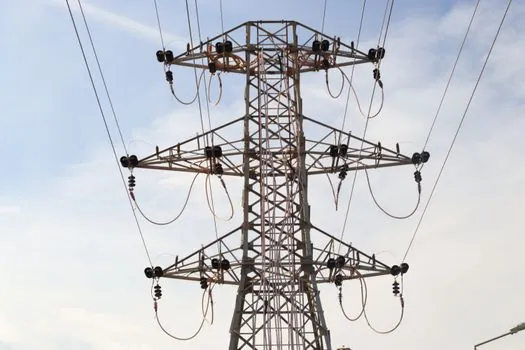
Mobile substations built around trailer-mounted transformers, with integral HV/MV switchgear and protection panels, have shifted from storm-restoration curiosities to baseline capacity tools. RMI's supply-chain work points to substations, transformers, switchgear, and circuit breakers as the four equipment categories where lead-time relief is most urgent [S4].
A typical 138/13.8 kV mobile sub can be on a lowboy in 8-14 months if a utility pre-orders the trailer, transformer, and relay house as separate long-lead packages, rather than as one integrated skid. The trade-off is real estate: mobile gear has higher losses and lower impedance margin than a fixed unit, so it is best used as a bridge for 18-36 months while a permanent power transformer is being built, not as a permanent fix. The economics work because the alternative is a delayed data-centre or substation interconnection, where one month of delay can cost more than the mobile rental.
Dual-sourcing, slot reservations, and supplier engineering
Data-centre developers and large IOUs now treat the purchase order as a strategic act, not a transactional one, and reserve production slots 30-36 months ahead with non-refundable deposits. The mechanics, deposit sizing, and the engineering data package that has to be locked early are covered in this 2026 data-centre transformer slot reservation playbook. Standardisation is the unlock: holding MVA, voltage ratio, impedance, and tap range constant across a programme lets a buyer move volume between suppliers if one slips. [S1]
Dual-sourcing at the design level is the second lever. Utilities that qualify two vendors for each rating band pay a modest engineering tax up front but recover optionality when one vendor announces an 18-month slip. Wood Mackenzie flagged the transformer market as structurally inflexible because of limited qualified suppliers and material bottlenecks [S3], and a pre-qualified second source is the practical hedge against that inflexibility.
Spare-parts kits, kitting, and field assembly
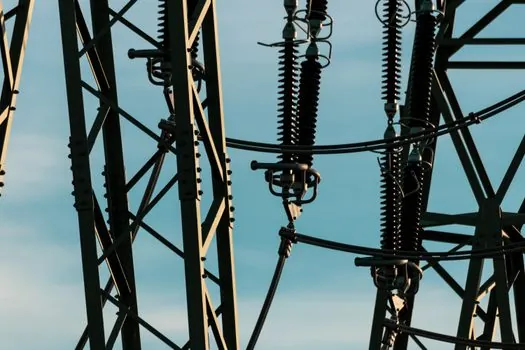
Rewind kits (pre-cut copper or aluminium conductors, laminations, tap windings, and insulation kits) shipped from a stocking distributor can compress a transformer rebuild from a 12-month queue into a 4-6 month outage. This works best on units below 100 MVA where winding geometry is repeatable, and it shifts the binding constraint from the factory floor to the on-site rewinding crew [S1][S2].
Stocking programmes now include bushings, OLTC mechanisms, and current transformers, because these sub-assemblies each have their own 6-18 month lead times and frequently gate a complete transformer delivery. A utility that carries a 10% redundant bushing fleet, sized against its failure-rate data, can swap a bushing in days and avoid a full transformer replacement that would otherwise sit on a multi-year queue. The same kit-based thinking applies to the power cable and power meter bill of materials inside a substation upgrade.
Demand-side and standards levers utilities control
Right-sizing MVA ratings is the single biggest demand-side lever. Specifying a 150 MVA unit where a 100 MVA unit would carry the load can double the lead time, because higher ratings are gated by core steel availability and tank wall thickness that fewer suppliers can roll [S4]. Load-flow studies that allow higher continuous loading at acceptable hotspot temperature often free the project from a constrained rating band.
Standardisation on a tighter set of voltage ratios and impedance targets is the second lever. Every special impedance or unusual vector group forces the factory to run a unique design slot, which compounds the lead screw of delivery risk by adding engineering hours to a queue already bottlenecked at winding stations.
Comparing the workarounds side by side
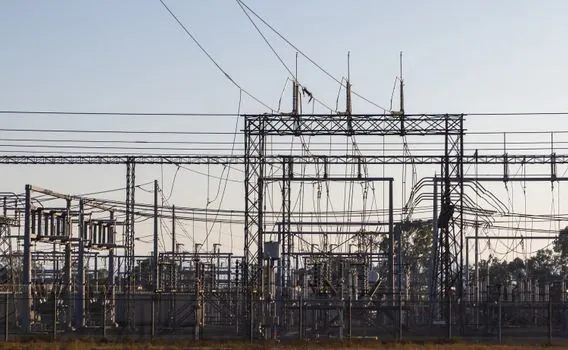
Across the four main coping strategies, the trade-offs line up as follows. A refurbished unit typically ships in 6-12 months at 40-60% of new-build cost, but availability is limited to ratings a rewind shop has previously built, and warranty terms are usually 12-24 months versus 5 years for new. A mobile sub delivers in 8-14 months for the trailer and transformer packages, with higher losses and a temporary footprint that has to be permitted separately. A reserved new-build slot costs the most capital and the longest calendar time (often 36-48 months), but yields a full-spec, full-warranty unit and is the only path for higher MVA or non-standard impedances. Field rebuild with a kitted rewind lands in 4-6 months, but only on ratings where the utility already owns the active part, and it cannibalises a spare. [S5]
The right mix is rarely one option. A typical 230 kV substation programme now pairs a reserved new-build for the long-term duty, a refurbished spare for the in-service contingency, and a mobile sub for the 18-24 month bridge, with the kitting programme covering the bushing and OLTC sub-components that gate the entire chain.
Signals to track over the next two quarters
Three trackable signals will tell utilities whether the market is loosening. First, watch the Wood Mackenzie quarterly average lead-time print: a move below 100 weeks would be the first indication that the 2024-2025 capacity additions are clearing the queue. Second, watch US GOES and copper spot prices, because material cost moves 3-6 months ahead of factory lead-time moves. Third, watch the DOE manufacturing announcements out of the 2024-2025 IRA-funded expansion rounds, since those new lines are scheduled to add meaningful large-power-transformer capacity from late 2027 onward [S1][S4].