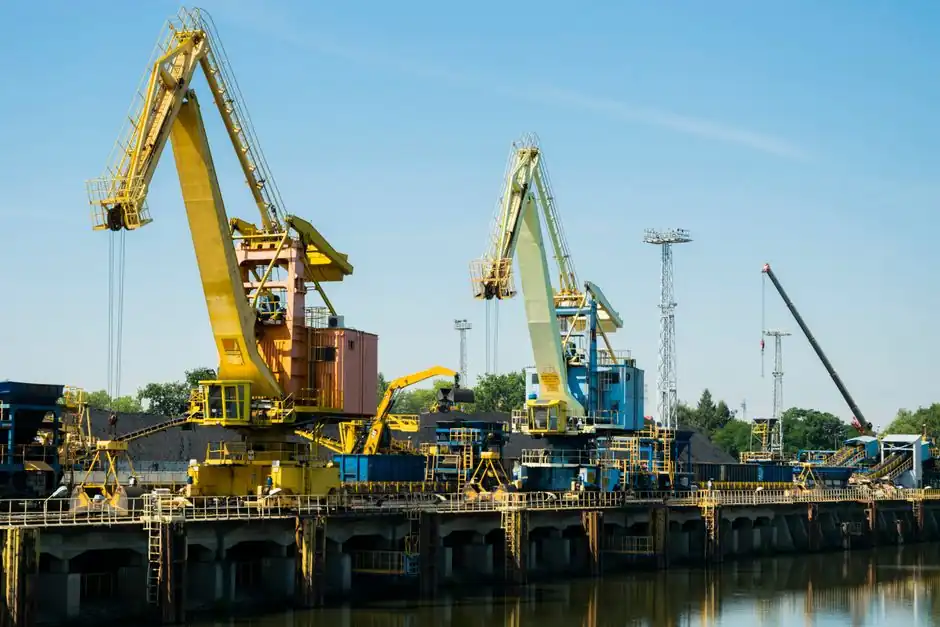
Chinese smelters accepted a benchmark copper concentrate treatment charge of US$0 per tonne for 2026, down from US$21.25/t in 2025, the first zero-dollar mid-year benchmark on record and a direct signal that mined concentrate is the binding constraint in the global copper value chain [S6].
The shortfall started with the Q4 2025 Grasberg mudslide in Indonesia, where a force majeure removed concentrate from an already tight market, and the International Copper Study Group now expects refined copper production to grow only 0.9% in 2026 against an estimated 150,000 tonne supply deficit [S5]. Downstream, the constraint is rippling from smelter payables into wire rod and cathode availability, reshaping sourcing strategies for cable, transformer, and busbar buyers.
Concentrate Supply vs Smelter Capacity: The Structural Mismatch
Global smelting capacity has expanded faster than mined copper output, leaving concentrate buyers competing aggressively for a flat mine supply base; the International Energy Agency's March 2026 commentary describes a market where TC/RCs have been pushed to historic lows because smelters must bid against each other for scarce feedstock [S1].
China produced about 48% of global smelting output in 2024 while mining only around 8% of the world's concentrate, a structural dependency that turns Chinese smelters into price-setters for the rest of the world and concentrates geographic risk in one jurisdiction [S2]. S&P Global's January 2026 study projects global mined copper production to peak at 33 million metric tons in 2030 and fall short of a projected 42 Mt demand by 10 Mt, a 25% gap, by 2040 even after recycled scrap more than doubles to 10 Mt [S4].
TC/RC Benchmarks: From US$21.25/t to Zero, What Miners and Smelters Pay
The annual benchmark TC/RC between Chinese smelters and major miners settled at US$0/t and 0 cents/lb for 2026, versus US$21.25/t and 2.125 cents/lb in 2025, a complete collapse of the smelter's processing margin and a transfer of value back to concentrate producers [S6].
Spot treatment charges on the same route had already gone negative during the 2025 negotiations, a condition the India Ministry of Mines' July 2025 Vision Document flagged as evidence of "concentrate supply tightening and expanding smelter capacity in China" that pushed spot TCs "to negative level" [S7]. Negative TCs mean smelters effectively pay miners to take concentrate, a configuration that is unsustainable for any non-integrated, market-reliant smelter and that explains the Columbia University CGEP warning that leading trading houses now describe existing smelters as unprofitable without "government ownership or significant government support" [S2].
Smelter Closures and Capacity Risk in the US, EU, Japan, Australia
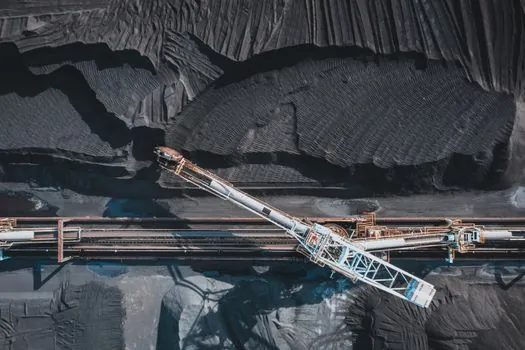
Glencore halted its Philippine smelter, received Australian government assistance to keep Mount Isa operating, and faces questions about the long-term viability of the Horne smelter in Quebec, while Mitsubishi and JX Advanced Materials in Japan are reviewing or scaling back copper operations, concrete evidence that the margin squeeze is forcing rationalization across allied jurisdictions [S2].
The CGEP report notes that restarting or replacing a closed smelter costs billions of dollars and takes years, so each closure permanently shifts the global supply curve toward Chinese smelters that operate at less than half the cost of US and allied facilities and can absorb losses through vertical integration into downstream copper products [S2]. From a procurement standpoint, the practical risk is not the LME cathode price but loss of optionality in physical rod and billet, where a closed smelter means longer lead times and thinner spot availability for non-Chinese buyers.
Wire Rod and Cathode: Downstream Transmission of the Concentrate Squeeze
Refined copper is sold as 99.99% purity cathode or billet and then fabricated into wire rod, tubes, sheets, and alloys, the route that links mine output to magnet wire, transformer winding, and busbar stock in copper material catalogs and to the 8 mm continuous-cast rod drawn down to 0.1-0.5 mm conductor sizes. [S2]
Battery electric vehicles use approximately 60-70 kg of copper per vehicle, and that demand layer is now stacked on top of grid expansion that the IEA's 2026 commentary flags as a multi-decade pull on refined output, so any smelter closure converts almost one-for-one into wire rod rationing rather than cathode price relief [S3]. The Columbia analysis explicitly recommends price floors for non-integrated smelters, targeted modernization grants, and production tax credits as the policy tools that would preserve the US and allied rod supply chain against further Chinese share gain [S2].
Comparison: Integrated vs Non-Integrated vs Chinese Smelters in the 2026 Margin Squeeze
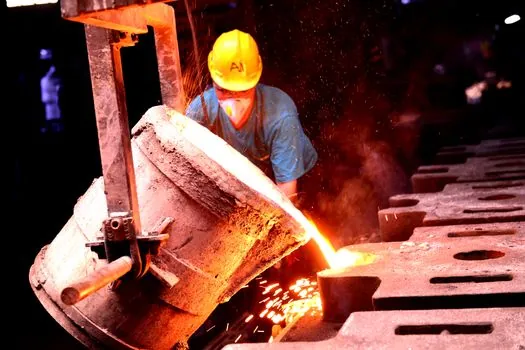
Three business models now face very different survival odds. Vertically integrated Chinese smelters tied to mining investment or to cathode and rod product lines can absorb zero or negative TCs because profits are recovered downstream, a flexibility that the CGEP report quantifies as a structural cost advantage of "less than half" the US/allied cost base [S2].
Non-integrated, market-reliant smelters in the US, EU, Japan, Canada, Australia, and South Korea sell processing for fees and have no internal hedge, so a US$0/t benchmark on the Asia route is a direct operating loss, which is why Glencore's Mount Isa needed government support and Horne is under review [S2]. Indian smelters, flagged in the 2025 Vision Document as exposed to the same spot TC collapse, sit in the middle and depend on policy support to keep processing wire rod capacity online for domestic cable and transformer demand [S7].
How Cable, Transformer, and Busbar Buyers Should Spec for 2026-2028
Procurement teams should treat the concentrate squeeze as a multi-year constraint, not a price spike: the ICSG's 0.9% refined production growth forecast for 2026 against a 150,000 tonne deficit implies physical tightness into 2027 even before considering the 33 Mt 2030 mine peak projected by S&P Global [S4][S5].
Spec hedges that buy optionality without raising cathode exposure include: locking 12-24 month rod supply via direct mill contracts rather than spot cathode draws, qualifying secondary sources in copper material forms such as billet and bar where freight and TC/RC penalties are lower, building in tolerance for ASTM B49 continuous-cast 8 mm rod substitutions, and pricing hedging instruments against the LME and SHFE rather than single-exchange spot indices, a workflow detailed in Copper Price Hedging for Cable Buyers.
Track two signals over the next two quarters: any revision to the 2027 annual benchmark TC/RC above zero (a smelter-margin recovery signal) and any policy announcement of US/EU/Japan smelter subsidies or price floors (an allied-capacity preservation signal); both will move non-Chinese rod and cathode premiums by more than the LME spot price does [S2].
For the relevant spec sheets and selection criteria, see power supply.