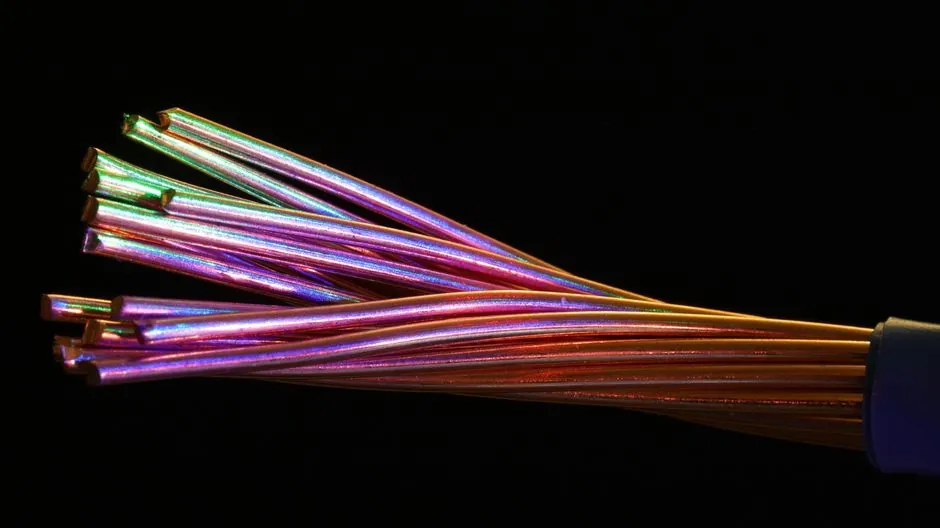
CSPT members cut primary copper smelting capacity by more than 10% during 2026 in response to treatment and refining charges (TC/RCs) that slipped below zero, tightening cathode availability across the world's largest refining hub [S2][S4].
The coordinated cut follows a multi-year run in which global smelting capacity expanded faster than mine supply, depressing TC/RCs to record lows and forcing operators to absorb losses on every tonne of concentrate converted into copper cathode [S1][S4].
Why CSPT Cut Smelter Capacity in 2026
Annual benchmark TC/RCs for 2025 settled near $21.25 per tonne in China, with Japanese and European smelters signing at various levels between the low $20s and high $20s per tonne, while spot TC/RCs in late 2025 collapsed to the range of negative tens of dollars per tonne [S1].
A Shanghai-based veteran trader quoted in the Fastmarkets 2026 preview said the 2026 benchmark could land "anywhere between $(10s)-$5 per tonne," and a European supplier confirmed the industry is moving toward index-linked pricing because fixed numbers no longer reflect reality [S1].
The CSPT decision, announced by the China Smelter Purchasing Team, targets primary smelting capacity and is meant to defend margins across the Chinese fleet, the world's largest concentration of copper smelting and refining equipment [S2][S5].
Cathode Production Numbers in 2026
China's copper cathode production reached 1.1206 million tonnes in September 2026, down 2.3% month-on-month and 0.04% year-on-year, with maintenance cycles and concentrate tightness cited as the primary drivers [S8].
Despite the announced cuts, China's actual refined output grew 7.4% year-on-year between January and April 2026 according to the National Bureau of Statistics, a divergence that reflects ramp-up of secondary smelting feedstock and delayed maintenance [S3].
Antofagasta reported first-half 2026 copper output down 9.5% to 285,000 tonnes and raised cash cost guidance to $2.40–$2.60 per pound, signalling that mine-side discipline is the upstream counterweight to smelter curtailment [S6].
How TC/RCs, Concentrates, and Cathodes Interact
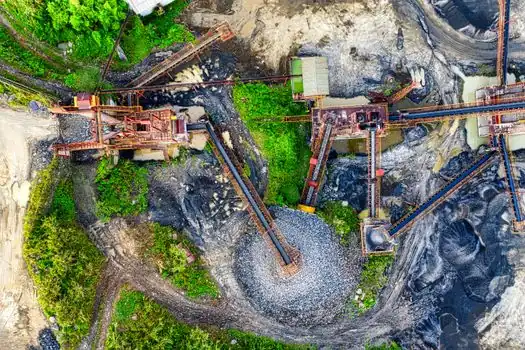
Treatment and refining charges (TC/RCs) are the fees miners pay smelters to convert copper concentrate into refined cathode, so when TC/RCs turn negative, smelters effectively pay miners to take concentrate, a structural inversion that no operator can absorb at scale [S1][S4].
Smelter Closure Risk Outside China
Glencore halted its Philippine copper smelter, took government support to keep the Mount Isa facility operating in Australia, and is reviewing its Horne smelter in Canada, evidence that the same negative TC/RC pressure is breaking non-integrated smelters in allied jurisdictions [S4].
Mitsubishi and JX Advanced Materials in Japan are reviewing operations or scaling back production, while leading trading houses have publicly stated that existing smelters "are not profitable" and need government ownership or significant support to continue [S4].
The Columbia University Center on Global Energy Policy notes that once a smelter closes, restarting or replacing it costs billions of dollars and takes years, a sunk-cost argument that supports interventionist policy in the US, EU, Australia, Japan, Canada, and South Korea [S4].
Cathode Availability: Spot Versus Contract
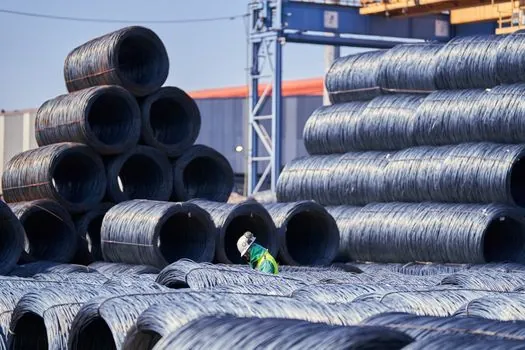
Spot TC/RCs in late 2025 and early 2026 sat at record lows, complicating 2026 annual contract talks so severely that the Antofagasta versus China/Japan benchmark remained unresolved as of mid-December 2025 [S1].
Market participants now expect a fragmented 2026 supply landscape, with index-linked pricing, regional caps and floors, and diverging Chinese versus non-Chinese benchmark numbers replacing the single annual settlement that previously governed concentrate flows [S1].
For downstream buyers, this fragmentation translates into a tighter physical cathode balance, with September 2026 Chinese output already contracting 2.3% month-on-month and the CSPT cut yet to fully reflect in the data [S8][S5].
Comparison: Smelter Response Options for 2026
Three structural responses are visible across the global industry, each with different cost, speed, and policy implications for cathode availability. [S1]
Option 1, CSPT-style coordinated capacity cuts of more than 10% in China, raises TC/RCs by removing concentrate demand but cuts cathode supply, the route chosen for 2026 [S2][S5].
Option 2, government-supported operation of strategic smelters, as seen at Mount Isa with Australian assistance, keeps capacity online at higher unit cost and protects domestic metal processing capability but shifts the bill to taxpayers [S4].
Option 3, smelter closure and reliance on imported cathode, the path Glencore has taken in the Philippines, preserves miner margins but permanently destroys domestic smelting capacity, since restart costs run into billions of dollars and require multi-year rebuilds [S4].
Standards, Sourcing, and Trackable Signals
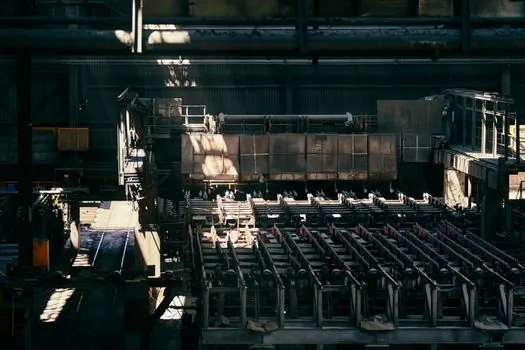
Standard copper cathode grades covered by ASTM B115 and LME Grade A specifications remain the contractual reference for most cathode off-take, and these specifications have not been altered by the 2026 curtailment wave. [S1]
China's State Council also halted around 2 million tonnes of planned new copper smelting capacity in 2026, a policy signal that the overcapacity correction is now state-backed, not just industry-led [S2].
Trackable signals for the next 60-90 days include the eventual settlement of the Antofagasta 2026 benchmark TC/RC figure, October and November 2026 Chinese cathode production prints from the National Bureau of Statistics, and any further government support announcements for non-integrated smelters in Japan, Canada, or Australia. The CSPT's 2027 capacity posture, expected to be set in late Q4 2026, will be the most important read on whether the 2026 cuts become a one-year reset or a multi-year structural reduction, and how that reshape interacts with mine-side responses like the 2026 copper mine disruption rate forensics already visible in first-half output data.