Four major forecasts published between October 2025 and June 2026 now show a 2026 refined copper deficit ranging from 150,000 tonnes (ICSG) to 600,000 tonnes (Morgan Stanley), versus an earlier consensus of a 209,000-tonne surplus, with mine disruptions in Chile, Indonesia, and the DRC removing roughly the equivalent of one large Chilean operation from this year's balance [S1][S2][S3][S5].
The tighter refined number flows directly from a concentrate squeeze: ICSG expects 2026 mine production to grow 2.3% while refined output decelerates to 0.9% from 3.4% the prior year, because smelters are running out of feed [S5]. For process engineers sourcing busbar, copper material for cathodes, or copper-alloy tube for heat exchangers, that is the operational meaning of the headline deficit: cathode availability, not ore price, is what will constrain deliveries through 2026.
Forecast Spread: 150 kt vs 600 kt for 2026
ICSG's May 2026 statistical update revises the 2026 refined balance from a previously expected 209,000-tonne surplus to a 150,000-tonne deficit, anchored on slower-than-expected smelter output [S1][S5]. J.P. Morgan's December 2025 and January 2026 notes sit at 330,000 tonnes, ING's December 2025 update moves to roughly 600,000 tonnes, and Morgan Stanley's May 2026 note goes to 600,000 tonnes, a figure ING and Morgan Stanley both describe as the largest in more than 20 years [S2][S3][S6]. The cluster of 330,000 to 600,000 tonnes across three banks versus ICSG's 150,000 tonnes reflects different assumptions on Chinese demand elasticity, US tariff-driven inventory repatriation, and the speed of Grasberg's restart.
On a methodology basis, ICSG works from reported smelter and refinery utilization plus customs trade, while the banks layer in proprietary mine-by-mine disruption probabilities and tariff scenarios. Practically, a specifier buying pressure transmitter bodies or industrial valve trim specified in C12200 or C11000 copper should plan cathode allocations against the higher end of that range, because the consensus 600,000-tonne view implies a tighter LME cash-3M spread through Q4 2026.
Why Concentrate, Not Mine Tonnage, Is the Binding Constraint
Global copper mine production is still set to grow 2.3% in 2026, led by expansions in Chile, Peru, Zambia, and an Indonesian rebound, but the same ICSG update shows refined production slowing to 0.9% from 3.4% because smelters cannot secure enough concentrate feed [S5]. ING's December 2025 note frames this as a stacked set of disruptions: Grasberg's force majeure, the May 2025 Kamoa-Kakula flooding in the DRC, and the July 2025 El Teniente accident in Chile, on top of structurally falling head grades in Chilean pits [S3].
Freeport-McMoRan has now pushed Grasberg's full restart from 2027 into 2028, and Grasberg alone supplies around 4% of global mine output, with its main area responsible for 70% of that volume, which means a multi-quarter loss rather than a one-off shock [S2][S3]. J.P. Morgan estimates that sulfuric acid shortages, partly from China's May 2026 halt on acid exports, are now affecting about 15% of global copper production, and that is the second-order binding constraint on smelter utilization [S2]. A cumulative copper concentrate deficit of roughly three million tonnes is now projected by 2036, which is the structural reason spot treatment and refining charges have moved toward zero or negative in 2026 contracts [S2][S5].
Where Supply Is Actually Lost in 2026
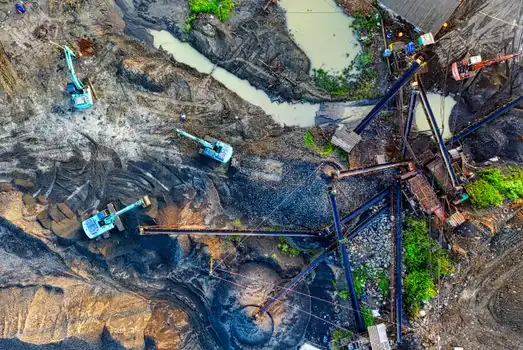
Chile's national copper output fell 9.04% year-on-year in March 2026 to 434,314 tonnes, per Cochilco, with Codelco down 10%, BHP's Escondida down 15.75%, and the Glencore-Anglo American Collahuasi JV down 10.80% in the same month [S2]. That single month removes more annualized volume than the entire ICSG 2026 deficit estimate, which is why the Chilean grade decline plus operational setbacks are doing more work in the balance than headline mine growth [S3][S4].
Indonesia contributes the second leg via Grasberg's extended outage, and the DRC contributes the third leg via Kamoa-Kakula's acid-constrained ramp [S2][S3]. Codelco's full-year 2025 production was effectively flat at 1.332 million tonnes, only 0.3% higher, after deep-level mining accidents, and that stagnation now extends into 2026 because new Chuquicamata-Radomiro Tomic underground tonnes have not yet backfilled surface decline [S4]. For buyers of high-conductivity copper material cathodes destined for flow-meter coils and PLC busbars, the practical read is that South American cathode supply will remain rationed through 2026, regardless of the headline LME price.
Demand Side: Data Centers, EVs, and Grid Pulling Harder
Copper demand for AI data centers is forecast to climb from 1.1 million metric tons in 2025 to 2.5 million metric tons by 2040, with a single hyperscale AI facility requiring up to 50,000 tonnes of copper [S4]. J.P. Morgan expects data centers alone to consume roughly 500,000 tonnes annually by 2030, anchored on projects like the $500 billion OpenAI Stargate buildout [S4][S6]. A battery-electric car uses about 83 kg of copper versus roughly 23 kg for an internal-combustion vehicle, a 3.6x intensity multiple, and EV-related copper demand is forecast to reach 4.3 million tonnes annually by 2035 [S4][S5].
Grid expansion is the largest absolute line item: roughly 152 million km of additional electricity grid is projected to be needed by 2050 to meet net-zero targets, requiring around 427 million tonnes of copper cumulatively [S4]. The International Energy Forum estimates that 100% renewable energy by 2050 would require a 460% increase in copper production, equivalent to bringing 194 new major mines online beyond baseline [S5]. Chinese property completions remain a drag, but grid investment, electrification, renewables, and EV/battery materials have been the offsets keeping total demand growth positive through 2026 [S3].
Price, Tariffs, and the Inventory Distortion

COMEX three-month copper hit a record $6.65 per pound on May 13, 2026, equivalent to $13,650 per tonne on the LME, and was consolidating around $13,100 to $13,400 per tonne by May 25, 2026, with the contract up roughly 33.9% year-to-date versus the same period in 2025 [S2]. LME cash copper first breached $13,000 per tonne on January 5, 2026, a 50% year-on-year increase, and LME is now predicting a 2026 average around $12,100 per tonne [S4][S5].
The US tariff backdrop is creating a real arbitrage: COMEX inventories have risen more than 300% year-to-date to over 400,000 tonnes, an all-time high, as traders front-run a potential Section 232 copper tariff that Goldman Sachs expects at 25% or more before mid-June 2026 [S2][S3]. J.P. Morgan's Q2 2026 target is $12,500 per tonne, Citigroup sees $15,000 per tonne if the Strait of Hormuz reopens, and Goldman Sachs models $10,000 to $11,000 per tonne through H1 2026 with a long-term $15,000 per tonne target by 2035 [S2][S5]. If refined copper is exempted again, the 400,000-plus tonnes of US stockpiles could quickly re-enter the global market, flipping the 2026 refined balance back into a temporary surplus [S3].
Decision Matrix: How a 2026 Buyer Should Position
On four decision criteria for 2026 copper procurement, the comparison reads: cathode availability (tight across all forecasts, worst in the 600,000-tonne scenarios); treatment and refining charges (zero to negative on 2026 spot contracts, indicating smelter rationing rather than oversupply); LME price level ($12,100 per tonne LME mean, $13,000 to $13,650 per tonne spot); and inventory buffer (COMEX over 400,000 tonnes, ex-US inventories lean) [S2][S3][S5]. For a buyer of C11000 rod for pressure sensor diaphragms or C12200 tube for heat-exchanger coils, the recommendation is to fix Q3 to Q4 2026 cathode tonnage on annual contracts now, hold a 60 to 90 day minimum buffer, and hedge the LME component rather than physical spot.
Refined copper was ultimately exempted from the first round of Section 232 tariffs, but a 15% tariff remains under review for June 2026, which is why the COMEX/LME spread will stay volatile through the decision window [S3]. The cobalt-based alloys and 2026 spec outlook piece is a useful parallel: critical-mineral supply tightness is no longer a single-metal story, and copper sits alongside cobalt on the expanded US critical minerals list of 60 entries [S3]. Track the ICSG monthly statistical bulletin, Cochilco's Chilean output releases, and the Section 232 decision expected before mid-June 2026 as the three nodes that will resolve the 150,000 vs 600,000-tonne spread in real time.