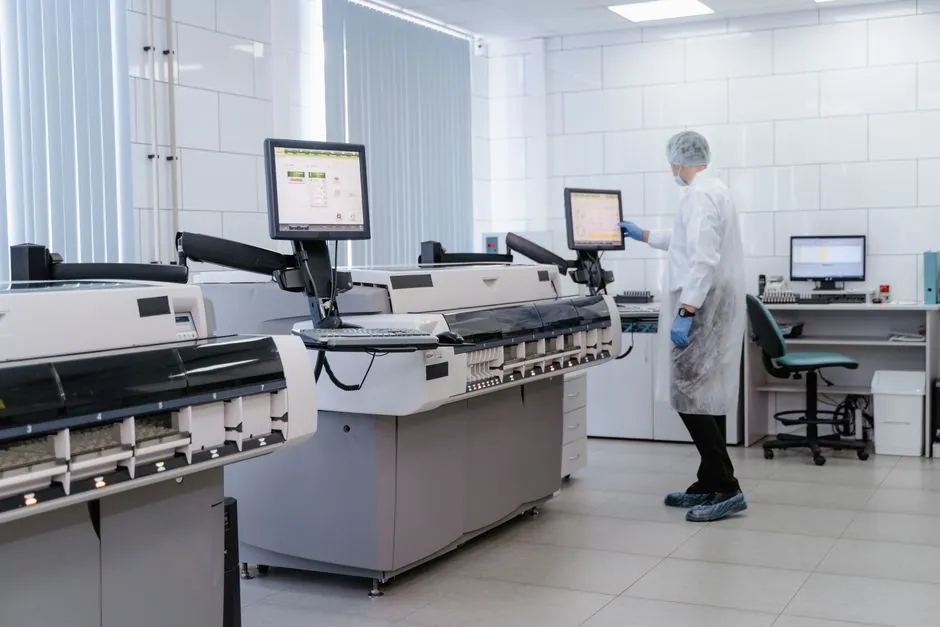
The pharmaceutical contract manufacturing market reaches $104.4B in 2026 with a 4.5% CAGR toward $155.4B by 2035, per Roots Analysis' 5th edition forecast (September 2026 update) [S2]. Broader scope definitions from Persistence Market Research value the segment at $245B in 2026, growing at 7.4% CAGR to $405B by 2033, reflecting inclusion of biologics, cell and gene therapy, and packaging services [S3]. Grand View Research places the combined contract manufacturing and research services market at $309.2B in 2026, up from $287.6B in 2025 [S6].
Commercial-scale manufacturing is set to dominate 2026 CMO revenue at approximately 63% of the market, driven by large production volumes and ongoing launches of GLP-1, ADC, and mAb therapies [S3]. More than 70% of molecules under development originate from small and mid-size biopharma companies, a structural shift that pushes outsourcing demand toward integrated CDMOs rather than spot CMO contracts [S3].
Biologics CDMO demand grows at 10.6% CAGR through 2029
Biologics drug product outsourcing is the most attractive subsegment, with William Blair analysts forecasting a 10.6% sales CAGR from 2025 through 2029 as outsourcing penetration deepens for mAbs, ADCs, and sterile fill-finish [S4]. Brian Scanlan of Edgewater Capital Partners identifies ADCs, monoclonal antibodies, PROTACs, and sterile filling as the four 2026 demand drivers, with smaller specialist CDMOs holding a niche edge in RNAi, multi-specific antibodies, and PROTAC handling [S4].
Fujifilm opened its $3.2B Holly Springs, North Carolina biomanufacturing site in September 2025, one of the largest commercial-scale cell culture facilities in North America, completing an $8B global investment program with roughly $4B expected operational by end-2025 [S4]. The KojoX network expands with a United Kingdom facility opening spring 2026, Toyama (Japan) in 2027, and a Texas clone to follow, while the SymphonX automated downstream purification system launches at Billingham, U.K. in 2026 [S4].
Sterile fill-finish, ADCs, and continuous manufacturing drive capacity type
Sterile capacity constraints, increased regulatory scrutiny, and biologics demand head the seven forces the Outsourced Pharma 2026 CDMO Forecast lists for sponsor preparation [S7]. CDMOs differentiate through technology, equipment, and analytical expertise in high-containment API and aseptic processing, where capital lead times of 36 to 48 months keep supply tight even as announced projects come online [S4].
Continuous manufacturing systems, single-use bioprocessing technologies, and personalized medicine production platforms are expanding CMO service scope beyond traditional batch formats [S3]. Toyama Second Factory in Japan, completed in late 2025 and operated by Fujifilm Toyama Chemical, will host two 5,000L and two 2,000L single-use mammalian cell culture bioreactors supporting antibody drugs and ADCs from 2027, marking Fujifilm's first antibody drug manufacturing plant in Japan [S4].
Talent shortages, M&A pressure, and partnership trust in 2026
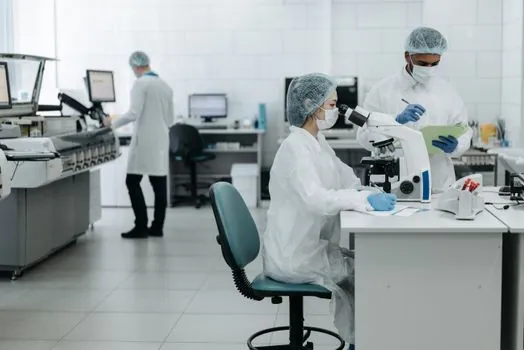
Talent, trust, and technology form the 2026 trend outlook, with partnership models and people strategy separating CDMOs that scale from those that stall [S1]. The Cell and Gene Therapy (CGT) subsegment has seen a step back in specialization, rerouting projects and developers to alternative providers, delaying timelines, and slowing innovation through Q4 2025 into early 2027 [S5].
M&A activity accelerated in 2026, with mergers and acquisitions driven by sponsors seeking integrated capabilities rather than spot capacity [S8]. The global CDMO market was valued at roughly $197B in 2025, projected to grow to around $211B in 2026 [S8]. Partnerships that lock in multi-year, multi-program take-or-pay terms are replacing transactional contracts, especially in late-phase biologics and ADC linker-payload work [S1].
Selection criteria: small molecule, biologics, and advanced therapy CDMOs
Sponsor selection criteria diverge sharply by modality. Small-molecule FDF outsourcing remains central to pharmaceutical manufacturing strategies, with drug substance manufacturing taking months versus drug product manufacturing typically completed in one day, per Allison Vavala (Former Director of Business Development, Helsinn Group) [S2].
For biologics, ADC, and cell therapy programs, the criteria list shortens to: high-containment API capacity, single-use bioreactor scale (1,000L to 5,000L per train), regulatory inspection history (FDA, EMA, PMDA), and a track record on technology transfer of complex modalities [S4]. Small specialist CDMOs may hold an edge in PROTAC and RNAi handling where large CDMOs underinvest in low-volume, high-complexity chemistries [S4].
Instrumentation is the often-overlooked layer: bioreactor pressure transmitter and flow-meter arrays on single-use skids, paired with PLC recipe control, now define whether a CDMO can run 24/7 GMP campaigns without operator babysitting. A reference for the kind of comparison-driven selection logic sponsors apply across modalities is the 2026 decision matrix for asset, process, and line twins, which applies the same criteria-based ranking pattern to a different industrial buying decision.
Limitations: funding, safety events, and CGT capacity contraction
Uncertain federal funding, recent safety concerns with some gene therapies, and a tight economic environment from market instability are causing drug developers to delay or cancel programs, which in turn cuts CDMO order intake and lengthens development timelines [S5]. CGT-specific capacity has contracted, with developers forced to retool and consolidate pipelines toward realistic Q4 2025 to early 2027 launch windows [S5].
The 2025 squeeze feeds directly into 2026: CGT and some early-stage biologics CDMOs face the worst of the volume drop, while commercial-scale large-molecule and sterile fill-finish operators run near full utilization on multi-year contracts [S3][S5]. The market is bifurcating into capacity-rich, technology-deep incumbents (Fujifilm, Lonza, Samsung Biologics, WuXi Biologics) and a long tail of specialists fighting for niche programs [S4].
Regulatory drivers and quality standardization
Regulatory frameworks across major markets are tightening quality standards, serialization requirements, and supply chain security expectations, raising compliance costs and pushing sponsors toward CDMOs with multi-agency inspection coverage [S3]. The practical impact on CDMO facility design is a heavier capex load: redundant cleanroom HVAC with pressure sensor-monitored differential, validated industrial valve arrays for aseptic separators, and full data integrity for 21 CFR Part 11 / EU Annex 11 batch records [S3].
Digitalization and AI are now embedded in service offerings, with CDMOs adding process analytical technology (PAT), multivariate statistical process control, and digital twins to justify premium pricing on complex modalities [S2]. A 2026 case study on automated gauge R&R on connected gauges shows how the same digital-instrument backbone is being applied across regulated manufacturing, including CDMO QA labs.
Trackable signals for the next 6 to 12 months: Holly Springs ramp-up volumes from Fujifilm, the spring 2026 U.K. KojoX opening, and 2026 M&A close rates as integrated CDMO consolidation continues [S4][S8]. FDA inspection outcomes for new ADC suites and the resolution of CGT pipeline retooling through early 2027 are the two events that will most likely reset 2027 sponsor procurement strategies [S5].