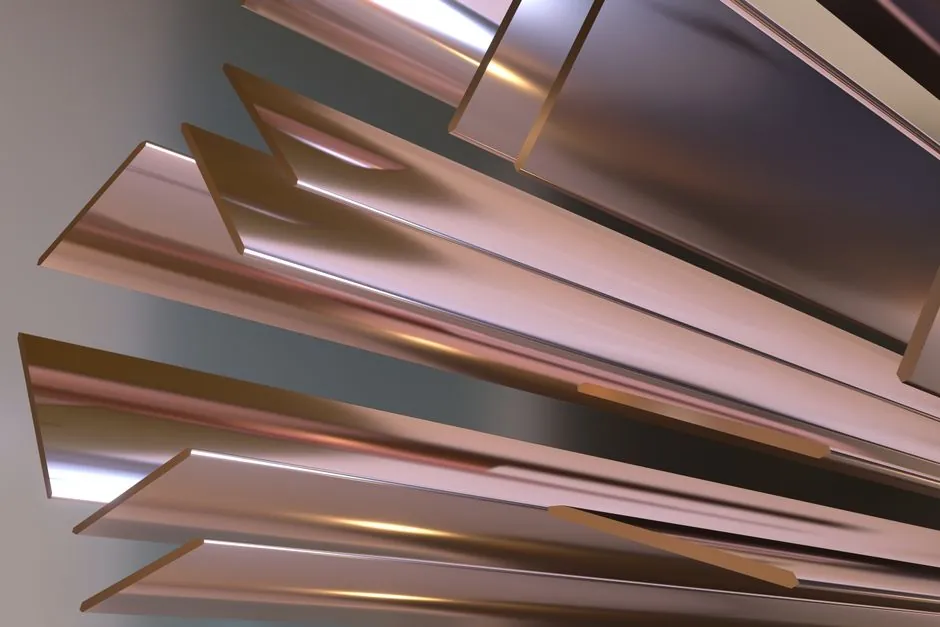
AI rack power density has redrawn the copper busbar specification window: a traditional data center rack draws 5 to 15 kW, while a single AI-optimized rack now demands 60, 80, or 100+ kW, and the electrical infrastructure upstream of the IT load has had to follow [S1].
In practical procurement terms, that step-change has converted the busbar from a commodity item into an engineered component, with geometry, plating, tolerance class, and grounding strategy all written into the build specification rather than left to the electrical contractor [S1][S2].
Why Rigid Copper Busbars Replace Cable Bundles Above 20 kW Per Rack
Busbar systems achieve up to 99% energy efficiency in data center distribution runs, with resistance losses measurably lower than equivalent cable bundles carrying the same current [S5]. The thermal case is direct: copper's conductivity is among the highest of any practical engineering metal, so a copper bar carries more current through a smaller cross-section than aluminum alternatives, and it holds lower contact resistance at bolted joints over years of high-current service [S1].
Cable-based distribution still works below the 20 kW per rack line, but MCB busbar trunking replaces multiple parallel cable runs with a single compact section: a 1600 A run that would otherwise need bulky cable trays fits into a slim trunking profile, freeing floor area, shrinking riser shafts, and reducing ceiling void height [S5]. At AI densities, the choice is no longer preference but engineering necessity, since resistance heating and joint losses compound faster than the cooling budget can absorb [S1][S5].
Material and Plating Selection: C11000 Copper, Bare, Tin, or Silver
Hussey Copper supplies silver-plated, tin-plated, and bare copper busbar for data center PDUs, UPS systems, switchgear, and high-density power distribution assemblies, with the plating choice driven by oxidation control at the bolted interface rather than by bulk conductivity [S4]. Bare copper is the default for indoor grounded busbars where atmosphere is controlled; tin plate is widely used where galvanic isolation from aluminum or steel frames is needed; silver plate is specified at the highest-current joints where contact resistance must stay stable across years of thermal cycling [S4].
Finished-edge copper busbar up to 12 inches wide is now a standard stocked width for hyperscale PDU builds, with precision-finished edges that eliminate the need for field deburring and allow direct insertion into UL 1953-style insulation housings [S3]. Tin-plated (or bare) copper wire and strip is also used downstream for 5G small cell, antenna, and edge telecom power runs, where the same plating and conductivity logic applies [S3][S4].
Factory Roll-Formed Grounding vs Field Fabrication Under NEC 250 and TIA-607-F
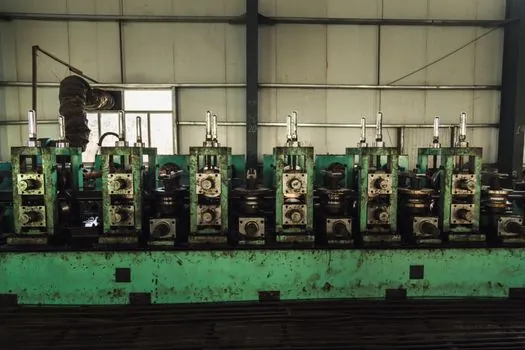
Field-fabricated grounding busbars introduce variability at the exact point where the NEC 250 and TIA-607-F codes require torque-verified bonds and recorded resistance readings, and a single failed ground impedance test can delay commissioning by weeks [S2]. Roll-formed grounding channels and bolt-in busbar systems ship from the factory with hole patterns, bend angles, and serrated hardware already specified, so the field step is mounting and torquing, not cutting and drilling [S2].
Two failure modes drive the shift away from field fab. First, factory-painted server frames interrupt the low-impedance grounding path unless paint is removed at every contact point or serrated hardware is used, and both options slow installation and risk coating damage [S2]. Second, mounting bare copper grounding bars directly to steel or aluminum frames invites galvanic corrosion in humid or thermally dynamic rooms, which then hides as rising resistance until a fault exposes the weakest link [S2]. For 600 mm-wide rack rows where every millimeter of cable tray competes with power and fiber routing, factory-form grounding channels are a cleaner mechanical fit than field-cut flat stock [S2].
Spec Comparison: Copper vs Aluminum, Bar vs Cable, Field vs Factory Ground
The decision matrix below is built from the four data center busbar product lines described in the research and the cable baseline still common in legacy halls. [S2]
On conductivity per unit cross-section, copper beats aluminum by a wide margin and is preferred where space and thermal headroom are constrained, while aluminum remains in use on long, low-current overhead runs where weight and material cost dominate [S1][S5]. On installation footprint at 1600 A, a single busbar trunking section replaces multiple cable trays, and the busbar side wins on riser and ceiling-void space, while legacy cable still wins on flexibility for one-off retrofits [S5]. On grounding code compliance, factory roll-formed channels with documented torque values align with NEC 250 and TIA-607-F documentation requirements, while field-fabricated bars shift the compliance burden to the installer and create the largest commissioning risk [S2]. On plating, bare, tin, and silver options are all stocked by Hussey Copper for data center service, with the choice set by the joint environment rather than by base conductivity [S4].
Lead-Time and Sourcing Signals Buyers Are Tracking in 2026
Hyperscaler and colocation build cycles in 2026 are running on tight delivery windows, and the suppliers responding are those with vertical integration from melt through finished edge: Pantheon Electric explicitly cites in-house conductor, busbar fabrication, and grounding system capability under one roof as the response to that pressure [S3]. Hussey Copper positions more than 175 years of copper manufacturing and advanced rolling capacity as the lead-time hedge for buyers who cannot wait on three separate suppliers [S4].
Two practical signals to track over the next quarter are finished-edge width availability beyond 12 inches for next-generation PDU bus stacks, and the stocking depth of silver-plated bar at the standard thicknesses (3 mm, 6 mm, 10 mm) used in 800-1600 A data center switchgear. Connector and power-line lead times tightened through 2026 in adjacent electromechanical categories, and busbar copper supply tends to follow the same conductor-market cycle, so a buyer who locks in 2026 Q4 fabrication slots now is typically ahead of the spring 2027 build wave [S3][S4].
Selection Criteria Buyers Should Put in Writing
Four specifications belong in the purchase document, not in the supplier's handshake. First, the copper grade and temper, since C11000 (ETP copper) is the data center default and any substitution toward copper-clad aluminum should be flagged in writing [S1][S4]. Second, the dimensional tolerance class on hole pattern, bar width, and bend angle, with factory roll-formed grounding systems typically held tighter than field-cut flat stock [S2]. Third, the plating specification at each joint, written as bare, tin, or silver with the plating thickness in microinches or microns, since contact resistance stability over a 10-15 year service life depends on it [S4]. Fourth, the documentation package, including torque values, recorded resistance readings, and traceability to the melt lot, which is the package NEC 250 and TIA-607-F inspectors actually ask for at commissioning [S2].
Buyers who want a deeper cross-reference on copper conductor grades and tempers used in busbar stock can work from the copper material reference page, which covers the C11000 / C10100 / C10200 family that dominates data center specification. For the upstream power chain that the busbar feeds, the industrial UPS and switching power supply reference pages map the downstream equipment the busbar ultimately connects to.
The clearest next node to watch is whether the major US mills extend standard finished-edge widths past 12 inches during 2027, since that single change would unlock a new tier of PDU busbar stacking density. A second trackable signal is the publication of an updated TIA-607 revision, which would re-set the bonding and grounding documentation requirements that today's roll-formed grounding systems are already designed to meet.
For related coverage, see SPC Flooring Warranty by Wear Layer: 2026 Spec Map.