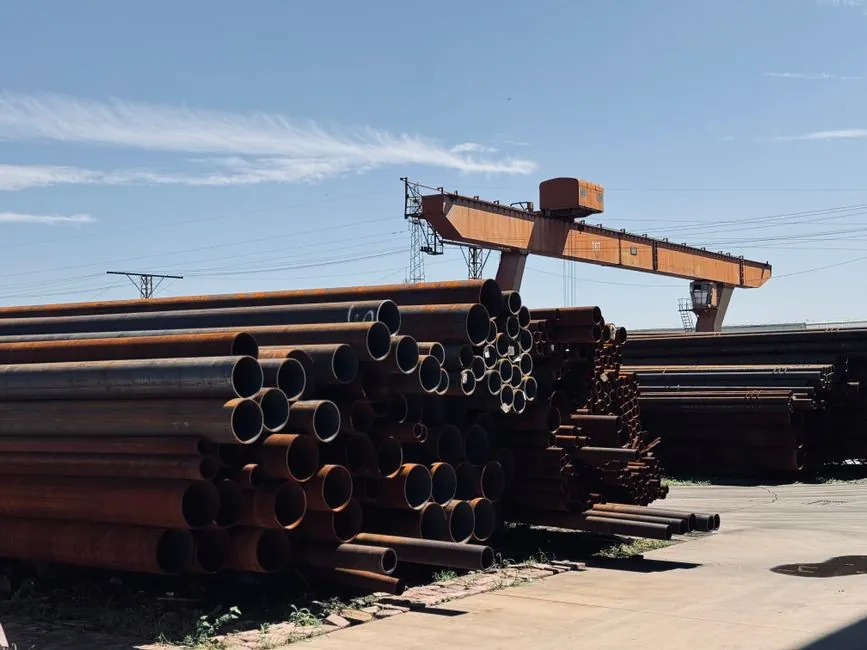
Copper tube prices through Q4 2026 are tracking an LME cathode benchmark above $12,000/ton, a record set in late December 2025 and reinforced by ongoing supply disruption in Chile and Peru [S1]. The global copper tube market is projected to reach USD 39.02 billion in 2026, expanding to USD 55.04 billion by 2036 at a 3.50% CAGR [S2]. HVAC refrigerant line sets, plumbing, and medical gas distribution are the three largest end-use categories driving volume, with seamless copper tube holding 47.3% of 2026 product mix and bright annealed formats taking 38.6% of finish type [S2].
Price formation runs through three layers: LME cathode, North American mill conversion + tariff, and downstream fabricated-product surcharges. April 2026 mill announcements imposed roughly 4.5% increases on copper tube list prices effective immediately [S8]. Asia Pacific, the largest regional bloc at USD 6.35 billion in 2026, grows fastest at 7.88% CAGR through 2034, with HVAC holding over 39% of 2025 regional revenue [S4].
Raw Material Cost Driver: LME Cathode and Supply Concentration
Copper cathode on global exchanges cleared $12,000/ton in late December 2025, the highest level on record, after a 20% July 2025 plunge triggered by a U.S. tariff exemption on refined metal [S1]. Fabricated copper (line sets, tubing, wire) was excluded from that exemption, leaving HVAC-exposed products tariffed even as cathode collapsed [S1]. By Q4 2025, mine disruptions in Chile and Peru, plus multi-year-low inventories, rebuilt the price, with renewed U.S. infrastructure spend and a global data-center build adding demand-side pressure [S1].
Mine-to-smelter supply tightness is the structural floor under 2026 pricing. For a deeper read on the upstream constraint, see Copper Mine Output vs Smelter Capacity: 2026 Supply Gap. Substitutes have not closed the gap: aluminum faces its own tariff-induced hikes and carries lower conductivity, which keeps copper specified in HVAC coils and high-efficiency refrigerant circuits [S1]. copper material pricing thus propagates directly into refrigerant line-set, evaporator coil, and condensing unit bills.
Fabricated-Product Cost: Mill Surcharges and Tariff Exposure
Mill list-price increases reached approximately 4.5% in April 2026 across copper tube product lines, applied immediately to distributor pricing [S8]. Earlier Q4 2025 manufacturer actions ranged from 4% to 18% on copper-linked HVAC components (Refco), up to 6% on coils and air handlers (ADP, September 15, 2025), and up to 25% in select valve categories (Legend Valve, September 29, 2025) [S1]. The dispersion reflects which product lines carry fabricated-copper tariff exposure and which are domestic-only [S1].
For HVAC contractors and wholesalers, the practical implication is that a single project bid now blends two risk vectors: a cathode-indexed surcharge that resets monthly, and a tariff premium that does not unwind even when LME drops. Buyers locking 30-day price holds should expect 5-10% downside protection only, because mill announcements during 2025-2026 show mid-single-digit to double-digit moves inside a single quarter [S1][S8].
Demand Driver: HVAC Refrigerant Lines, Heat Pumps, and Low-GWP Compliance
Refrigerant-line copper is the volume backbone of HVAC copper demand, and the transition to low-GWP refrigerants is forcing specification upgrades to internally cleaned, dehydrated tube formats [S2]. Legacy ACR grades are being displaced in jurisdictions with binding refrigerant transition deadlines, with facility managers specifying standard tube grades for new HVAC installations now facing compliance gaps [S2].
Heat pump adoption is reinforcing the same demand vector. Federal incentives under the U.S. Inflation Reduction Act and parallel programs in the EU and UK are pulling forward high-efficiency heat-pump installations, each of which carries a longer, smaller-diameter copper refrigerant circuit than a legacy split system [S3]. The U.S. copper tube market is forecast at USD 7.28 billion in 2025, reaching USD 13.83 billion by 2035 at 6.57% CAGR, outpacing global averages on heat-pump pull-through [S3]. The downstream link to marine HVAC systems is smaller in volume but identical in specification pressure, since marine and offshore refrigerant conversions follow the same low-GWP rule sets.
Regional Comparison: Asia Pacific, North America, Europe
Asia Pacific leads volume; North America leads price-per-kilogram. China alone accounts for nearly 50% of regional copper fabrication capacity per the China Nonferrous Metals Industry Association, anchoring downstream cost across the bloc [S4]. Regional CAGR ranking through 2034 puts Asia Pacific at 7.88%, the highest of any major bloc, with HVAC holding over 39% of 2025 application revenue [S4].
North America's value story is tariff and specification driven rather than volume driven. The U.S. market is forecast at 6.57% CAGR through 2035 versus a global 6.33% baseline, a premium that reflects higher specification copper for heat-pump and low-GWP circuits rather than commodity plumbing tube [S3]. Europe sits in the middle: country-level CAGRs run 4.0% (Germany), 3.7% (France), 3.3% (UK), with medical gas and refrigeration-grade tube procurement carrying the value mix [S2].
A direct comparison of the three blocs across four decision criteria clarifies the procurement picture:
- Volume growth: Asia Pacific 7.88% CAGR > North America 6.57% CAGR > Europe ~3.5% weighted [S2][S3][S4]<br/>- Specification intensity: North America high (low-GWP, IRA heat-pump) > Europe high (medical gas, F-Gas) > Asia Pacific moderate (HVAC, plumbing) [S2][S3]<br/>- Tariff exposure: North America high (fabricated copper) > Europe low > Asia Pacific low [S1]<br/>- Lead time volatility: Asia Pacific moderate (China capacity buffer) > Europe moderate > North America high (inventory multi-year lows) [S1][S4]
Secondary Demand: Medical Gas, Plumbing, and Industrial Heat Exchange

Medical gas distribution piping in hospitals is a non-substitutable copper end-use, driven by hospital construction in both mature and developing markets and tied to oxygen, vacuum, and surgical gas code requirements [S2][S3]. The same antimicrobial and code-compliance logic underpins plumbing specification in mass-housing programs such as India's Pradhan Mantri Awas Yojana, where copper is increasingly specified for internal water lines per ASTM B88 and ISO 6708 [S4].
Industrial heat exchange and electrical bus bar conductors round out the volume base, though both are price-takers when HVAC and construction cycles tighten. IndexBox's baseline scenario puts global copper tube volume CAGR at 2.8% for 2026-2035, slower than value CAGRs of 3.5-6.57%, which is the standard signature of a market where specification upgrades (not unit growth) are driving dollar value [S5].
Total Cost of Ownership: Installation, Maintenance, Energy
Purchase price is the smallest line on a 20-year copper tube ownership ledger. Installation labor for brazed refrigerant line sets runs $40-80 per joint in U.S. commercial HVAC work, meaning a 30% material cost spike on a 500-foot line set translates into a smaller percentage hit on installed cost than on material-only quotes. Maintenance is dominated by refrigerant leak repair, where copper's brazed-joint reliability outperforms mechanical fittings over a 15-20 year service life. [S2]
Energy is where copper's thermal conductivity premium earns its keep: copper's thermal conductivity is roughly 30 times that of stainless steel and approximately 700 times that of common plastic piping, which translates directly into smaller required tube surface area in heat exchangers and lower compressor lift in refrigerant circuits [S3]. Over a 20-year HVAC asset life, the energy delta between a copper-brazed evaporator and an aluminum-fin alternative is typically larger than the upfront material premium, which is why copper substitution has stalled despite repeated aluminum price advantages.
Outlook Signals: Inventory, Tariff Status, and Refrigerant Deadlines

Three trackable signals will determine whether Q1 2027 pricing retraces from the late-2025 record or extends the rally. First, LME cathode inventory levels in LME-registered warehouses: any sustained rebuild above 100,000 tons typically pressures cathode back toward $10,000/ton and gives mills room to delay further surcharges. Second, fabricated-copper tariff status: the July 2025 exemption covered only refined metal, so a fabricated-product carve-out would be the single largest downside catalyst for U.S. HVAC tube pricing. Third, low-GWP refrigerant transition enforcement dates in major jurisdictions, which drive the demand mix toward higher-spec internally cleaned tube and away from legacy ACR grades [S2].
For buyers, the working assumption through end-2026 should be LME in a $11,000-13,000/ton range, mill surcharges resetting quarterly, and U.S. HVAC unit price increases of mid-single digits as the floor rather than the ceiling.
Spec-level background on the components involved: pressure transmitter.