
Copper and tool & die steel are almost never in direct material competition; they solve different problems in a factory. Copper is specified wherever electrical/thermal conductivity, corrosion resistance, or hot-work heat extraction matter — busbars, welding studs, forged fittings, tube. Tool & die steel is specified wherever a hardened Fe-based alloy must hold a geometry under cyclic impact, abrasion, and heat — stamping dies, die-cast tooling, cutting tools, forging dies [S1][S4][S5].
The cross-over point in shops that work both is fastening and assembly: copper-coated steel studs weld to plate, the steel core carries the structural load, and the copper skin handles arc stability and weld metallurgy [S2]. Outside that hybrid use, the materials live in different design slots, which is why side-by-side specification is rare but worth laying out cleanly.
Material Definition and Alloy Chemistry
Copper material covers pure copper (C110 / C11000, electrolytic tough pitch, ≥99.9% Cu, conductivity ~100% IACS ~ 58.0 MS/m) and the broad wrought copper alloy families — brasses (Cu-Zn), bronzes (Cu-Sn, Cu-Al, Cu-Si), copper-nickels (Cu-Ni 90/10, 70/30), and beryllium copper (C17200). Cold- and hot-forged copper fittings are produced in large series as open-die forgings, with copper, aluminum, and stainless all processable on the same press [S1].
Tool & die steel is a functional class of high-alloy steels engineered for hardness, wear resistance, and hot-strength rather than conductivity. Common grades: AISI D2 (1.2379, high-C high-Cr cold-work, ~12% Cr, ~1.55% C, working hardness HRC 58-62), AISI H13 (1.2344, hot-work die steel, ~5% Cr-Mo-V, HRC 48-54), AISI O1 (1.2510, oil-hardening cold-work, HRC 57-62), AISI A2 (1.2363, air-hardening, HRC 57-62), and AISI S7 (1.2355, shock-resistant, HRC 54-58) [S4][S5]. Custom tool, die, and machine shops — Jonesboro Tool & Die, Pennco Tool & Die, Atlantic Tool & Die — all run EDM, milling, and grinding cells on this grade family [S4][S5][S6].
Beyond hardness, the chemistry divergence is sharp. Copper alloys trade on Cu content + minor alloying for conductivity and corrosion; tool steels trade on Fe + Cr/Mo/V/W carbide formers for hot strength and wear. A typical die block of D2 is roughly 12% Cr by mass; a typical C110 busbar is ≥99.9% Cu with trace oxygen — they are metallurgically opposite.
Mechanical and Physical Properties Compared
Side-by-side, the two materials answer different design questions. The table below lines the main options up against 2-4 decision criteria: density, electrical/thermal conductivity, as-delivered hardness, and elastic modulus. [S1]
Properties for representative grades:
- C110 copper (annealed): density 8.96 g/cm³, electrical conductivity ~100% IACS (~58.0 MS/m), thermal conductivity ~391 W/m·K, tensile strength ~220 MPa, Vickers hardness ~40 HV.
- C17200 beryllium copper (aged): density 8.25 g/cm³, electrical conductivity ~22% IACS (~12 MS/m), thermal conductivity ~105 W/m·K, tensile strength 1100-1400 MPa, hardness 350-420 HV.
- AISI D2 (1.2379, hardened): density 7.70 g/cm³, electrical conductivity ~2.4% IACS (~1.4 MS/m), thermal conductivity ~20 W/m·K, tensile strength ~1850 MPa, hardness HRC 58-62.
- AISI H13 (1.2344, hardened): density 7.76 g/cm³, electrical conductivity ~2.5% IACS (~1.45 MS/m), thermal conductivity ~28 W/m·K, tensile strength ~1500 MPa, hardness HRC 48-54.
Conductivity gap: copper runs ~40× more conductive electrically than tool steel and ~10-20× more conductive thermally. Hardness gap: annealed copper sits at ~40 HV (≈ tens of HRB), while D2/O1 in service run HRC 58-62 (≈ 600-800 HV). Elastic modulus: copper ~110 GPa, tool steel ~190-210 GPa.
For context, copper-coated steel studs (e.g. for stud welding to plate) keep the steel core mechanical and the copper skin as a metallurgical aid at the weld interface — a hybrid explicitly engineered around this contrast [S2].
Selection Criteria: When You Pick One Over the Other

Pick copper when at least one of these is on the critical-path spec: electrical conductivity (busbar, switchgear, ground strap, transformer winding), thermal conductivity (heat sink, induction coil, cooling jacket, welding tip), corrosion resistance in water/chemical service (C70600 Cu-Ni 90/10 for seawater, C95400 aluminum bronze for chemical plants), or conformability / forgeability into complex shapes in a single hot or cold blow [S1].
Pick tool & die steel when the spec asks for high hardness plus wear resistance (stamping dies, blanking, drawing dies, powder-compaction dies), high-temperature strength and toughness (die-casting dies, hot forging dies, extrusion tooling), or dimensional stability under cyclic thermal/impact loading (cutting tools, punches, shear blades, EDM electrodes for steel work) [S4][S5][S6].
A useful decision rule: if the part carries current, moves heat on purpose, or resists a corrosive medium, specify copper. If the part cuts, forms, or shapes other metals, specify tool steel. The cross-over is small but real — copper alloy C17200 (BeCu) at 350-420 HV is sometimes used for plastic-mold inserts and non-sparking tooling, sitting in the gap between full copper and full tool steel.
Total cost of ownership is also a hidden gate. Copper pricing tracks the LME cathode and fluctuates by tens of percent; tool steel pricing tracks the AISI grade, melt route (ESR/VAR premium), and heat-treatment throughput, but a D2 die block is typically reusable for tens of thousands to millions of parts once ground and EDM'd [S4][S6]. Copper tube product stockists like United Pipe & Steel operate a multi-mill distribution model — copper tube multiplier pricing, gasket-joint and solvent-weld SDR 35/26 product mix, mix-and-match for low minimum order weights — that puts copper into plumbing/HVAC/radiant lines at predictable per-foot cost [S3].
Forming and Joining: Forging, Stamping, Welding
Open-die forging of copper, aluminum, and stainless on the same industrial press line is standard practice at large-series production [S1]. Forged copper and copper-alloy fittings (C110, C46400 naval brass, C95400 aluminum bronze) ship in pressure, marine, and process-piping codes. Custom tool and die shops, by contrast, run CNC milling, grinding, EDM, and turning on tool-steel blanks, then EDM-cut the cavity geometry to spec [S4][S6].
Joining diverges the same way. Copper and copper alloys are routinely joined by brazing, silver-solder, TIG, resistance, and ultrasonic welding; copper-coated steel studs are joined by stud welding with the Cu coating acting as a metallurgical bridge — 17 of 18 product listings in the current copper-coated steel stud catalog show butt-weld fixation, with 15 threaded and 3 non-threaded variants, supplied by C2G Soudage Innovation, Fixi, HA-Co, Specialinsert, and Thomas Welding Systems [S2]. Tool steel is not welded in service — it is machined, EDM'd, and heat-treated, with welds limited to die repair (TIG with matching filler, pre-/post-heat).
The die-casting cell is the cleanest hybrid example: a die casting machine injects molten aluminum into a hardened H13 die cavity, while the same machine's shot sleeve, plunger tip, and cooling channels often use H13 tool steel with copper-alloy inserts at hot spots. For full press-cell spec discipline, die casting machine selection: six hard gates that decide the spec before you quote lays out the constraints a process engineer has to lock before tooling choice becomes final.
Who It's For, and Who It Isn't
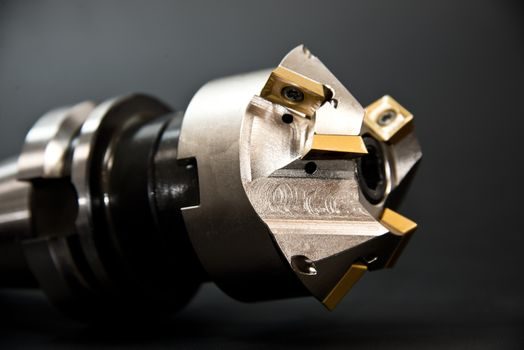
Copper is for: switchgear / busbar / transformer design, HVAC and plumbing systems (Type L / Type M copper tube, SDR-rated drainage stock), marine hardware (Cu-Ni 90/10), chemical process valves (C95400 aluminum bronze), induction coils, resistance-welding electrodes (RWMA Class 2 / Class 3), architectural flashing, and architectural / decorative hardware [S1][S3].
Tool & die steel is for: stamping and blanking dies, deep-draw dies, die-casting dies, plastic injection molds, hot-forging dies, cold-heading tooling, shear blades and punches, powder-compaction tooling, EDM electrodes for steel, and cutting tools for production runs [S4][S5][S6].
Copper is the wrong pick if you need edge-holding hardness, hot yield strength above ~300 °C in a load-bearing role, or wear resistance on a cutting or forming edge. Tool steel is the wrong pick if you need electrical conductivity above ~2-3% IACS, marine corrosion resistance, or thermal conductivity above ~30 W/m·K. Beryllium copper is the only grade that meaningfully bridges the two — it is still a copper alloy, but at 350-420 HV it is hard enough for some plastic-mold and safety-tooling service.
Standards, Specs, and Where to Find the Real Numbers
Copper specifications are governed by UNS designations (C11000 ETP, C12200 DHP, C17200 BeCu, C26000 cartridge brass, C46400 naval brass, C70600 Cu-Ni 90/10, C95400 aluminum bronze), ASTM B specifications for rod/bar/shapes and tube, and ASME SB series for pressure piping. Tool & die steel specifications are governed by AISI/SAE grade designations (D2, H13, O1, A2, S7, P20), DIN/W-Nr. cross-references (1.2379, 1.2344, 1.2510, 1.2363, 1.2355, 1.2330), and ASTM A681 for tool-steel bars. [S2]
Heat treatment is its own spec: D2 typically receives a 1010-1040 °C austenitize, air-quench, and a 200-540 °C temper to hit HRC 58-62; H13 receives 1000-1050 °C austenitize, oil- or air-quench, and a 540-650 °C double-temper to hit HRC 48-54. Copper alloys are annealed (e.g. C110 at 400-650 °C) or solution-treated and age-hardened (C17200: solution ~790 °C, age ~315 °C / 2-3 h).
Conductivity for copper is reported on the IACS scale — 100% IACS = 58.0 MS/m at 20 °C — and is the standard reference for electrical-grade copper worldwide. Tool-steel conductivity is reported in % IACS only for context (a few percent); no shop uses tool steel as a conductor.
Failure Modes and Operating Limits
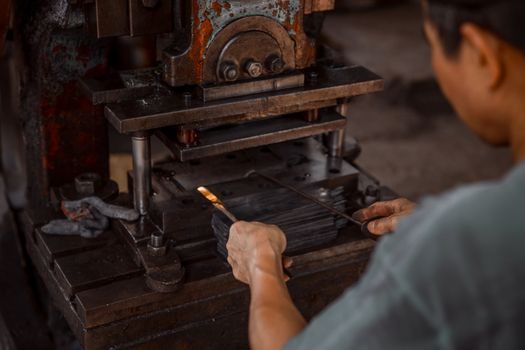
Copper fails by: creep in high-temperature busbar service (long-term softening above ~200 °C for cold-worked tempers), galvanic corrosion when coupled to a more noble metal in a conductive electrolyte (mitigated with bi-metallic transition plates), and work-softening / hydrogen embrittlement in sour-service (NACE MR0175) when free-machining brass is wrongly specified for H₂S exposure. [S3]
Tool steel fails by: thermal fatigue checking on die-casting dies (H13 surface cracks after thousands of cycles if the cooling circuit is not balanced), gross cracking on cold-work dies (D2 chipping if edge geometry is too thin or hardness is above the toughness floor), EDM recast / micro-cracks from improper EDM parameters on D2 or A2, and decarburization / scale if heat treatment atmosphere is not controlled.
Operating limit summary: copper C110 is comfortable to ~200 °C continuous, ~350 °C intermittent; aluminum bronzes (C95400) push to ~400-500 °C; BeCu C17200 holds mechanical strength to ~200 °C after age. D2 / O1 cold-work dies run to ~200 °C continuous with hardness loss past ~250 °C; H13 hot-work dies run to ~600 °C with HRC drop past ~625 °C — this is exactly why H13, not D2, is the default die-casting die material.
For a die-cast die that touches molten aluminum at >660 °C, the die-casting die cavity block is H13 (1.2344) and the shot sleeve sleeve is a hot-work tool steel with copper-alloy cooling inserts — a textbook case of the two materials living in the same machine on different jobs. The full material-decision logic for a press cell sits in Aluminum Alloy vs Carbon Steel: Spec-Driven Material Selection and the tonnage-side cost discussion in Die Casting Machine Price & Cost Guide 2026: Tonnage, Configuration and Total Outlay.
Copper Tooling and Tool-Steel Conductor Adjacencies
Two adjacencies are worth flagging because they get specified and get wrong. First, beryllium copper C17200 in the aged condition is hard enough (350-420 HV) to be used as a non-sparking tool, a plastic-mold insert, or a resistance-welding electrode tip — it is the only material class that genuinely lives in both material families. Second, copper-coated steel studs are a deliberate hybrid: a low-carbon steel core (mechanical strength) with a Cu coating (weld metallurgy, arc stability) — listed under 5 manufacturers, 18 products, with 17 butt-weld variants and 1 pin variant [S2].
A third adjacency is the tungsten-copper and copper-chromium class used for EDM electrodes and resistance-welding facings — these are composite materials that borrow copper's conductivity and a refractory phase's hardness, and they sit on the edge of both material conversations. If you are weighing pure copper against tool steel in a more application-driven spec conversation, the copper material encyclopedia page and the tool-die-steel encyclopedia page hold the grade and standard references used in process-engineering work.
Closing trackable signal: copper grade choice is increasingly driven by alloy-family conductivities, ASTM B / UNS numbers, and tightening ASTM B16/B16M copper-alloy rod stock; tool-steel grade choice is increasingly pinned to AISI D2 / H13 / O1 melt-route premiums and EDM-grade cleanliness specifications. The next concrete spec to watch is H13 ESR-grade vacuum-arc-remelted hot-work die blocks for high-cavity-count die-casting cells, and C18000 / C18150 Cu-Cr-Zr mill product for next-generation switchgear busbar. Both signal a tightening of the conductivity-vs-hardness trade-off on each side of the material split.