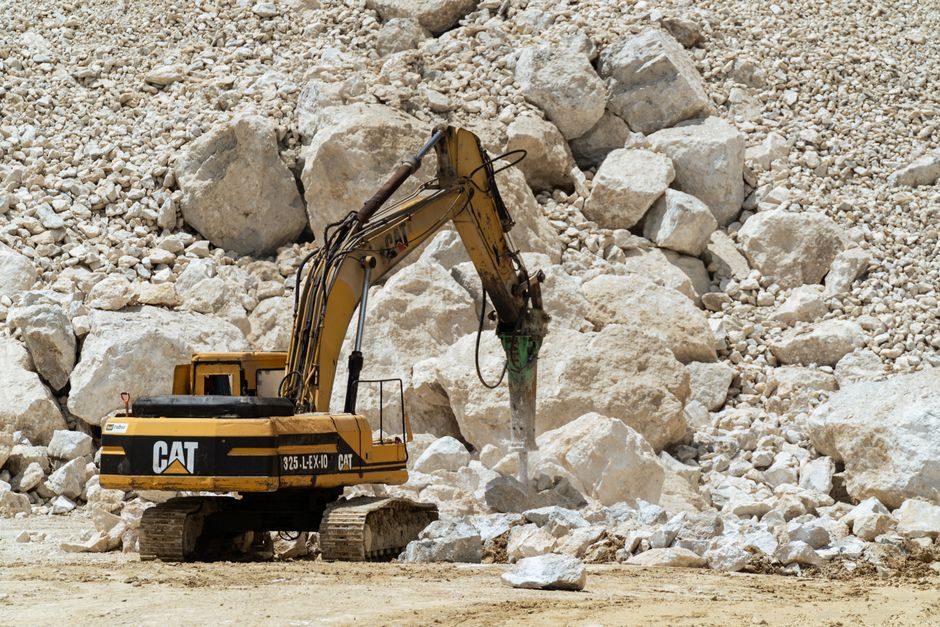
Core drilling machines fall into three duty tiers — hand-held/anchor, rig-mounted electric/hydraulic, and trailer-/vehicle-mounted gas-powered — with diamond bit diameters spanning roughly 12 mm to 500 mm across the catalog range [S2][S5].
Selection hinges on four binding constraints: hole diameter, substrate (concrete, asphalt, reinforced concrete, masonry, or steel), site power availability (single-phase 230 V, three-phase 400 V, hydraulic, or gasoline), and wet versus dry cutting duty [S2].
Hand-Held vs Rig-Mounted vs Trailer-Mounted: Duty-Cycle Tier Comparison
Hand-held electric core drills cover the 25-150 mm diameter band used for pipe penetrations, anchor fixings, and small conduit openings in concrete and masonry [S2].
Rig-mounted (anchor or vacuum base) electric and hydraulic core drills handle the 50-250 mm range where hole depth, perpendicularity, and continuous water feed matter; KOR-IT lists anchor-base, vacuum-base, and hydraulic models as separate rig configurations on its product map [S2].
Trailer-, hitch-, skid-steer-, and bucket-mounted gas-powered core drills are specified for road and airfield work, with bit diameters commonly reaching 250-500 mm in asphalt and reinforced concrete [S2]. For deeper mining and exploration cores, surface and underground core drill rigs from manufacturers such as H.H. Drill-Tech add a fourth tier built around rotary head torque and rod-handling rather than diamond bit diameter [S5].
Substrate Drives Bit and Machine Pairing
Wet diamond bits paired with a water-fed rig are the default for cured concrete and reinforced concrete because water cools the segment, controls slurry, and extends bit life; KOR-IT positions wet coring as the standard concrete-cutting method on its guide page [S2].
Asphalt and green concrete are cut with bit specifications tuned to abrasive aggregate — softer bond, harder segment — and KOR-IT markets separate asphalt blade and bit lines alongside its concrete line for that reason [S2].
For structural steel, magnetic base drilling machines using HSS-Co annular cutters (with elevated cobalt for heat resistance) are the dedicated tool class, not a diamond rig [S1]. The magnetic drill's annular cutter concept is also covered in the core machine reference, where cutter geometry and pilot-pin ejection are explained in engineering detail. BDS Maschinen's AutoMAB 350 is cited as a representative premium automatic mag drill in this category, made in Germany [S1].
Power Source and Site Logistics
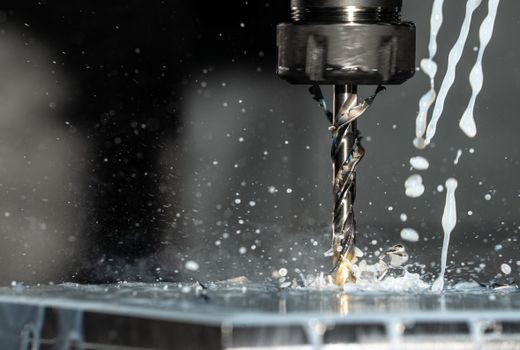
Single-phase 230 V hand-held drills dominate interior fit-out and small-diameter work because they plug into any site distribution board; three-phase 400 V rig-mounted drills deliver the torque needed for 150-250 mm holes in reinforced concrete [S2].
Hydraulic core drills draw power from a separate hydraulic pack and are used where electric or gasoline is unsafe — for example, in confined-space or fuel-restricted sites — and KOR-IT lists hydraulic as a standalone drive option alongside electric [S2].
Gasoline-powered trailer and rolling units are the only practical option for road-work sites without grid power, with KOR-IT's product map explicitly separating rolling gas-powered drills from electric models [S2]. Wholesale catalog data from Made-in-China shows China-sourced core drilling rigs priced in the US$ 5,200 to US$ 129,000 per-set band as of May 2026, with one audited supplier (Changsha Xingtan Machinery) listing entry-level rigs at US$ 5,200/set MOQ 1 [S8].
Speed, Coolant, and Operating Parameters
Peripheral cutting speed for diamond core bits is set by bit diameter and bond hardness — smaller diameters and harder bonds run higher RPM — and magnetic drill manufacturers publish the formula d × π × n = cutting speed for annular cutters as the matching rule [S1].
Pilot pins on annular cutters serve three functions: centring on the punch mark, signalling that magnet and tool are in drilling position, and channeling cutting oil through the cutter's internal lubrication path to the cutting edge [S1]. The same auto-oiling logic is why the shell core machine reference treats internal lubrication as a built-in feature rather than an operator add-on.
Water flow on wet rigs must match bit diameter — typical guidance is 0.5-1 L/s for 50-150 mm bits and higher for larger diameters — and is delivered either through a rig-mounted pump or a pressurized portable tank; KOR-IT lists dedicated water tanks and slurry-control accessories (Kor Vac) for this duty [S2].
Safety, Mounting, and Non-Magnetic Substrate Limits

Magnetic drill press safety rules published by magneticdrillingmachine.com forbid use in flammable or explosive atmospheres, require supervision for operators with reduced physical or mental response, and explicitly exclude persons with heart pacemakers or other medical implants [S1].
Magnetic adhesion is reliable only on clean ferrous substrate: paint, zinc, scale coatings, and rust significantly reduce holding force, and the magnetic drill manufacturer states the substrate must meet specific preconditions — flatness, thickness, and clean steel — for full-rated holding force to develop [S1]. For non-ferrous and non-magnetic materials, vacuum-base or anchor-base rigs are the alternative mounting strategy [S1][S2].
Trailer-mounted rigs add road-transport safety constraints (braked chassis, tie-downs, lighting) and on some sites require operator certification for towing; the same drill selection logic that puts a trailer rig on asphalt also puts it through stricter pre-job checks than a hand-held unit [S2].
Selection Shortlist Logic and 2026 Sourcing Signals
A practical shortlist: specify hand-held electric for interior 25-100 mm concrete holes; rig-mounted electric (anchor or vacuum base) for 100-250 mm wet-cut concrete; rig-mounted hydraulic for fuel-restricted or wet-site 100-250 mm work; trailer- or hitch-mounted gas-powered for road and airfield 250-500 mm asphalt/reinforced concrete; and magnetic base drill with HSS-Co annular cutters for structural steel [S1][S2].
Two verifiable signals to track: Made-in-China's core-drilling category pricing on May 2026 (US$ 5,200/set to US$ 129,000/set) and KOR-IT's expansion of the trailer-mounted product line as a distinct category on its 2026 catalog page [S2][S8]. For buyers cross-shopping with larger exploration rigs, the DTH vs Rotary Drilling Rig spec map covers the heavier end of the market that sits above the diamond core-drill tier. For a structural-steel buy that touches this category, the hot-box core machine and cold-box core machine references explain the foundry-side cousins of the same cutting family.