Down-the-hole (DTH) rigs are the workhorse for 5-8 in blast holes in hard rock, with the DirectIndustry index listing 99 DTH models across 29 manufacturers as of 14 July 2026 [S2]. Standard DTH hole diameters sit in the 127-165 mm (5-6.5 in) range for quarry and construction units, while mining rigs scale to 311 mm and beyond [S1][S2].
A 403 kW class rig such as the RTDrill RTD45 weighs 24,948 kg, drills to 30.97 m, and runs a 7.62 m pipe for an 8.1 m single pass, illustrating the mid-size DTH envelope that handles roughly 80% of civil and aggregate blast-hole work [S1]. Buy on duty cycle and rock hardness first, then match engine, hammer size, and carrier.
Hole Diameter and Depth Set the Hammer Class
DTH rigs are sold by the bit diameter they can run, and the bit dictates the hammer air consumption and rig compressor size [S2]. The 127-165 mm band shown on the RTD45 is the mainstream quarry / construction class; below 100 mm shifts the spec to a top-hammer or compact DTH rig, above 200 mm requires a high-pressure 30+ bar compressor and a 600+ hp carrier [S1][S2].
Drill-pipe handling also scales: 7.62 m (25 ft) pipes are the volume standard, with single-pass depth of roughly one pipe length before the machine needs to add a rod, as the RTD45's 8.1 m single pass demonstrates [S1]. For rotary drilling rig buyers, drill-pipe carousel capacity (4+1, 5+1) and single-pass depth matter more than headline max depth, because rod-handling time dominates cycle time on shallow blast patterns.
Rock Hardness and Compressor Pressure Decide Hammer Family
Hard abrasive rock above 200 MPa UCS needs a high-pressure DTH hammer running 25-30 bar, while soft to medium rock (50-150 MPa) is fine for standard 10-17 bar hammers, per the DirectIndustry DTH filter on compressor and hammer options [S2]. Most integrated crawler rigs pair the hammer and compressor on one chassis; standalone DTH rigs need a separate high-pressure booster matched to the hammer CFM.
For hard-rock mining and quarry duty, Epiroc and Furukawa together account for 15 of the 99 indexed DTH platforms, and both push high-pressure pneumatic-on-hammer technology for 6-12 in holes [S2]. Buyers should match hammer diameter to bit, not to engine power: oversizing the hammer chokes the flow meter of compressed air and slows penetration.
Engine Power and Carrier Class
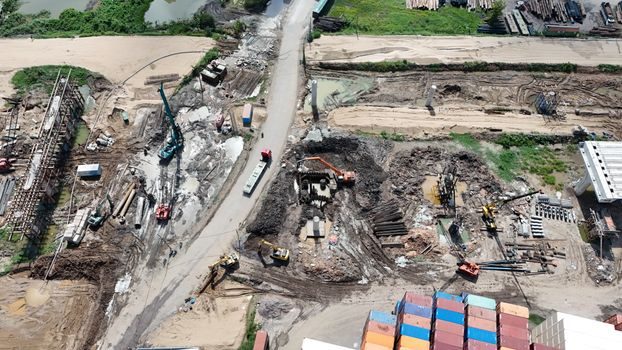
DTH rig power ratings cluster in two bands: 100-200 kW for compact / utility rigs and 350-450 kW for production blasthole rigs, with the RTD45 at 403 kW (CAT C15 Tier III / IVf) sitting at the top of the mid-class [S1]. Comacchio (10 models) and Hydra S.r.l. (8 models) cover the smaller 100-200 kW end of the index, while Epiroc, Sunward, and Xuanhua Taiye occupy the heavier class [S2].
Engine emissions tier matters on regulated sites: Tier III and Stage IIIA units remain in use in much of Asia and Africa, while Europe and North America require Tier IVf / Stage V, which the RTD45 explicitly offers [S1]. Spec the pressure sensor and pressure transmitter on the compressor side to the same emissions tier to keep warranty and after-treatment valid.
Mobility: Crawler, Truck, or Skid
Mobile crawlers dominate at 83 of 99 indexed DTH models, with only 3 fixed and 3 autonomous entries, confirming that track-mounted carriers are the default for production blasthole work [S2]. Truck-mounted DTH rigs (e.g., RTD70, RTD75) add road-transport speed for multi-quarry contractors but sacrifice low ground pressure on soft benches.
Tramming speed, ground clearance, and gradeability spec out a rig's true mobility. Compact rigs in the 8,000-12,000 USD class on the Made-in-China index are typically crawler-mounted with hydraulic industrial valve packages, while 310,000 USD class integrated rigs like the Kaishan KT15/20 bundle a separate screw compressor and dust collector on the same track frame [S6].
Options Worth Paying For, and What to Skip

Buy a dust collector and wet suppression kit on day one if the rig will work near populated areas; dry DTH drilling without suppression is a regulatory non-starter in most jurisdictions and a productivity killer from operator-fatigue standpoints. Spec the auto-lubricator for the hammer; manual greasing at every rod change is the most common cause of premature hammer failure in the field [S4].
Skip the remote-control option on a 100-200 kW class unit, since the value of RC shows up only above 300 kW where the operator needs to stand back from highwall hazards [S2]. For a buyer choosing between a basic DTH crawler and a top-hammer rig, the PLC automation package is a much better upgrade point than a longer rod carousel, because cycle-time variance drops 10-15% with rod-add automation on production patterns.
Who Should NOT Buy a Mainstream DTH Crawler
Underground drift drilling and tunnelling are bad fits for the 127-165 mm surface-DTH crawler class; for those duties, a top-hammer or a dedicated underground DTH jumbo with a 360-degree boom is the right machine, and only 8 of the 99 indexed DTH models are tagged for underground mining [S2]. Likewise, water-well contractors drilling 200-400 mm holes to 200+ m should look at rotary mud rigs, not DTH, because DTH struggles with the cuttings evacuation that long holes require.
If the project is a one-off 50-hole foundation job, a rental 5-6 in crawler is a better economic call than a 310,000 USD purchase, since break-even on a new integrated DTH rig sits around 4,000-6,000 m of drilled hole per year at typical contractor day rates. Buyers running fewer hours than that should lease or buy a used Tier III unit.
Pricing Bands and Sourcing Channels
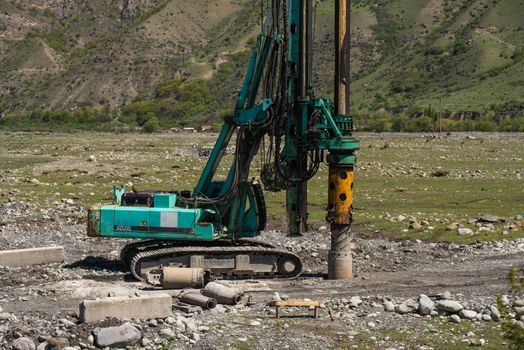
Entry-level DTH rigs on the Made-in-China index start at roughly 30,000 USD for a basic Kaishan-style down-the-hole drilling machine (1-piece MOQ), and integrated crawler rigs in the Kaishan KT15/20 class list around 310,000 USD per unit [S6]. DTH drill pipe from Xi'an Boban Oil Tools lists 1,200-1,700 USD per piece at 50-piece MOQ, while heavy drill pipe from Zhejiang Koonsa sits in the 40,000-45,000 USD range per piece at 1-piece MOQ, showing the spread between commodity and engineered pipe [S7].
For buyers cross-shopping heavy equipment platforms, the selection logic used here mirrors the spec map approach in Gantry Crane vs Truck Crane: Spec-First Selection Map and the rotary-rig fit logic in Rotary Drilling Rig Types, Spec Boundaries, and Job-Site Fit - both work from duty cycle and headline spec, then narrow to carrier class. Direct sourcing from manufacturer hubs in Sichuan, Zhejiang, and Shandong dominates the budget tier, while Epiroc, Furukawa, Comacchio, and Vermeer hold the premium tier for mine-spec DTH platforms [S2][S6][S8].
Final selection criteria in priority order: 1) hole diameter and depth match, 2) rock hardness and required hammer pressure, 3) engine tier and carrier mobility, 4) compressor class and dust suppression, 5) automation level and rod-handling. Watch the DTH index on DirectIndustry for the 8-10 new models typically added per quarter, and cross-check the Made-in-China drilling-rig category for factory-direct price moves on integrated crawler units [S2][S6].