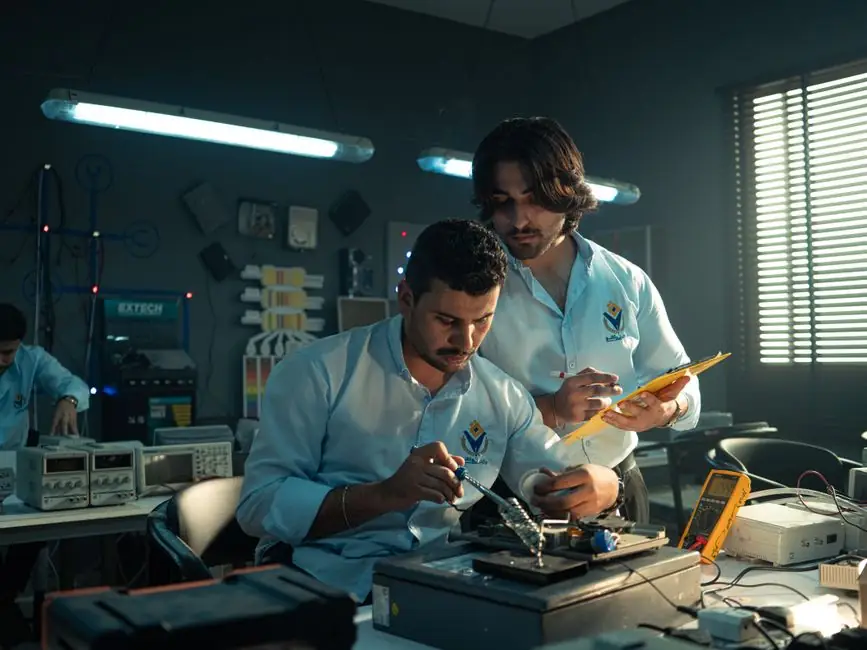
Electronic enclosures, connector housings and PCB-support castings are a binder-driven problem, not a tonnage problem, and the four core-making machine families (shell, hot-box, cold-box, and inorganic/CO₂-silicate) each lock the buyer into a different utilities and gas-handling package [S3][S7].
Foundries producing 5–80 t/h of castings for electronics, telecom, and power-conversion OEMs treat the binder family as the first spec gate, the shot weight and box envelope as the second gate, and the curing energy source (electric, gas-fired, or amine gas) as the third [S7]. Core moldings in connector housings and component enclosures are explicitly part of the PCB-to-final-product integration chain, which is why tolerance and surface finish matter as much as cycle time [S1].
Binder Family: Why Electronics-Housing Foundries Split Between Shell, Hot-Box, and Cold-Box
Shell and hot-box core machines dominate thin-wall aluminum and zinc-alloy electronic housings because the resin-coated sand cures against a heated 230–280 °C box face in 15–60 s, producing a smooth, low-veining core that survives non-ferrous pour temperatures and gives the clean as-cast surface that downstream machining and EMI gasket seating depend on [S3][S5]. A horizontal industrial shell core shooter rated 25 kW at 380 V with face-down blow-mold geometry is a typical fit for small electronics-housing cores under ~6 kg per shot [S5].
Cold-box phenolic urethane is the workhorse for iron and steel electronic enclosures where tighter dimensional tolerance and higher mechanical strength are required, and where the cured core must survive the 1350–1450 °C ductile-iron pour window in service conditions typical of heavy industrial electronics [S3]. Inorganic sodium silicate/CO₂ and warm-box routes sit in the middle, attractive to foundries that want to eliminate amine gas handling but accept longer cycle times and lower as-cast surface finish.
Shot Weight, Box Envelope, and Clamp Force Matched to the Part
Production core machines for electronics housings commonly run 1–80 kg per cycle, with bench units below 1 kg and large foundry units above 80 kg, so the spec gate is the heaviest single core in the part range plus 15–25% sand-density margin [S3]. For reference, the BELNIILIT cold-box range covers 6 kg (model 4749Б1К2 at 60–80 cycles/h, 5 kW) up to 150 kg (4760УБ2К1 at 20–30 cycles/h, 19 kW, 1600×1180×570 mm box), and the hot-box range tops out at 100 kg with 35 s cycle time on model 4757А2Э1 [S4].
Clamp force must clear the projected core area, not the catalog "max sand capacity." Pneumatic core shooters typically deliver 0.4–0.7 MPa blow pressure and high-pressure units 0.8–1.0 MPa; at 0.5 MPa, clamp force in kN should run 5–8 times the projected core area in cm², otherwise parting-line flash forces rework or scrap [S3]. For a connector-housing core of roughly 80 cm² projected area, that translates to 400–640 kN clamp force at standard blow pressure, which already rules out the smallest bench-top shell shooters and pushes the buyer toward mid-frame horizontal or vertical machines [S3][S4].
Cycle Time, Curing Energy, and Amine-Gas Handling for Tight-Tolerance Housings
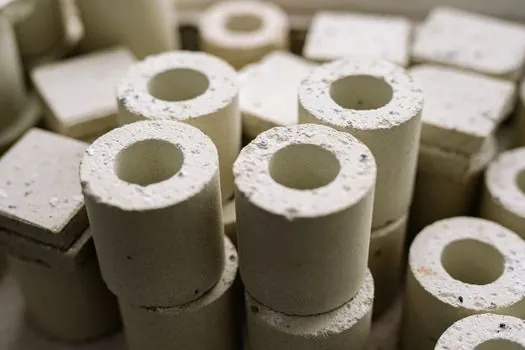
Cold-box machines for iron and steel electronic enclosures run 20–80 cycles/h depending on shot weight, with the BELNIILIT 4749Б1К2 hitting 60–80 cycles/h at 6 kg shot and the 4768Б2К1 dropping to 20–30 cycles/h at 130 kg shot, while the hot-box range settles at 18–35 s cycle time across 6–100 kg shot weights [S4]. That means an electronics-housing foundry running mixed part weights on a single line needs a machine whose cycle time stays inside the molding-line takt, not a bench-mark cycle at 1 kg that collapses at 25 kg.
For tight-tolerance connector and RF-housing cores, cold-box phenolic urethane with a vaporized triethylamine (TEA) plus CO₂ or methyl-formate purge through an in-line gassing chamber is the standard route, and the buyer must plan the amine gas train, vent stack, and scrubber as part of the machine footprint, not as a retrofit [S3]. Foundries that want to skip the gas train move to sodium silicate/CO₂ or warm-box, trading cycle time and surface finish for a simpler permitting and ventilation package, which is a legitimate decision for indoor electronics-casting cells in mixed-use factories [S3].
Machine Class Comparison: Shell, Hot-Box, Cold-Box, Inorganic
On four decision criteria for electronics-housing cores, the four families line up as follows. (1) Cure mechanism: shell uses 230–280 °C heated box face-down blow, hot-box uses 200–260 °C heated box with amine gas, cold-box uses TEA/CO₂ vapor at ambient box, inorganic uses CO₂ or ester hardening of sodium silicate. (2) Cycle time: shell 15–60 s, hot-box 18–35 s, cold-box 20–80 cycles/h, inorganic 30–120 s. (3) Typical electronics-housing fit: shell for thin-wall aluminum/zinc <6 kg, hot-box for small-to-medium iron cores, cold-box for tight-tolerance iron/steel 6–150 kg, inorganic for foundries avoiding amine gas. (4) Utilities burden: shell needs electric or gas box heating, hot-box needs heat plus amine gas, cold-box needs amine gas train and CO₂ purge, inorganic needs CO₂ supply and ester storage but no amine train [S3][S4][S5].
For connector housings and small aluminum enclosures, shell is the default. For RF-shielded iron housings, cold-box is the default. For mixed-pour foundries that occasionally run electronics-housing cores, hot-box covers the gap, and for foundries that must eliminate amine gas entirely, sodium silicate/CO₂ is the only practical option, accepting longer cycle times and a rougher as-cast surface that will need more machining [S3][S7]. The aerospace-casting spec map, covered in Core Making Machine Selection for Aerospace Castings: Process Map, faces the same binder-first gate but adds vacuum and outgassing constraints that are not relevant to electronics housings.
Material and Tolerance Limits Specific to Electronics Castings
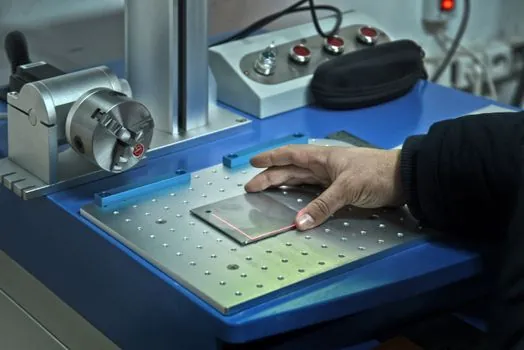
Centracore's electronics and telecom work, which spans aluminum, iron, and steel castings for electronic housings and thermal-management parts, illustrates why tight-tolerance machining capability and stable as-cast surface finish are non-negotiable: connector housings and RF enclosures are machined or ground to final dimension with limited stock allowance, and a veined or shifted core surfaces as scrap at the machining cell, not at the molding line [S2]. For transformer-core lamination stacks and lamination housings, the parallel spec is on the transformer core making machine side, which is a different equipment class focused on silicon-steel winding and annealing rather than sand cores [S8].
Digital-twin integration and 3D sand printing are flagged as the two near-term shifts in core-making equipment, with bio-based binders entering qualification at several OEMs, though none of these are yet ready to displace phenolic urethane cold-box in production electronics-housing cells [S10]. For now the procurement decision is concrete: lock the binder family, then size the shot cylinder, then verify clamp force against the 5–8× rule, then specify the gas train.
Who the Four Machine Classes Are For, and Who They Are Not For
Shell core shooters are for high-volume, thin-wall aluminum and zinc-alloy electronic housings under ~6 kg, and they are not for iron or steel pours or for foundries that need to swap part geometry daily. Hot-box core machines are for small-to-medium iron and steel cores with amine-tolerant ventilation, and they are not for foundries that need <20 s cycle time on heavy cores. Cold-box phenolic urethane machines are for tight-tolerance iron and steel enclosures at 6–150 kg shot, and they are not for foundries that cannot install an amine gas train and scrubber. Inorganic sodium silicate/CO₂ machines are for foundries that need to eliminate amine gas and accept 30–120 s cycles and rougher surface finish, and they are not for the tightest-tolerance RF-housing work [S3][S4][S7].
Semi-automatic core builder machines from suppliers such as SUNHOPE, with quoted 60-day delivery and 10 sets/month supply ability, sit in a different slot: low-volume prototyping and small-batch electronic-housing cores where a full cold-box or shell line is uneconomic, and where manual core assembly is acceptable [S9].
Limits, Failure Modes, and Sourcing Discipline
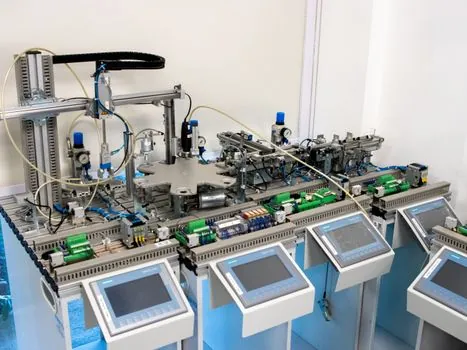
Under-sized shot weight produces cold cores that crack on the conveyor before mold assembly; wrong binder chemistry forces a hazardous-gas retrofit that costs more than the machine itself; wrong cycle time bottlenecks the molding line and forces a second machine purchase within 18 months; wrong curing energy source can double kWh per ton of finished core [S3]. Buyers who skip the trial pour and the projected-area calculation pay in scrap, not in spec sheet gaps.
Sourcing should lock three numbers before the RFQ goes out: heaviest single-core shot in kg plus margin, projected core area in cm², and the planned blow pressure in MPa, so that the supplier's clamp-force and cycle-time numbers can be checked against the 5–8× clamp-to-area rule at 0.5 MPa and the published BELNIILIT-class 20–80 cycles/h envelope for cold-box at 6–150 kg shot [S3][S4]. The core machine reference, shell core shooter, and cold-box core machine pages give the family-level spec framing for the RFQ shortlist.
Next trackable signal: monitor the 3D sand-printer and bio-based-binder qualification programs that OEMs flagged in late 2025, since either could shift the binder-first decision for electronics-housing foundries within the next 12–24 months [S10]. The second signal is amine-scrubber regulation in mixed-use industrial estates, which is the variable that quietly pushes a foundry from cold-box to inorganic CO₂-silicate even when cycle time and surface finish suffer.