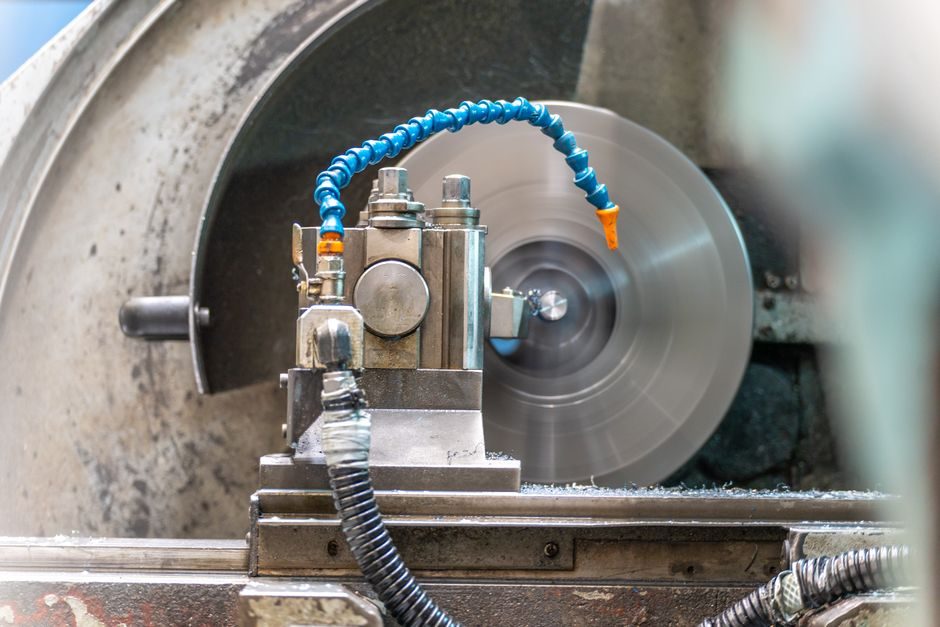
A core making machine is the broader equipment category covering hot-box, cold-box and shell sand core production, with shot weights commonly ranging from roughly 5 kg bench units to 200 kg+ heavy foundry cells; a shell core machine is a narrower sub-type that cures resin-coated sand against a heated metal pattern (typically 200-280 °C) to produce hollow shell cores in 8-30 mm wall range.
For a 2026 foundry specifier the first decision is not brand but process: phenolic-urethane no-bake (PUCB), furan/SO2 cold-box, hot-box amine-cured, and silica-shell resin-coated all require different machines, and the wrong pairing is the most common reason an RFP gets rejected on first review.
Process window and core chemistry that drives machine choice
PUCB no-bake systems mix a phenolic resin with a polymeric MDI isocyanate hardener in a high-speed continuous mixer; benchtop output starts near 5 kg per shot, while production cells deliver 20-50 kg per cycle with a strip time of 5-15 minutes depending on section thickness [S2].
Cold-box cores use a furan or phenolic resin bonded with sand, gassed with tertiary amine vapor (TEA/DMEA) for cure, and are blown into a room-temperature core box — the dominant method in mid-to-high volume iron and steel foundries because cycle time drops to 10-30 seconds per core [S2].
Hot-box systems mix furan resin with a latent acid catalyst, blow into a heated pattern at 200-260 °C, and cure in 10-60 seconds; the hot-box core machine is the workhorse for small-to-medium automotive cores in the 1-15 kg range.
Shell cores use phenolic resin-coated sand dropped onto a pattern plate pre-heated to 220-280 °C; the facing layer cures in 15-30 seconds, excess sand dumps, and the shell core shooter ejects a hollow shell typically 8-25 mm thick with smooth inner and outer walls — the geometry that gives shell cores their name.
Shot weight, box size and capital cost envelopes
Vertical parting cold-box and hot-box cells typically max out at 25-50 kg core weight with a 600 × 500 mm to 800 × 800 mm box envelope, while horizontal-flask shell molding machines and large cold-box cells cover 100-200 kg shot weights for cylinder blocks, large valve bodies and wind-energy hub castings [S2].
For reference, benchtop hot-box and small shell units list in the 8,000-25,000 USD range, mid-size vertical cold-box cells (10-30 kg) sit in 40,000-120,000 USD, and turnkey 100 kg+ automatic cells with sand reclamation commonly exceed 250,000 USD FOB — though these are catalog ranges, not live quotes.
Compressed-air supply is the other envelope spec: small shell shooters run on 0.5-0.6 m³/min at 0.5-0.6 MPa, while 50 kg cold-box cells need 3-6 m³/min at 0.6 MPa plus an amine vapor generator sized to the box volume.
Decision matrix: which process fits the casting
For thin-walled, smooth-finish cores under 25 mm wall with high dimensional repeatability (intake manifolds, hydraulic valve bodies, pump housings) — specify shell core shooting, because the heated-pattern cure produces a near-net-shape surface that needs no further coating in many applications. [S1]
For complex multi-cavity cores with deep draws, internal passages, and iron or steel casting service where amine cure speed matters — specify cold-box core machine cells; cold-box handles the geometry that hot-box cannot fill and cures faster than PUCB no-bake.
For short runs, prototype work, and large one-off cores where a 10-15 minute strip is acceptable — specify PUCB no-bake; the equipment cost is the lowest, and the process is forgiving on sand quality.
For high-volume small cores in 1-15 kg range where 200-260 °C tool temperature is already in the plant's utility envelope — specify hot-box; cycle time of 10-30 seconds per core beats PUCB on throughput.
Pattern tooling and consumable economics
Shell core boxes are cast iron or steel with electric or gas heating channels integral to the pattern plate; pattern life commonly exceeds 100,000 shots when release agent and sand flow are controlled, but the heated pattern itself is the largest tooling line item. [S2]
Cold-box core boxes are unheated, typically aluminum or cast iron with integrated gas vents, ejector pins and amine off-take channels; pattern cost is roughly 30-50% of a comparable shell box because no heating channels are machined in.
Resin consumption sets the consumable line: shell cores use 2.5-3.5% phenolic resin-coated sand by weight, PUCB uses 1.0-1.5% phenolic plus 1.0-1.5% MDI isocyanate on sand, and cold-box furan runs at 1.0-1.8% resin with amine vapor as the external catalyst.
Foundries running both shell and cold-box cells typically size the binder silo, amine scrubber, and sand reclamation train to whichever process has higher tonnage — sharing a reclamation loop between shell and cold-box is technically possible but requires the dust classification to match the finer coated-sand fractions.
Limitations, failure modes and what to avoid
Shell cores crack or warp when the pattern is not within ±5 °C uniformity across the plate, or when the dump-over is delayed more than 5-10 seconds past the cure window — both failure modes are tooling-side, not machine-side. [S3]
Cold-box cores fail with scabs and blows when amine vapor concentration is starved (typical target 0.5-1.5% by volume in the carrier air) or when sand moisture drifts above 0.2% by weight.
PUCB no-bake cores show peel-back and under-cure at section thicknesses above 80-100 mm, which is why heavy machine-bed and wind-hub castings are rarely specified on no-bake despite the lower equipment cost.
Standards, sourcing signals and 2026 supplier landscape
China remains the dominant supply source for benchtop and mid-size core-making cells, with foundry-equipment exporters in Qingdao, Jinan and Suzhou listing multi-station automatic core shooters on the trade portals; one verified 2026 listing describes an automatic foundry core shooting machine covering the cold-box / shell process envelope [S2].
For a 2026 specifier, the verifiable procurement signals are: pattern heating control accuracy (±3 °C for shell), shot weight repeatability (±2% on cells with servo metering), amine vapor concentration control on cold-box, and PLC/HMI platform openness (Allen-Bradley, Siemens S7-1500, or open EtherCAT networks — not proprietary black boxes).
Trackable signals over the next quarter include any new IEC/ISO 9001 re-certification filings for tier-one Chinese foundry equipment exporters and any update to the Chinese foundry machinery export volume (relevant because cold-box and shell cell export share has been rising as EU and Indian greenfield iron foundries come online).
For plants already running an aluminum or thin-wall iron line, the mining equipment manufacturing process gives a useful read on how core selection ties back to pattern tooling and casting yield — and on a separate spec line, the EPDM vs NBR rubber selection cut matters because most core machines use NBR or EPDM seals on blow heads and shot sleeves that see amine vapor or hot sand daily.