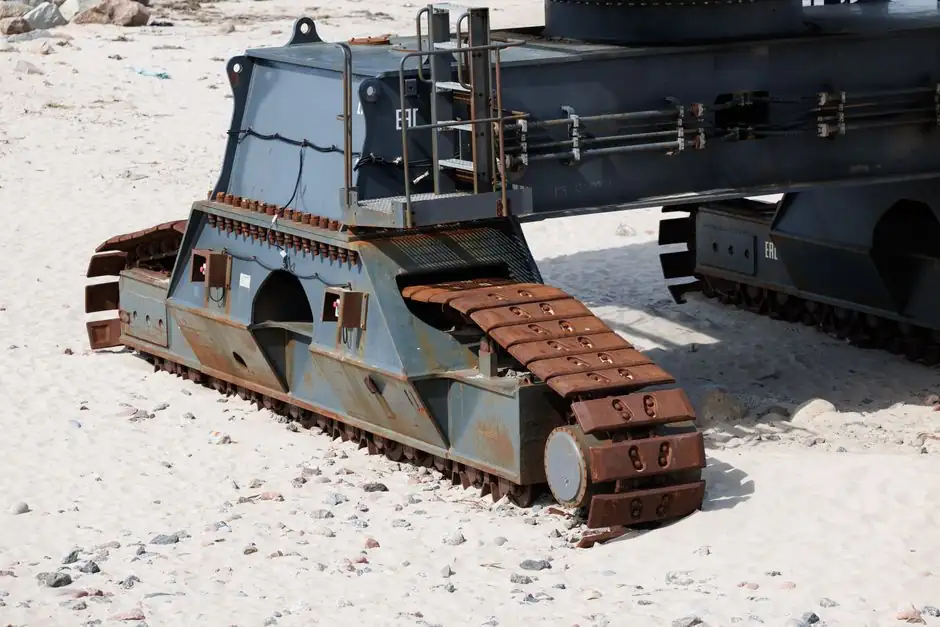
Lattice-boom crawler cranes span 25 t at the compact end and over 3,000 t at the heavy-lift extreme, a 120:1 ratio that makes capacity class the single most important selector on a rental sheet [S1][S3].
The mid-range 50-100 t segment serves general construction and municipal work, while 600 t and above machines, such as the Demag CC 2800-2 at 600 t / 7,700 t·m load moment and the Kobelco CKE3000G at 300 t base, are engineered for refinery, wind, and modular lifts where outrigger pads give way to integrated superlift systems [S2].
Capacity Class Boundaries and Defining Parameters
Manufacturer line-ups place compact crawlers at 25-40 t, mid-range at 50-150 t, heavy-duty at 200-600 t, and super-heavy at 800-3,000+ t, with each step roughly doubling the maximum load moment and the transport component count [S1][S3].
A 50 t crawler typically runs a 30-45 m main boom and weighs 35-55 t in transport configuration; a 100 t unit extends to a 50-70 m boom and 70-110 t transport mass; a 600 t class machine like the Demag CC 2800-2 reaches 102 m main boom (192 m with luffing jib and SWSL) and a 77 t base machine, of which 62.5 t remains after the A-frame is removed [S2][S4]. At the 3,000 t class, a single superlift counterweight stack can exceed the mass of an entire 50 t crane, and total rigged weight surpasses 2,000 t.
Selection Criteria: Boom, Counterweight, and Transport Envelope
Capacity alone misleads: the Demag CC 2800-2 lifts 600 t at short radius but only 7,700 t·m at full 192 m system length, which dictates the job envelope rather than the headline number [S2].
Three parameters separate the classes: (1) main boom length, 30-45 m at 50 t versus 90-120 m at 600 t and 150+ m at 3,000 t; (2) superlift / variable-position counterweight, optional at 50-100 t and integral at 600 t and above; and (3) transport envelope, where a 100 t Liebherr LTR 1100 ships within a 900 mm flat-pad track width and standard road limits, while a CC 2800-2 requires per-component widths kept under 3 m for European road permits but a 37.8 t axle load per trailer [S2][S3]. Emission tier also splits the classes: pre-Tier 4 stock such as a 2012 LTR 1100 with Tier 3 engine sells for repurposing, while 2019-on units such as the Tadano Mantis GTC-1200 ship Tier 4 Final from the factory [S3].
50-Ton vs 100-Ton Class: Comparison Map
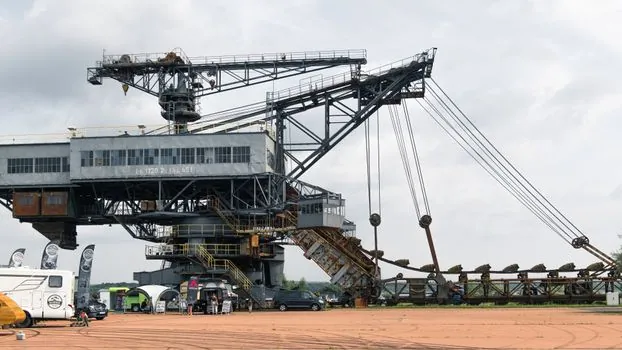
50 t crawlers are the general-purpose workhorses for road, bridge, light-steel, and port-terminal lifts; 100 t crawlers cross into heavy infrastructure, airport apron work, and mining-equipment handling where a 198,000 lb / 19,360 lb two-block hook configuration is common [S3][S4].
Side by side on four decision criteria, the contrast is structural. (1) Lift envelope: a 50 t machine peaks at roughly 40-45 m radius with 5-8 t on the hook, whereas a 100 t unit holds 20-30 t at the same radius, doubling single-pick productivity. (2) Footprint: 50 t crawlers need roughly 5-6 m working width and assemble in under a shift; 100 t units need 6-8 m, hydraulic counterweight install, and 1-2 shifts. (3) Transport: a 50 t fits 2-3 standard lowboy loads under 40 t each; a 100 t such as the LTR 1100 splits into boom, carbody, and a 70,400 lb counterweight package. (4) Cost efficiency at utilisation: a 50 t unit earns on small-pick frequency, while a 100 t earns when single-pick mass would otherwise force a larger crane on a 2-3 day mobilisation. For a deeper look at the boom-type and capacity taxonomy, see the related Crawler crane classification by lifting capacity and boom type reference, and for transport logistics the Crawler crane haul road width breakdown covers track-gauge effects on road design.
Heavy-Duty and Super-Heavy Classes (300-3,000 t)
From 300 t upward, the lattice-boom format dominates because telescopic booms lose rigidity, and modular counterweight / superlift becomes the only practical way to control the load chart at long radii [S2][S3].
The 300 t Kobelco CKE3000G illustrates the class: 300 t at 5.5 m on the standard boom, 189.8 t at 8.8 m in heavy-lift configuration with a 60 m luffing fly jib and 30 m back mast, and 350 t at 8 m in super-heavy-lift mode, all with a Scania 13-litre, 331 kW engine meeting Stage IV / Tier 4 Final without a particulate filter, and a transport component width held under 3 m [S2]. The 600 t Demag CC 2800-2 introduces variable-position counterweight (Superlift LSL up to 138 m boom, SWSL up to 192 m system length) and a two-frame 10 t counterweight plate design that replaces heavier base plates to keep per-trailer mass inside European road rules. Beyond 600 t, the SR (super-ringer) and dual-crane arrangements appear, and the upper 2,000-3,500 t bracket hosts wind-installation vessels, refinery module lifts, and petrochemical reactor sets where one crane picks a 1,500 t module in a single lift [S3].
Standards, Telematics, and Compliance Markers
No single ISO or ASME standard caps crawler-crane capacity; instead, compliance stacks from EN 13000 (crane safety), the operator's local road-permit regime for transport mass and width, and engine emissions tiers such as EU Stage IV / U.S. EPA Tier 4 Final [S2][S3].
Modern units ship with OEM telematics as standard: Kobelco's KCROSS (Kobelco Remote Observation Satellite System) collects operating data and GPS position via a server-side terrestrial network and comes on the majority of its crawler line [S2]. Tadano ships the A2B HELLO-NET system on Mantis-series telescopic crawlers such as the 130 t GTC-1200 with a Cummins QSL9 Tier 4 Final engine [S3]. Load-moment indication (LMI) and the AML-C system on Tadano, or LICCON on Liebherr, form the operational safety layer that prevents class-mismatch rigging errors, the leading cause of crawler tip-overs per industry incident data.
Who Each Class Is For, and Who It Is Not
50-100 t crawlers suit general contractors, rental fleets serving commercial builds, and port / municipal work; they are wrong for wind, refinery, or modular installs where a 600 t plus class machine is the only unit physically capable of clearing the radius-mass envelope [S1][S4].
300-600 t class crawlers fit dedicated heavy-lift rental houses, EPC contractors on refinery and power projects, and the wind-installation market where nacelle and hub picks routinely exceed 200 t at 15-20 m radius. The 1,000-3,000 t class belongs to a handful of global heavy-lift specialists, with Manitowoc 31000 (2,500 t), Liebherr LR 13000 (3,000 t), and the legacy 888-series parts market in the secondary channel [S3]. Telescopic-boom crawlers such as the Grove GHC130 (132 t) and the Tadano Mantis GTC-1200 (130 t) carve out a middle ground between the 100 t lattice class and 300 t pick-and-carry work, with boom ranges of 12.6-40.2 m on the GHC130 and a 155 ft five-section boom on the GTC-1200 [S3].
Track the next moves by watching OEM Bauma 2026 and Conexpo announcements for 3,000 t plus class unveils, the rollout of Stage V engines for European-bound units, and any tightening of road-transport envelopes for 600 t class machines where bridge-class load ratings limit regional deployment. The Crawler crane classification by lifting capacity and boom type page tracks the taxonomy in parallel.
Spec-level background on the components involved: crawler crane, crane scale, and gantry crane.