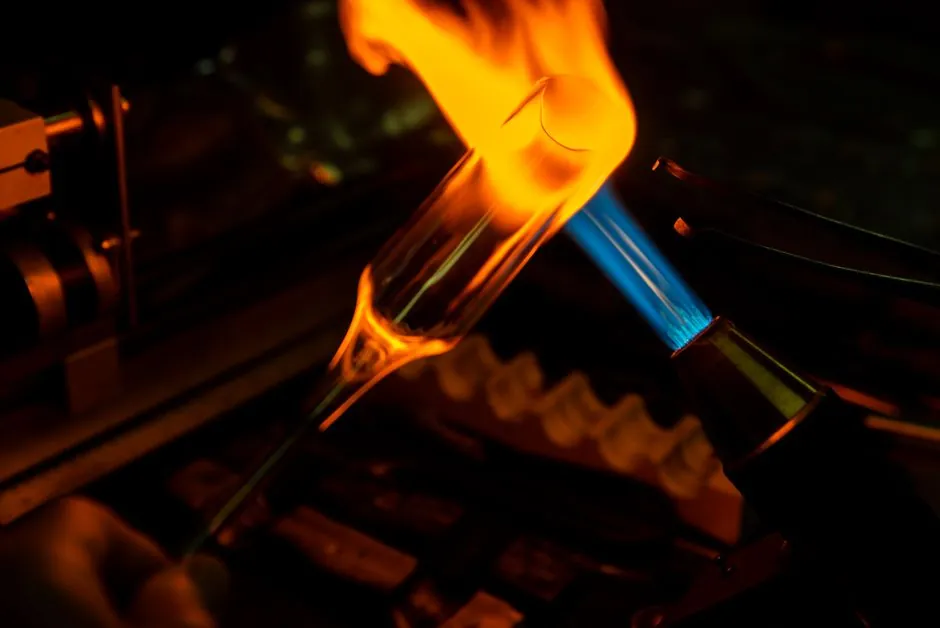
Selecting a crucible furnace for rail components is driven by three engineering facts: the alloy (typically medium/high-carbon rail steel or specialty grades), the charge weight, and the reline economics of the lining. For rail-grade steel melting, induction crucible units with prefabricated crucibles are the dominant choice, because the dry-ramming and in-situ sintering approach exposes operators to respirable crystalline silica and forces a furnace cool-down for every reline [S1].
The rail sector also needs a fire-safety reference frame for any in-plant thermal equipment. DIN 54837 tests rail-vehicle materials and components for burning behaviour, with classification grades S2 to S5 for smoke, ST1 to ST2 for flaming drips, and SR1 to SR2 [S5]. Furnace selection for rail-component production lines must therefore be cross-checked against the same DIN 5510-2 system that governs the rolling stock itself, including the burning behaviour of any in-line heat-treatment station adjacent to the melter.
Induction vs resistance crucible: which melts rail steel
For carbon and alloy rail steels, an induction furnace with a prefabricated crucible is faster to reline than a dry-rammed induction furnace, because the prefabricated body is sintered under controlled conditions and the backfill is a non-sintering granular material capped with a patching compound [S1]. The reference patent describes a furnace cage, a peripheral clearance between the cage and the prefabricated crucible, and induction coils surrounding the crucible: this geometry is the working template for modern rail-foundry induction units [S1].
Small electric crucible furnaces in the 2 kg to 3 kg range, rated roughly 1400 W to 1500 W (with peak internal temperatures quoted at 2102 F / about 1150 C on consumer listings) are sold for precious-metal and laboratory work, not for rail-grade ferrous melting [S2]. Rail foundries should treat those consumer-grade ratings as a baseline only and oversize power and refractory thickness for the larger thermal mass of rail components.
Lining, crucible material, and reline economics
The traditional dry-ramming lining uses quartz or quartzite with a sintering agent, rammed around a form and then sintered in situ; this method exposes operators to silicogenous dust and forces a long, physically strenuous reline that risks damage to the induction coils [S1]. Prefabricated crucibles avoid both problems, but the earlier bonded-graphite prefabricated crucible was restricted to non-ferrous melts because clay-bonded graphite cannot survive the metallurgical conditions of iron and steel [S1].
For rail steel, the working lining stack today is typically a prefabricated alumina-magnesia or alumina-spinel crucible with a granular non-sintering backfill (often dry olivine or calcined magnesia) between the crucible OD and the furnace cage wall, sealed on top with a plastic patching material [S1]. This stack lets the rail foundry swap a worn crucible in hours rather than the multi-day cool-down of a fully sintered in-situ lining, and it eliminates the silica-dust hazard of the older ramming practice [S1].
Charge size, melt rate, and rail-component throughput
Crucible furnace capacity for rail components is set by the heaviest single pour, not by average hourly tonnage. A common rail-wheel or rail-pad casting pattern requires the furnace to hold at least one full shot plus a heel, so the crucible working volume is typically sized 20 to 30 percent above the largest ladle pour to keep the induction coil above its minimum melt level. [S1]
Melt-rate scaling is dominated by applied power: a 1500 W consumer crucible lists a 3 kg charge size and reaches about 1150 C for gold/silver work [S2], which is a useful sanity check for energy density. Industrial rail-foundry units scale this up by 2 to 3 orders of magnitude in power, and the energy per tonne falls back toward 500 to 600 kWh/t for steel as the furnace size rises, a well-known induction-melting economy that should be checked against the OEM's own test certificate before purchase.
Standards and the rail-furnace compliance map
The rail-vehicle side of the supply chain is governed by DIN 5510-2 preventive fire protection in rail vehicles, with DIN 54837 as the principal small-scale burning-behaviour test method producing the S, ST, and SR classification grades [S5]. While DIN 5510-2 and DIN 54837 apply to the materials in the train, the same test method is widely used by rail-foundry QA teams to qualify any in-line heat-treatment furnace lining, hood, or handling fixture that ends up near the casting line, and the S2 to S5 / ST1 to ST2 / SR1 to SR2 ladder is the working scale that procurement should reference in furnace-area material specifications [S5].
On the furnace itself, rail foundries typically reference generic electrical-safety and EMC standards for industrial heating equipment, plus the refractory supplier's own material data sheets for the prefabricated crucible. Any rail-grade melt shop should also check the refractory's thermal-shock rating against the planned power-on ramp, because prefabricated crucibles used in induction melting are sintered externally and the quartz in the backfill still undergoes transformation cycles if pushed too fast [S1].
Where a crucible furnace does not fit the rail application
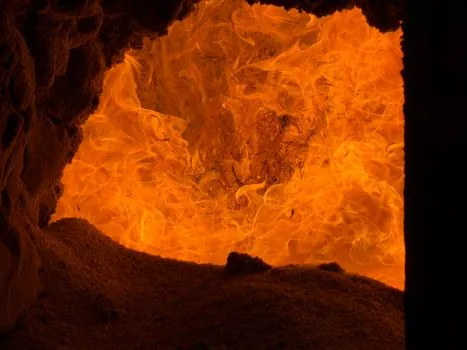
For very high-tonnage continuous casting of standard rail profiles, a cupola furnace or a large electric arc furnace feeding a continuous caster is usually more economic than a bank of crucible furnaces, because crucible units are batch melters with limited tap weights. A crucible furnace is also a poor fit where the rail component is made by forging rather than casting, since the melting furnace section of a forge shop is usually a single high-power induction or gas-fired unit feeding a forging billet line, not a crucible. [S1]
Small 2 kg / 1400 W and 3 kg / 1500 W resistance crucible furnaces [S2] are explicitly designed for jewellery, silver, and small-batch precious-metal work, with peak temperatures of about 2102 F (roughly 1150 C) [S2]. Specifying one of these for a rail foundry would be a category error, even though the name 'crucible furnace' overlaps; the right comparison for rail work is among industrial induction crucible units sized for 0.5 t to 10 t taps, not consumer gold-melting boxes.
Procurement signals to watch in late 2026
Two trackable signals should be on the rail-foundry procurement desk for the rest of 2026. First, watch whether refractory suppliers publish updated technical data sheets for prefabricated rail-grade crucibles, because the working material in this category has shifted away from the older bonded graphite and quartz systems towards alumina-spinel bodies with magnesia backfill, and the shift shows up first in datasheet revisions [S1]. Second, cross-check any new in-line heat-treatment station against DIN 54837 small-scale burning test results in the S2 to S5 band, since the rolling-stock builder is already bound by that scale and the foundry should not be a weak link in the same fire-safety chain [S5].
Rail buyers comparing OEM and ODM models for foundry equipment can borrow a sourcing framework from adjacent heavy-industrial categories, for example the criteria used in OEM vs ODM for mining equipment: which model fits a 2026 procurement plan, and rail-rolling-mill operators can cross-check their material-grade logic with the rail-specific POM selection case in POM material selection for rail applications: where POM-H vs POM-C fits when the same procurement team owns both melting and downstream polymer-pad lines.