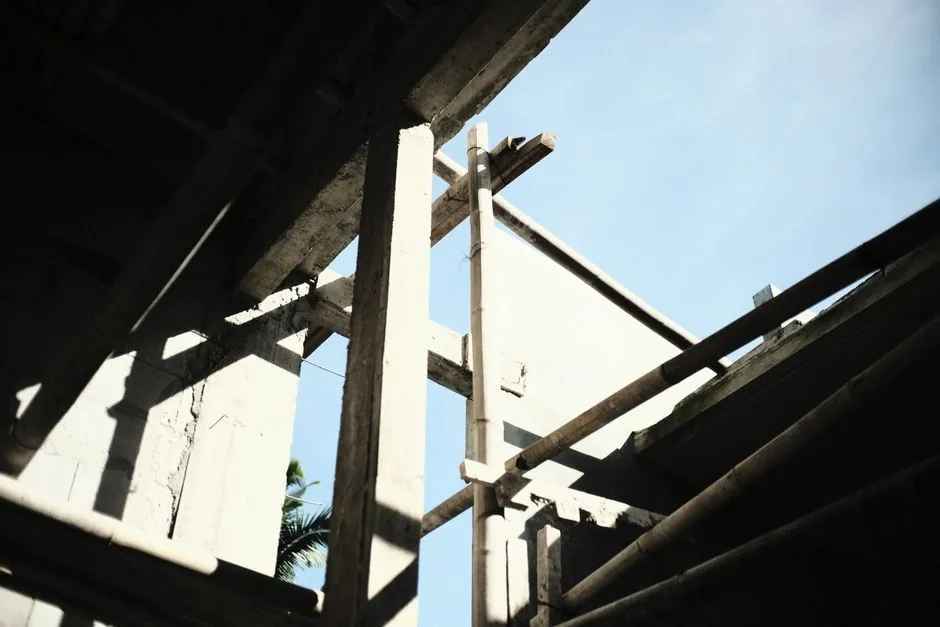
Cuplock is a modular scaffolding system where the vertical standard carries fixed lower cups and a rotating top cup at 500 mm intervals, and ledger blades are locked into four directions per node with a single hammer strike, eliminating loose wedge or screw couplers at the joint [S5]. That single mechanical fact drives the entire selection logic: Cuplock is fast and stiff in regular orthogonal bays, but limited in angular flexibility compared with rosette-based modular systems [S3].
Specifying Cuplock is not a single product choice but a system choice covering standards, ledgers, transoms, base jacks, diagonal braces, and working platforms, with each component carrying its own duty rating. Buyers comparing Cuplock against scaffolding alternatives need clear criteria on load class, geometry, corrosion protection, and compliance before they shortlist a vendor or rental fleet [S4].
Cup-and-Blade Node: The Mechanical Reason Cuplock Behaves the Way It Does
Each standard carries a lower fixed cup and an upper movable cup welded at 500 mm vertical intervals, and each ledger or transom terminates in a forged blade that drops into the lower cup before the top cup is rotated down to clamp up to four horizontals per node, with the connection typically tightened by one hammer blow [S2][S5]. This four-way orthogonal geometry is the root cause of Cuplock's two most-quoted strengths (assembly speed and bay repeatability) and its main weakness (no true diagonal connection at the same node, so irregular layouts require extra bracing).
Galvanizing is the default finish on the standards and ledgers, with hot-dip galvanizing specified for outdoor and humid environments because the zinc coating survives repeated site handling and weather exposure across multiple reuse cycles [S2]. High-strength steel grades are used for the standards to carry the vertical shoring loads that formwork support demands, and the cup joints transfer horizontal ledger forces into the standard as a combined shear and bearing action [S7].
Load Class, Height, and Bay Geometry: Three Numbers That Drive the Bill of Materials
Cuplock is regularly specified where work-at-height platforms must carry concentrated live loads from masonry stacks, concrete buckets, or formwork beams, and shoring and formwork support is one of the system signature applications [S2][S3]. For duty selection, the project working height, the planned bay size, and the number of working levels each define a load case that has to be checked against the standard's axial capacity and ledger bending capacity, with base jacks used to level the standard on uneven ground [S4].
Component selection usually starts with the standard length (commonly 0.5 m to 3.0 m for top-up, and full 3.0 m lengths for the main run), the ledger length setting the bay (typically 0.9 m to 2.4 m for light access, 1.8 m to 2.5 m for heavier duty), and transoms matched to the chosen scaffold plank width. Diagonal braces are added to every fourth or fifth bay longitudinally and to every access bay laterally to control sway, and base jacks spread the standard load into sole boards or mudsills on soft ground [S2].
Cuplock vs Ringlock vs Kwikstage vs Frame: A Criteria-Based Comparison
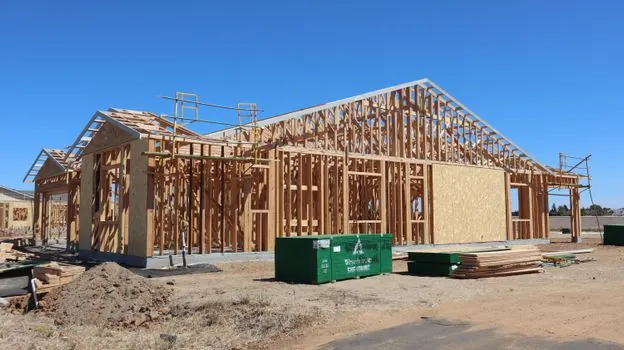
Cuplock connects 4 directions at each node via a cup-and-blade lock, Ringlock connects 8 directions at each rosette via a wedge lock, Kwikstage uses a captive wedge on a pressed steel spigot, and frame scaffolding is a welded A-frame stack joined by cross braces and pins, with frame pieces typically lighter and easier to transport while Cuplock occupies more transport volume per square meter of platform [S5][S6][S8]. On load distribution, Ringlock's 8-direction rosette is generally described as distributing load more evenly and taking higher loads than Cuplock's 4-direction cup [S5][S6].
On assembly speed, Kwikstage and Ringlock are both described as quicker than Cuplock, but Cuplock is still faster than traditional tube-and-clamp because the cup joint replaces loose fittings; on flexibility, Ringlock handles curved facades, circular tanks, and high-rise access because the rosette accepts angled braces, while Cuplock is best for straight residential, small-to-medium commercial, and standard infrastructure work [S3][S5][S6]. On cost, Cuplock is usually the lower initial investment for projects on standard configurations, and frame scaffolding has the lowest per-piece transport cost, but Ringlock's faster erection and higher reuse count can offset its higher unit price on large industrial sites [S5][S6][S8].
Who Should Pick Cuplock, and Who Should Walk Past It
Cuplock is the right call for facade access, plastering and painting, residential and small commercial builds, slab and beam formwork shoring, and repetitive bridge or tunnel falsework where bays are square or near-square [S2][S3][S5]. It is also a strong fit for industrial maintenance access where the geometry is known up front and the scaffold is erected and struck many times on a rotating plant.
Cuplock is the wrong call for complex curved structures such as petrochemical spheres, large-diameter tanks, ship hulls, or stadium geometries, where the 8-direction rosette of a Ringlock system absorbs angular bracing without custom welded solutions; it is also a poor fit when the only available crew has Kwikstage tooling and trained Kwikstage erectors, because mixing captive wedge and cup-lock parts at the same node is not approved [S3][S5][S6]. In those cases, a steel scaffolding decision is better driven by geometry and crew skills than by per-piece price.
Compliance, Inspection, and On-Site Failure Modes to Plan For
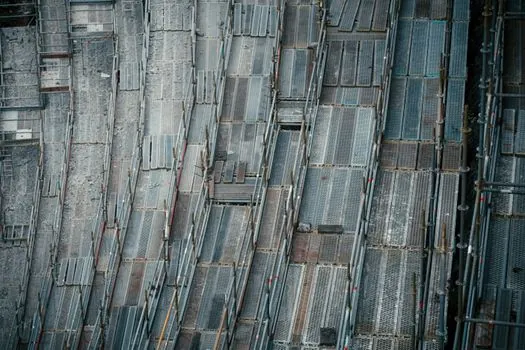
Every Cuplock system on a live site needs a tagged inspection regime covering damaged cups, bent blades, cracked welds at the rosette/cup, and thread integrity on base jacks, with components rejected on visible deformation rather than repaired on site [S4]. Common failure modes reported in the field include overloaded bays when concrete is pumped into formwork without re-checking the shoring layout, missing diagonal braces on long scaffold runs, and base jacks over-extended on soft ground without sole boards, all of which lead to differential settlement and sway.
For procurement, buyers should request the manufacturer's test certificate for the standard and ledger steel grade, the galvanizing thickness (typically reported in g/m² or µm), and the type-test load for the cup joint, and they should confirm the system is certified to the relevant national or regional scaffolding standard (such as EN 12810/EN 12811 in Europe, ANSI/ASSE A10.8 in the US, AS/NZS 1576 in Australia, or equivalent local codes) before placing a rental or purchase order [S1][S4].
Shortlist Logic: A Decision Sequence a Buyer Can Follow
Step 1 is to lock the duty case: working height, number of loaded levels, and the heaviest single load (masonry stack, concrete skip, formwork beam, or worker + tools only). Step 2 is to lock the geometry: square bays push the answer to Cuplock, curved or angled layouts push it to Ringlock, simple low-rise access on tight sites often defaults to frame or Kwikstage. Step 3 is to confirm the supply chain: hot-dip galvanized Cuplock in the right standard length, ledger length, and compatible accessories (base jacks, U-jacks, planks, stairs, guardrails) from a single manufacturer, because mixing standards across makers voids the system test certificate. [S3]
Buyers weighing Cuplock against the broader scaffolding market can cross-check selection logic against other equipment-driven spec maps such as this steel scaffolding selection for steel construction spec guide, and a related aluminum ladder selection for masonry sites breakdown helps where the access interface shifts from full scaffold to ladder-aided work platforms on smaller elevations.
Spec-level background on the components involved: pressure transmitter, and flow meter.