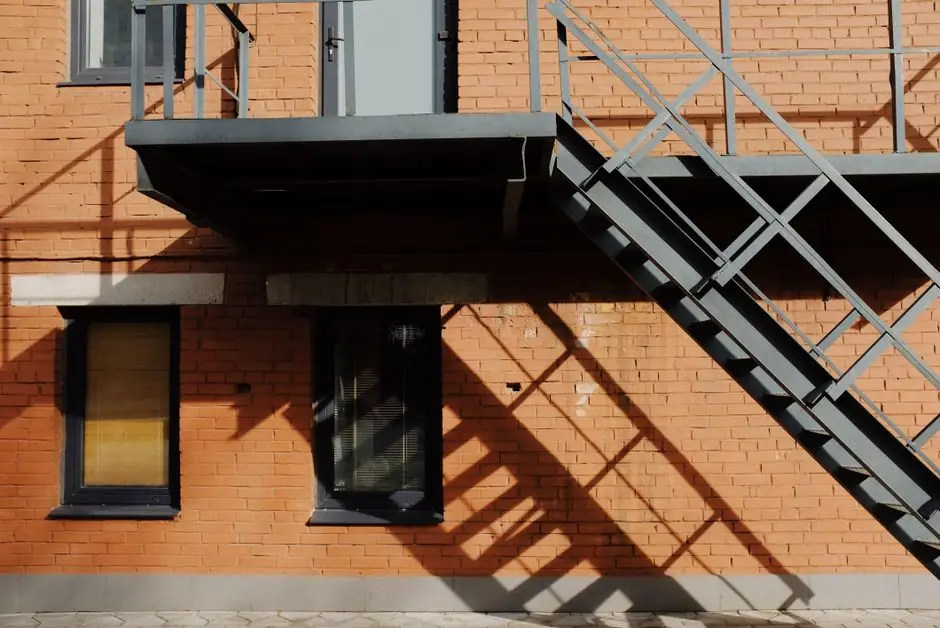
Aluminum is the most common portable ladder material in U.S. workplaces, yet metal ladders must never be used on or around exposed electrical conductors; a wood or fiberglass unit is required there [S1]. On masonry jobs without overhead power, a typical 10 ft aluminum extension weighs roughly 30 lb, undercutting equivalent wood or fiberglass ladders on carry and reposition time [S4].
Selection is governed by the duty rating, the configuration (step, single, extension), and the governing standard. Metal portable ladders in service after January 7, 2011 in California must comply with ANSI A14.2-2007, per T8 CCR Section 3276 [S1]. For a bricklayer or block-layer who climbs and descends hundreds of times per shift, those three data points (weight, duty class, A14.2 compliance) decide the unit, not the brand badge.
Duty Ratings and What They Mean On a Masonry Wall
Duty rating is the single most important number on the spec sticker. ANSI-style ladders fall into Type IA (Industrial, 300 lb / 136 kg), Type I (Industrial, 250 lb / 113 kg), Type II (Commercial, 225 lb / 102 kg), and Type III (Household, 200 lb / 91 kg); U.K. trade ladders carry roughly a 24 stone (152 kg) maximum load and represent the most common trade grade on the market [S5]. A mason carrying a 50 lb block, a hammer, a trowel, and a 5 gal mortar bucket (about 50 lb) plus a 200 lb body is well past a Type III limit, so the practical floor for masonry is Type II minimum and Type I/IA preferred.
Alaco Ladder, a U.S. heavy-duty aluminum maker, builds its construction-grade aluminum units from high-strength, aircraft grade aluminum alloy to OSHA and ANSI standards, with the explicit claim that "our ladders perform the same on day one as day 2,000" [S3]. The relevant property of aerospace-grade alloys (commonly 6000-series such as 6061-T6 or 7000-series) is a yield strength roughly 3-4x that of mild steel by weight, which is why a properly specified aluminum alloy ladder can match a steel ladder's load rating at a fraction of the mass [S3].
Configuration: Step, Single, or Extension
Three configurations cover almost every masonry scenario, and each has a hard length ceiling in the California code. A stepladder is self-supporting with a hinged back and flat steps, sized by the overall length of the front rail; a single ladder is one nonadjustable section, sized by overall side-rail length; an extension ladder has two or more traveling sections and is sized by the sum of the section lengths [S1]. For block work below 12 ft, a 6-8 ft stepladder is the workhorse; for tying and pointing at mid-wall, a 16-24 ft extension; for two-story façade or chimney work, a 28-40 ft two-section extension is typical.
Code length caps matter: 20 ft max for a stepladder, 48 ft for a two-section metal extension, 60 ft for a three-section metal extension, and 60 ft for a two-section wood extension [S1]. The metal ceiling is 12 ft shorter than the wood ceiling at the two-section level, so any plan specifying a 50 ft aluminum extension is non-compliant by code and must be reworked as a three-section aluminum or a different material. Sizing the extension also requires that the ladder reach at least 3 ft above the roofline or working surface so the user has a handhold on transition [S5].
Why Masonry Crews Default to Aluminum, and Where That Fails
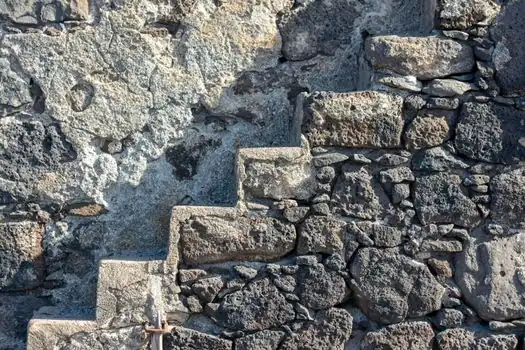
Aluminum's three job-site advantages on a masonry wall are weight, corrosion resistance, and dimensional stability. It does not rust like steel, so a ladder left on a wet scaffold overnight for the duration of a long project remains serviceable, which is a recurring need since construction projects "take months, even years to complete" [S3]. The 30 lb aluminum 10-footer versus a heavier wood or fiberglass equivalent translates directly to fewer fatigue injuries and faster repositioning during repetitive tie work [S4]. Heavy-duty aluminum is described by one U.S. maker as "as strong as steel ladders but lighter, easier to handle, install, and maintain, and more sustainable than steel" [S3].
The same conductivity that makes aluminum useful in electrical bonding makes it a hard exclusion near energized lines. Metal and aluminum ladders are excellent conductors of electricity; even wood and fiberglass can conduct when wet or dirty, so the rule is to stay clear of power lines regardless of material [S5]. If the masonry wall sits within reach of an overhead service drop, a temporary feeder panel, or a torch-down heat-welding rig's power lead, the safe pick is a fiberglass A14.5-2007 unit, not aluminum. Crews also need to plan for a working masonry insulation layer, scaffold ties, and aluminum veneer panel cladding that can be damaged by a leaning rail, so the placement and the rail protector matter as much as the duty rating.
Setup Geometry: 4-to-1 Footing and Pre-Use Checks
The standard safe angle is one foot out for every four feet of working height. For a 16 ft eave the ladder foot sits 4 ft from the wall, and the user can verify by standing with toes at the ladder feet and reaching the rungs at shoulder height with arms extended [S5]. This 4-to-1 rule is the geometry that keeps the rail load in pure compression in the lower third and prevents the base from kicking out under the cyclic loading of a mason stepping off and on with a loaded trowel.
Pre-use inspection is a one-minute habit that prevents most ladder incidents: check for loose bolts, frayed ropes on extension ladders, bent rungs, cracked rails, and missing or worn anti-slip feet [S5]. If a masonry crew is moving a single 24 ft aluminum ladder twenty times a day, that 60-second check, done by the climber before mounting, is the cheapest safety control on the site. Joints and rivets are the most fatigue-sensitive zones, and on aluminum those show up as hairline cracks around the rung-to-rail interface long before the rail bows.
Comparison: Aluminum vs Fiberglass vs Wood for Masonry

Three criteria dominate the material choice on a masonry wall: weight, electrical safety, and weather durability. A 10 ft aluminum extension weighs about 30 lb; equivalent fiberglass units are heavier, often 45-50 lb in the same duty class [S4]. On electrical exposure, aluminum is conductive and excluded, fiberglass is non-conductive and rated for live-work environments, and wood is non-conductive only when dry and clean [S1][S5]. On weather, aluminum wins on rust resistance, wood is vulnerable to rot and must never be painted because paint hides cracks, and fiberglass is inert but can be UV-degraded over years of outdoor storage [S3][S5].
Mapping the three materials to the four common masonry scenarios gives a clear table to specify against. For interior block work with no electrical exposure, the pick is a Type I or IA aluminum extension or stepladder for the weight win. For exterior wall tying near overhead service drops, the pick is a Type IA fiberglass A14.5-2007 stepladder. For long-duration outdoor projects where the ladder lives on site for months, aluminum still wins on corrosion, but only if the line-clearance distance to any energized conductor exceeds the OSHA minimum approach. For plaster or EIFS finish work where contamination of a fresh wall is a concern, the closed-section fiberglass rail sheds less dust and metal onto the surface than an open aluminum rail.
Accessories and Adjacent Specs Worth Specifying Together
Three accessories move with a serious masonry ladder order and should be listed on the same purchase order. A ladder leveler is mandatory on uneven ground or block-pile staging; a stabilizer bar increases the bearing footprint by roughly 1 ft on each side and prevents the sideways tip that is the most common ladder-fall mechanism on a scaffold. A wheel kit for an extension ladder lets a mason walk the unit up to a wall solo, removing the two-person carry that consumes labor on a small-crew site. A pail shelf, sized for a 5 gal bucket, removes the hand-carry load on climbs and reduces the risk of dropping mortar on a worker below. [S5]
Adjacent equipment on the same site includes the aluminum window door and cladding systems, the aluminum ladder itself, and the scaffold, plank, and tie system that the ladder connects to. For contractors selecting across these categories, related coverage on steel scaffolding grade, load, and fall-protection ladders and on climbing formwork for masonry and vertical concrete ladders applies the same duty-rating and standards-discipline thinking. For the masonry wall's own fasteners and rebar splices, the selection logic in rebar coupler selection for road maintenance carries the same "match the standard to the load case" structure that an A14.2 aluminum ladder purchase should follow.
Track these signals next: confirm the ladder's A14.2-2007 compliance stamp is present and legible on every unit delivered, log the duty rating and the manufacturer date code on a per-ladder register, and re-inspect any aluminum extension that has taken a drop or a tip-over impact before the next shift. Failure to record those three items is the most common reason an OSHA ladder citation outlasts the original purchase price.