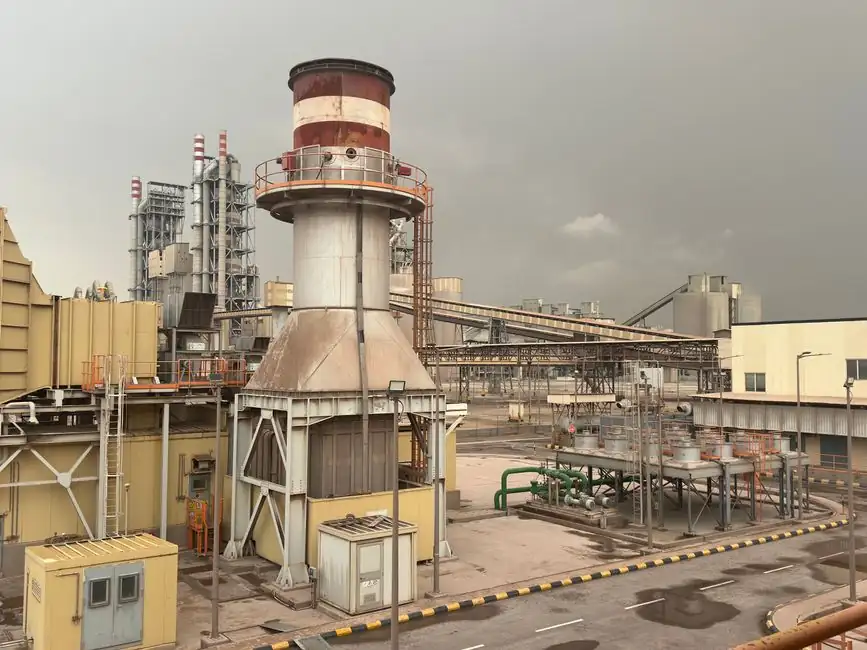
Coke rate on a continuous mineral wool cupola is set first by the melt temperature the fibre spinner needs, not by an abstract fuel economy target, and foundry coke at roughly 0.2 m mean diameter carrying 3-15% ash is the reference fuel the published heat balances are built around [S2].
For a stone-wool cupola running on air blast alone the practical operating band sits near 13% coke on charge to keep the bath at the 1,430 °C window needed for fibre attenuation, and that figure is the anchor most plant engineers quote when the slag basicity and acid coefficient are already fixed [S3] (2016-08). Outside the cupola-furnace world, no minimum coke rate is mandatory for a given melt rate; coke rate only governs metal temperature once the bed depth passes the critical hold point [S8] (2021-04).
What "coke rate" actually means on a mineral wool cupola
Coke rate is the mass of coke charged per mass of stone or slag melt, and on a shaft furnace it does three jobs at once: it is the fuel, it is the permeable bed that lets blast air climb through the charge, and it is the reducing buffer that holds the melt chemistry inside the acid coefficient window for spinning [S2][S4]. A cupola furnace is therefore tuned as a heat and mass balance, not as a burner.
Published trials on iron cupolas show the same coupling: melt rate scales with total energy input (coke plus auxiliary gas) and the optimum coke rate shifts when oxygen, natural gas, or hot blast is added above the tuyeres, with the spare energy credit moving to either throughput or fuel saving depending on the constraint [S1] (1984).
Numbers plant engineers actually run
On a foundry-coke cupola in conventional air-blast service the operating coke rate is set by melt temperature first, and the 2,600 °F (1,430 °C) ceiling in the cited operations note required pushing the coke share to about 13% of the charge, while every percentage point of silicon loss to oxidation has to be paid for in additional coke input [S3] (2016-08).
Slag basicity, not coke rate, sets the refractory life: an acidic lining is mandatory in North American practice because a basic slag will attack the silica refractory, and the acid coefficient plus the CaO/SiO2 ratio are the variables a gas aluminum melting furnace engineer has to balance against the coke bed, which is covered in the spec map on cupola slag basicity. A rock wool cupola therefore trades refractories for fuel: push basicity higher, push coke harder.
How oxygen and hot blast bend the curve
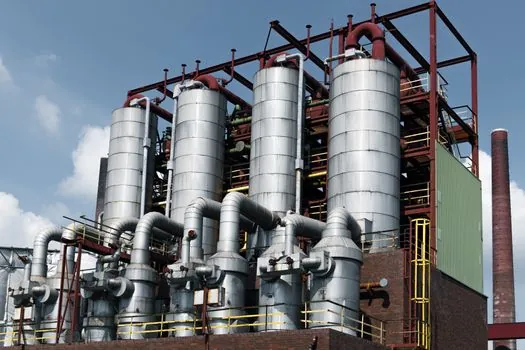
Oxygen enrichment lowers the nitrogen ballast in the blast, which raises adiabatic flame temperature and lets the same melt temperature be reached on less coke; the published model shows the coke-saving effect of oxygen is larger at a 500 °C blast than at 800 °C, because the relative weight of nitrogen dilution is bigger at the colder blast [S6].
Natural gas injection above the coke bed, evaluated in the Bureau of Mines gas-assisted cupola trial, reduces the coke needed to reach a given melt rate but does not eliminate it: gas supplies part of the sensible heat, the coke bed still has to stay permeable and reducing [S1] (1984). Air Products describes the same idea for mineral wool, with coke providing both fuel and inter-particle void for the tuyere gas to climb the stack [S5].
Comparison: three ways to push coke rate down
Three process options sit in front of the plant engineer when the target is the lowest sustainable coke rate on a continuous mineral wool line, and they trade differently against capital, melt rate, and refractories. [S5]
Hot-blast cupola: raising blast air temperature from ambient to 500-800 °C cuts coke use at the cost of a hot-blast stove and pipe runs; the credit is bigger the lower the starting blast temperature, which is why retrofit economics are strongest on older cold-blast units [S6]. Oxygen-enriched cupola: adding 1-3% O2 in the blast lowers nitrogen flow, raises flame temperature, and trims coke, but the credit shrinks as blast temperature rises and the oxygen supply cost is the limiting economics [S6]. Gas- or oil-assisted cupola: a side-fired burner above the coke bed cuts coke rate for the same melt rate, with the credit translating into either more tonnes per hour or a lower fuel bill, not both at once [S1] (1984).
Why coke will not go to zero
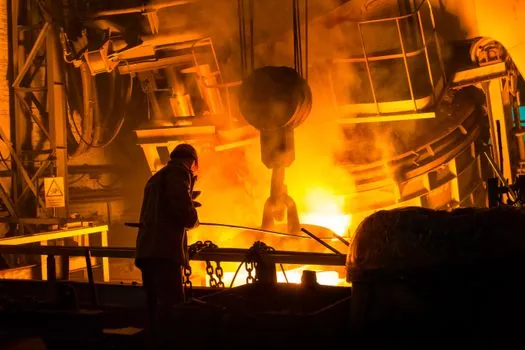
Foundry coke is mechanically load-bearing in the shaft: the bed must support the weight of stone, briquet, and recycled material above it while still letting blast air distribute, and there is no other solid fuel that combines the 3-15% ash band, the ~0.2 m mean diameter, and the high-temperature strength that stone-wool practice has standardised on [S2].
Petroleum coke is too reactive in the upper shaft, anthracite fragments pack too tight, and charcoal cannot carry the iron-bearing reduction load; even the gas-assisted trial still kept a coke bed under the melting zone, with the gas doing the supplementary work above the tuyeres [S1] (1984). A melting furnace burning only gas, oil, or electricity gives the operator process control but requires a refractory strategy and a melt-rate profile that are not the same as a coke-fired cupola, which is why the spec matrix in SiC vs graphite crucible refractories treats the materials and the crucible furnace topology as a separate decision tree.
Operating signals that the coke rate is wrong
Backpressure, blast temperature, slag FeO, and stack oxygen are the four channels an operator watches to decide whether the coke rate is set correctly, and the rule from foundry practice is that a coke-rate change shows up in tap temperature within 30-60 minutes because that is the residence time of a stone particle inside the shaft [S3] (2016-08).
Two failure modes dominate: a low coke rate cools the melt and burns the iron into the slag (visible as a high FeO slag and a grey-to-white iron drift in the chill test), while a high coke rate overheats the tuyeres, accelerates refractory wear, and pushes CO above its combustion-air target in the stack [S3][S8] (2021-04). On a holding furnace downstream, those signals appear as temperature sag and a drift in the fibre diameter distribution, not as a fuel-meter reading.
Sourcing and process evidence
The most cited engineering reference for stone-wool cupola heat balance is the ACS Industrial & Engineering Chemistry Research paper on mineral melting cupola modelling, which anchors the 0.2 m coke size, 3-15% ash, and the effect of oxygen enrichment on coke rate at different blast temperatures [S2][S6].
Operating practice is documented in the Modern Casting operations note and in the Mastermelt cupola control guide, both of which state the 13% coke figure for the 2,600 °F (1,430 °C) target and the rule that coke rate controls tap temperature only after the bed is established [S3] (2016-08) [S8] (2021-04). The Bureau of Mines 1984 gas-assisted trial and the US patent on mineral-wool cupola operation with spent pot lining both support the substitution-with-coke-bed-still-present pattern that the industry still runs on [S1] (1984) [S4].
Watch the cupola slag basicity spec map for the next update on how lower coke rates change the acid coefficient and the CaO/SiO2 ratio at the same time.