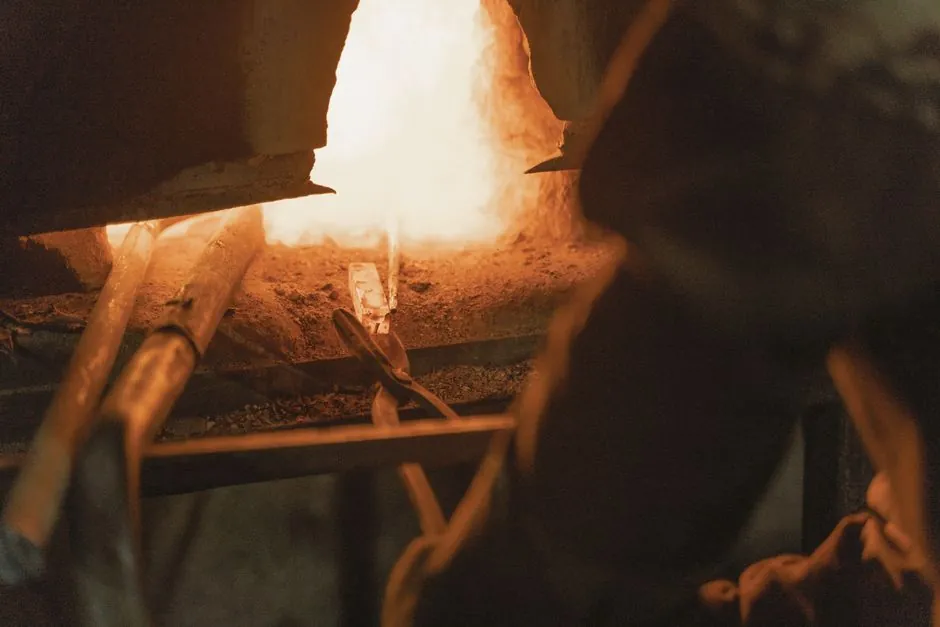
A cupola furnace runs on a metallic charge of cast iron scrap, pig iron, and steel scrap, with coke as fuel and limestone as flux; a blast furnace runs on iron ore, coke, and limestone [S1]. The two are not interchangeable: the cupola is a melting unit, while the blast furnace is a smelting and reduction unit [S2].
Output follows directly from the input. A cupola discharges molten cast iron at roughly 2.5-4.0% C and 1.0-3.0% Si, suitable for sand-mould casting. A blast furnace discharges pig iron at roughly 4.0-4.5% C with lower Si, plus a slag tapped separately for cement, road base, and concrete aggregate [S4]. Selecting between them is a feedstock and product decision, not a size decision.
Charge materials: what goes in at the top
Blast furnace burden is dominated by iron-bearing feeds: iron ore (sinter, pellets, lump), coke, and limestone, charged in alternating layers through a bell or bell-less top [S2]. The coke rate for an integrated ironmaking blast furnace typically sits in the 350-500 kg/thm range, with pulverised coal injection of 150-200 kg/thm replacing part of that coke in modern plants. Cupola charge is fundamentally metallic: return scrap (gates, risers, sprues), purchased cast iron scrap, steel scrap for carbon trimming, foundry-grade coke at 8-12% of the metallic charge, and limestone or dolomite at 1-3% for desulphurisation and slag conditioning [S1][S5].
Flux selection differs. A blast furnace flux (limestone or dolomite) is sized to deliver a target slag basicity (CaO/SiO2) of 1.0-1.3, engineered for hot-metal desulphurisation and Si control. A cupola flux targets a lower basicity of 0.6-1.0, balancing against iron loss to FeO in slag. Both units share the countercurrent principle, so burden permeability, sizing of coke (typically 50-150 mm for blast furnace, 50-100 mm for cupola), and tuyere airflow all set the operating window [S2][S4].
Product output: cast iron vs pig iron
Cupola tapped metal exits at 1,400-1,550 degrees C and is poured directly into sand or shell moulds; the standard product is grey, ductile, or malleable cast iron, with C and Si tuned through the charge mix and inoculation. A blast furnace produces pig iron tapped at 1,450-1,550 degrees C, then either cast into pigs for foundries or transferred molten to a basic oxygen furnace or electric arc furnace for steelmaking; lead and copper smelting shaft furnaces use the same shaft principle at smaller scale [S2].
The carbon-silicon split defines downstream routing. Cast iron from a cupola, with its higher Si, has a stable Fe-C-Si ternary that solidifies with graphite flakes or nodules, no further refining required. Pig iron from a blast furnace is over-carburised and must be decarburised in a downstream converter; otherwise, it goes directly to a foundry as a charge material that the cupola itself then melts. The two furnace types are linked: a cupola commonly buys pig iron pucks to balance charge carbon, and a blast furnace cannot make castings directly without an additional melting and alloying step.
Slag: the real economic divergence
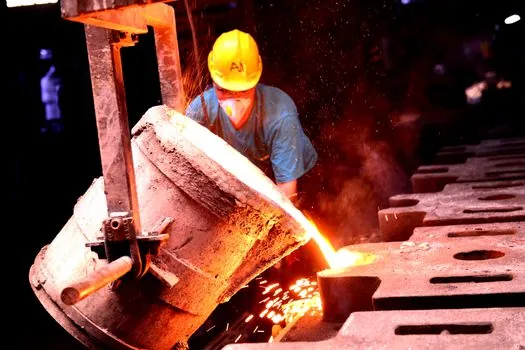
Slag chemistry is similar, but the market is not. Blast furnace slag, air-cooled or water-granulated, has established use in cement (ground granulated blast-furnace slag, GGBFS), road base, and concrete aggregate; cupola slag typically goes to landfill or low-grade fill, because foundry fluxes vary and metal-oxidation losses (FeO up to 5-15% in cupola slag versus under 1% in well-run blast furnace slag) make it less consistent [S4]. A 2018 Technical University of Kosice comparison confirmed hydraulic activity in cupola slag is achievable only with careful basicity control, which most foundries do not run.
For a greenfield decision, this is a hidden cost line. A 10 t/h cupola generating roughly 400-600 kg of slag per ton of metal will land 4-6 t/h of slag with limited offtake; an integrated blast furnace route produces 250-350 kg of slag per ton of hot metal with a mature cement-sector buyer. Foundries that can lock in a cement or aggregate buyer for cupola slag can absorb otherwise wasted tonnage; those that cannot should price in landfill or inerting cost.
Operating envelope: size, air, and continuity
A cupola is short and hot: typically 5-13 ft (1.5-4.0 m) in diameter, 20-40 ft (6-12 m) tall, hot-blast air at 400-700 degrees C, and melting rates from 1 t/h for a 24-inch unit to 25-30 t/h for a 72-84 inch (1.8-2.1 m) diameter stack [S3][S5]. A blast furnace is large and continuous: hearth diameters of 8-15 m, working volumes of 2,000-5,000 m3, hot-blast temperatures of 1,100-1,300 degrees C through 20-40 tuyeres, and campaign lives measured in years (10-25 years between relines) [S2].
Continuity is a hidden specification. A blast furnace is designed for multi-year continuous campaign, started up and blown down over days; an unexpected stop is a major economic event. A cupola is more flexible: cold start in 2-4 hours, melt on demand, and shutdown overnight or between shifts. Foundries serving short-run or job-shop work generally cannot justify blast furnace capital; integrated mills cannot run a foundry-style variable schedule.
Selection matrix: pick by feedstock and product, not by heat
For a foundry pouring grey or ductile cast iron shapes, with a metallic scrap supply chain already in place and no captive ore supply, the cupola is the right unit, lower capex (typically 0.5-3 million USD for a 5-15 t/h unit, per industry pricing trackers) versus a blast furnace at 100-500 million USD minimum, and the slag is a manageable waste line. For an integrated steelmaker or pig iron producer running iron ore from a captive mine or long-term offtake, with downstream steelmaking, oxygen, and slag sales, the blast furnace is the correct primary reduction unit, and the cupola is only a downstream remelter, not a competitor [S1][S2].
Hybrid routes deserve a sentence. Many modern foundries pair an induction furnace for clean steel-based ductile iron production with a cupola for high-tonnage grey iron; a few specialty plants use a submerged arc or electric arc furnace for charge melting. The cupola's niche, low-alloy grey iron at high tonnage, is narrow but durable, and it survives because no other melting route matches its cost per ton on that specific product.
Constraints and common failure modes
Cupola limitations are well documented. Sulfur pick-up from coke drives ductile-iron producers off the cupola entirely, because ductile iron needs S below 0.015% and basic cupola sulphur runs 0.05-0.12%; desulphurisation ladle treatment (Mg or CaC2) is the workaround, raising cost and process complexity. Blast furnace limitations are scale and carbon: hot-blast stoves, coke ovens, and slag handling all demand capital, and process CO2 intensity, estimated at 1.6-2.2 t CO2 per t of crude steel via the BF-BOF route, makes the unit a long-term decarbonisation target [S2].
Spec engineers should treat both as decision points, not upgrades. Replacing a cupola with induction, or a blast furnace with direct reduction, are not like-for-like swaps; they change charge, slag, product chemistry, and downstream capacity all at once. Pre-engineering must lock feedstock, target C and Si, slag offtake, and emission envelope before any equipment list is opened.
Track three signals over the next 6-12 months: cupola-grade coke and steel scrap pricing, which set the operating cost line; iron ore and coking coal benchmark spreads, which set the integrated route's relative cost; and regional slag offtake capacity, because cement-sector absorption of granulated blast furnace slag is what keeps that route's waste economics viable. For foundries weighing a new cupola furnace build, sizing now hinges less on the furnace itself than on locked-in scrap supply and a realistic slag disposal plan; the cupola furnace price per ton per hour 2026 capacity-based cost breakdown shows why that variable dominates.
For component-level specifications, see construction machinery and equipment, and lamps and light fittings.