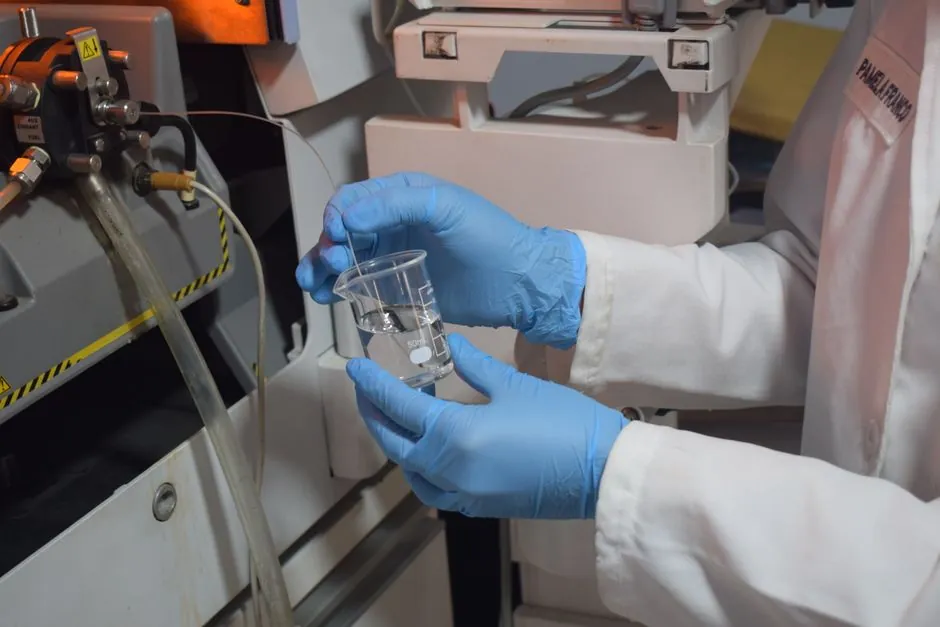
A modern high-power cut-off machine, such as the 30kW fiber laser cutter commissioned by SENFENG in the United States, is brought online through a staged procedure: equipment inspection on 2026-08-07, laser source and auxiliary setup on 2026-08-09, mechanical assembly on 2026-08-10/11, and electrical and motion-control commissioning on 2026-08-17/19 [S1].
The same staged pattern, planning, dry tests, no-load trials, loaded performance verification, handover, applies to abrasive wheel cut-off machines, plasma tables, and waterjet tables, since the underlying commissioning process is defined as a quality procedure that documents and verifies that a facility meets the owner's project requirements [S2].
Pre-Install Inspection and Site Readiness
Commissioning begins before the crate is opened: technicians verify foundation plates, power-supply configuration, and overhead clearance, and they document the unpacking condition of the machine, accessories, and any shipping damage [S1]. Where overhead space is limited, conventional lifting gear is replaced by a compact forklift, and the machine is positioned incrementally, with the engineer controlling placement into the designated footprint [S1].
Reliable Plant frames the same step as anticipation: repair histories for the asset class are pulled from the CMMS, interview data is collected from operators of identical equipment, and the resulting expectations are written into a retrievable commissioning framework before any tool is powered on [S3]. For a cut-off machine, this stage also locks the future positions of the voltage stabilizer, air compressor, dust extraction, and cooling skid, since the 30kW laser source is moved into a dedicated air-conditioned room with a one-pass placement strategy [S1].
Mechanical Assembly and Auxiliary Hookup
Mechanical assembly covers rear platform alignment and leveling, cutting head mounting, tow chain restoration, sheet metal closure, cable routing, and dust extraction ducting, with ductwork extended on site when the layout exceeds the original fitting length [S1]. The ME1114 mechanical commissioning course lists the standard mechanical checks used across equipment classes: assembly check, alignment check, grounding verification, insulation resistance test, and polarization index test [S4].
For an abrasive cut-off machine the equivalent assembly items are wheel guard fit, spindle runout, work-hold alignment, and coolant nozzle aim, but the same rule applies: mechanical completion is signed off only after every auxiliary, dust collection, lubrication, and guarding item is in place and traceable to a checklist [S1][S4].
Electrical Commissioning and Motion-Control Diagnostics
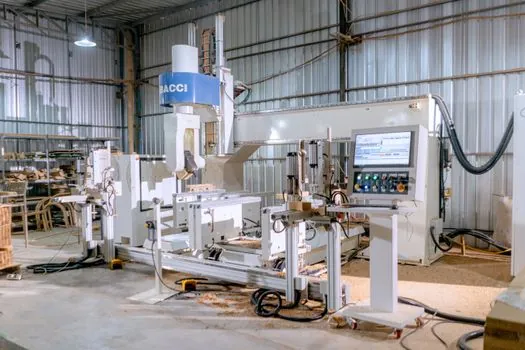
Once mains power is available, the engineer performs power-on commissioning, a comprehensive inspection of the motion-control system, and verification of each axis drive, servo loop, and E-stop chain [S1]. The ME1114 reference lists the electrical tests to record at this stage: insulation resistance, polarization index, phase rotation, grounding continuity, and protective device settings [S4].
ScienceDirect defines commissioning as a quality control procedure that documents and verifies that a facility meets the owner's project requirements, which is why each test point, setpoint, alarm threshold, and interlock is logged with the value observed, the pass/fail result, and the engineer who signed it [S2]. For high-power cut-off machines the motion stage also includes verifying the cutting head tracking accuracy on a graphite witness board before any live cuts are attempted [S1].
No-Load and Loaded Performance Verification
Performance verification runs in two passes: first a no-load pass that confirms direction of rotation, travel limits, lubrication flow, and dust extraction performance, then a loaded pass that cuts witness coupons and records kerf width, dross, perpendicularity, and surface finish against a parameter sheet [S1][S4]. Flowdit's commissioning glossary calls this the "machine works correctly" stage, where the asset is checked for safe, efficient, and reliable operation against the Owner's Project Requirements (OPR) and the Basis of Design (BoD) [S5].
Reliable Plant's commissioning philosophy adds the perception layer: vibration, temperature, current, and pressure are trended over the loaded run, and any drift outside the asset's documented envelope, such as a centrifugal blower's allowable vibration limit, triggers an investigation before the machine is accepted [S3]. The same envelope approach, alarm trip values versus observed values, is what separates a real commissioning record from a one-line startup note [S3][S4].
Common Failure Modes and Acceptance Criteria
Flowdit's glossary lists the two recurring failure modes seen across machine commissioning: improper installation or mounting, which produces noise, vibration, shortened life, and structural damage, and integration failure, where a machine that works on the factory floor cannot talk to a BMS, PLC, or upstream process [S5]. The mitigation in both cases is the same: bring the commissioning team in at first installation, or, if that is impossible, hand the installer a QA/QC checklist that mirrors the OPR [S5].
Acceptance is signed only after the loaded cut data matches the parameter table, the witness coupons pass visual inspection, the dust extraction airflow is at design CFM, and the operator training session has produced signed competence records [S1][S3]. ScienceDirect ties the sign-off to documentation: commissioning is the record that proves the facility met the owner's project requirements, not just the moment the machine first cuts a part [S2].
Standards, Documentation, and Handover
The ME1114 reference treats commissioning, often called acceptance testing, as a documented sequence that achieves, verifies, tests, accepts, and records that performance meets design intent and the owner and occupant needs, and that runs from programme phase to at least one year past project closeout [S4]. For a cutting machine the equivalent record set includes the as-built electrical schematic, the axis calibration sheet, the cutting parameter table, the alarm and interlock matrix, the spare parts list, and the O&M manual marked up with the actual settings [S4][S6].
CxPlanner summarises the closeout as planning, testing, and certifying that every component and parameter associated with the machine is safe, efficient, predictable, and documented, which is the same exit criterion used for HVAC, generators, and fire systems under ME1114 Chapter 4 through Chapter 7 [S4][S6]. Comparable asset-management and reliability practices are documented in our guide to motor grader spare parts and consumables, where the same traceable-replacement record logic applies.
Trackable signals for the next six months: (1) follow-up commissioning reports from SENFENG or competing OEMs on 20kW+ fiber laser cutters, since the 30kW USA install released 2026-08-31 will set a benchmark for cycle time and parameter sheets [S1]; (2) any update to the ME1114 mechanical commissioning course material, since its 2018 release still anchors the canonical list of electrical and mechanical tests [S4].
Spec-level background on the components involved: tensile testing machine.