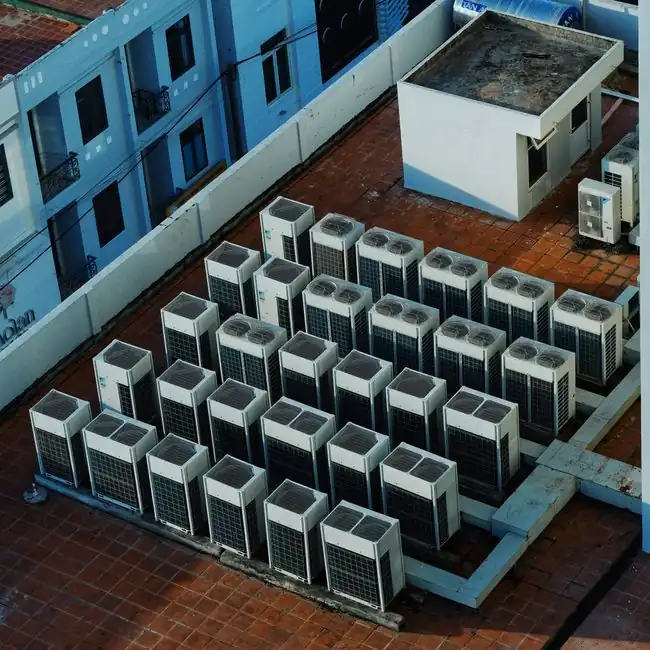
Stud welding in HVAC sheet-metal work runs in milliseconds, but the tool wear is cumulative, and a missed chuck inspection is the single biggest cause of off-center welds and lack-of-fusion failures documented in the field [S1][S10].
The HVAC variant uses a slightly modified process because the base metal is wrapped in insulation, which traps heat and contaminants; the work is often done overhead on thin galvanized or stainless sheet, where chuck condition directly decides weld quality [S2].
Three-Line Maintenance Architecture: Gun, Cables, Power Unit
Modern drawn-arc stud welding equipment has exactly three service domains: the stud welding gun, the cable set (incoming power, weld, ground, control), and the power control unit [S5]. The gun carries out most of the welding functions and should be disassembled and cleaned at least every 3 months, with special attention to the lifting mechanism, which must remain absolutely free with no binding inside the gun and no contact between the stud and the spark shield [S4]. Lubrication of the lifting mechanism is forbidden; only a dry cleaner such as electrical contact cleaner is approved [S4].
Power sources, by contrast, have very few mechanical parts (cooling fans, contactors, switches, cabling), and rarely need service beyond an annual blow-out to remove conductive metallic dust, which is the dominant failure cause in grinding-heavy HVAC fab shops [S5]. A single annual blow-out of a properly sited power source commonly yields 20 years of service life [S5]. In harsh environments with grinding or sanding, metallic dust can enter the welder and cause unexplained control faults, so opening the cover and blowing it out periodically is a documented best practice, with the proviso that CD units may continue to store energy after unplugging and require a one-minute discharge wait [S4].
Daily and Weekly Gun-Side Tasks for HVAC Sheet Work
A five-minute end-of-shift routine on the gun is the single highest-leverage habit in HVAC stud welding, and CNC operators see measurable drift in weld quality when it is skipped [S6]. The copper chuck is a wear item and should be inspected daily for pitting or erosion from the high-intensity electrical arc; a specialized wire brush removes carbon buildup and keeps current transfer uniform [S6]. Off-center welds trace back to worn chucks or bent studs as the primary culprits, and chucks should be replaced on a preventive schedule rather than run to failure [S10].
Ceramic ferrules should be checked for dampness and the base metal verified dry before every weld; in drawn-arc welding with a gas shield, increasing shield flow rate is the documented corrective when porosity appears [S10]. End-of-week tasks include continuity checks on all four cables with a standard Ohm meter, with a slight pull on every connector so any break separates visibly, plus visual inspection for cuts, bare conductor, or fraying, and immediate replacement of any damaged ground, weld, or incoming-power cable because exposed conductors are life-threatening [S4][S5]. Control cable damage in particular is a common source of stud weld system failure and is worth replacing at the first sign of damage rather than after it has caused a production stop [S5].
Tiered Tear-Down Schedule by Production Volume
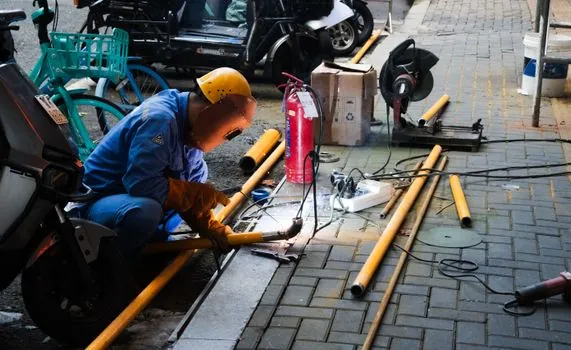
Stud gun tear-down frequency should be tiered to actual stud throughput, not the calendar, because the gun is primarily mechanical and component bind or drag is what produces poor welds [S5]. For heavy users at 500,000 studs per year, a quarterly tear-down, clean, inspect, and replace program is recommended; for normal users at 250,000 studs per year, every six months; for lighter users, a minimum annual tear-down [S5]. The 3-month interval is independently corroborated by OEM service literature, which sets the gun strip-down floor at quarterly regardless of throughput [S4].
For CNC stud welders used in high-precision HVAC bracket production, calibration drift is the parallel risk to mechanical wear: dust, worn electrodes, and minor misalignment degrade electrical signals, so daily mechanical checks should be paired with periodic calibration against known reference studs to keep fillet geometry within spec [S8]. When studs are prepared with automated precision, the welding machine experiences less stress from inconsistent fluxing, which reduces spatter and cuts cleaning time, making automated stud preparation a force multiplier for the maintenance budget on production HVAC lines [S9].
Symptom-to-Cause Map for the Four Common HVAC Failures
When a stud bends easily without breaking the weld, the root cause is typically lack of fusion, which points to low current, short weld time, or contaminated base metal, and the corrective is to verify amperage at the stud gun with a clamp meter before chasing mechanical faults [S10]. Porosity in the fillet is the symptom cluster most often tied to damp ceramic ferrules or wet base metal, both common on HVAC jobs where condensation forms on cold ductwork; the corrective is ferrule replacement and pre-weld drying of the base, with shield-gas flow bumped only if the machine is so equipped [S10].
Erratic arc ignition that cannot be traced to settings is frequently a control cable intermittent, and a simple continuity check with the cable slightly flexed will expose the break that a static meter reading misses [S4]. Unexplained control faults on a power unit that lives near a grinding station almost always trace to conductive metallic dust on the control boards, and a cover-off blow-out resolves the issue without board replacement, provided the dust has not already caused a tracking fault [S4][S5]. Knowing when not to repair matters: a chuck with visible arc-erosion pitting should be replaced, not dressed, because dressed chucks lose grip on the stud collet and produce the off-center weld pattern that started the inspection in the first place [S6][S10].
Tooling and Safety Boundaries Specific to HVAC Work
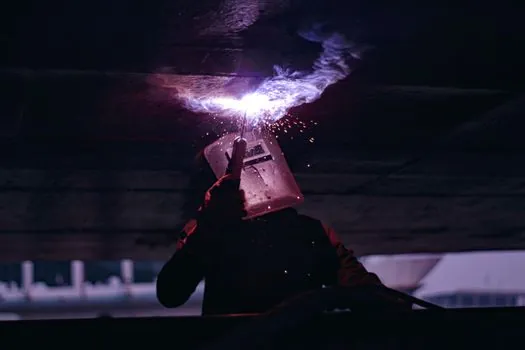
Hand-tool and pistol maintenance follows the same principles as bench guns: chucks, contact points, and lift springs get the most attention, and housekeeping around the tool prevents the cross-contamination that causes weld defects [S7]. For dent-repair stud welders used on thin HVAC sheet, the slide hammer and stud release mechanism must be kept free of carbon so the stud releases without bending the parent metal, and the released stud should be cut and ground flush rather than pried off [S3].
On the work-environment side, stud welder power sources should be sited away from grinding and other debris-generating operations, and operators should be formally trained rather than left to learn on the job, because equipment failure in the field correlates strongly with operator training gaps in addition to mechanical wear [S1][S5]. For broader plant decisions around TIG welder integration or arc welder line layout in HVAC fab shops, the same dust-and-heat discipline applies to neighbouring welding processes and is a useful cross-reference when drafting a single maintenance SOP for the whole welding bay.
Trackable signals to watch over the next quarter: OEM service bulletins from Nelson, Taylor, and ProWeld on chuck material upgrades, plus any revision to AWS D1.1 stud-welding clauses that govern HVAC shear-connector work; operators should also log chuck replacement intervals against weld-pull test results to build a defensible preventive-maintenance interval for their specific HVAC product mix.
See also our earlier report, Aluminum Veneer Panel Selection for Commercial Buildings.