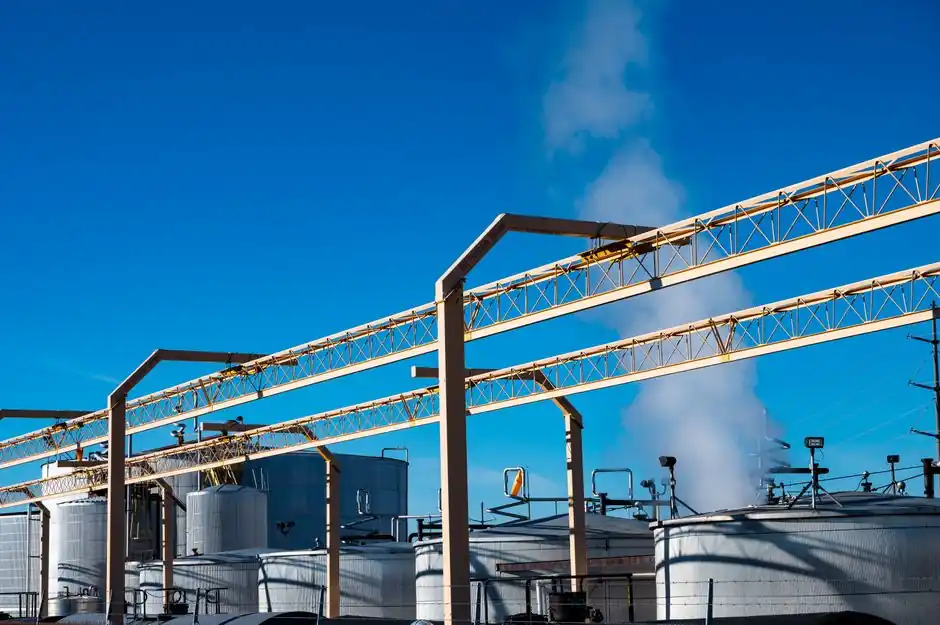
The US cryogenic vaporizer market is valued at $127.3M in 2026 and is projected to reach $156.5M by 2031, a 4.2% CAGR, with the strongest demand pull coming from LNG regasification terminals, industrial-gas supply, and aerospace propulsion [S2].
For project engineers ordering a packaged cryogenic storage tank plus vaporizer in October 2026, realistic delivery is roughly 6 months for a skidded, no-rotating-equipment system, compared with 1-2 years for systems that include reciprocating or centrifugal compression stages [S6]. That gap is now the single largest schedule variable in any LNG, LOX, LIN, LAr, or LCO2 plant build.
Where the 6-Month Lead Time Comes From
Chart Industries' Cryonorm product line is published at a 6-month lead time for skid-integrated cryogenic tank and vaporizer packages, framed explicitly against alternative processes that bundle rotating equipment and typically run 1-2 years [S6]. The shorter cycle is a function of scope: a fixed skidded system with ambient air-heated or steam-heated vaporization, pressure regulation, and a metering skid has fewer long-cycle items than a system that needs a boil-off gas compressor, a high-pressure LNG pump, or a BOG recondenser train.
The 6-month figure aligns with how engineers should treat the procurement critical path. For buyers, the practical implication is that a tank-and-vaporizer-only RFQ placed in October 2026 lands around April 2027, while any system with a cold pump or BOG compressor stretches into 2027-2028. For the storage vessel itself, sizing must be locked before the RFQ: usable volume depends on the stored medium, density, working pressure, filling ratio, and reserve policy, not just nominal cubic meters [S3].
Selection Criteria: Tank Size First, Vaporizer Second
Cryogenic tank sizing should be driven by the stored medium and the real consumption profile, not by tank catalog volume [S3]. A LOX, LIN, LAr, LNG, and LCO2 tank may share a nominal diameter but differ in working pressure (typically 4-17 bar for vacuum-insulated bulk tanks), filling ratio limits, and boil-off rate, so two tanks with the same water-volume rating deliver different usable gas quantities.
Daily consumption is the most important sizing number, and average use must be separated from peak use because the vaporizer and pressure-regulator train, not the tank, governs peak flow [S3]. A useful working sequence: (1) lock the gas and its supply pressure band; (2) tabulate average m3/hr and peak m3/hr from operating data; (3) size the tank for the desired reserve period, normally 5-14 days for industrial-gas users; (4) size the vaporizer for peak m3/hr at the design minimum ambient temperature, because ambient air-heated vaporizers de-rate in cold weather.
Where downstream flow is the limiter, larger tanks do not fix a vaporizer shortfall. Sizing the construction machinery and equipment downstream of the vaporizer, such as compressor skids, pump skids, and pressure-regulated metering trains, has to be checked against the same peak figure, or the tank arrives on time and the plant still cannot run at nameplate.
Vaporizer Type Comparison: Ambient, Steam, and Electric

Cryogenic vaporizers convert LIN, LOX, LAr, and LNG to gas by adding controlled heat through ambient air convection, steam or hot water coils, or electric heating elements, each with a different cost, response time, and climate suitability profile [S4]. The choice sets both the operating cost and the schedule risk, because steam-heated and electric-heated units need a utility tie-in that can extend the site-side critical path well beyond the 6-month equipment lead time.
A direct comparison on four criteria, drawn from the engineering behaviour described in [S4]:
Ambient units dominate small and mid-scale industrial gas and LNG stations because they remove the utility dependency, which is often the hidden schedule risk. Steam-heated units dominate the high-flow end of the LNG and refinery hydrogen market, where heat-exchanger area and stable control matter more than the simplicity of the skid. Electric units are specified where footprint, weather independence, or precise temperature control outweighs the operating cost.
Lead-Time Drivers and Schedule Levers
Three variables control the actual delivery date for a tank-and-vaporizer package in 2026. First, scope: a tank plus ambient vaporizer plus PRV skid fits the published 6-month window; adding a BOG compressor or a high-pressure pump pushes the project into the 1-2 year band that the [S6] reference uses for rotating-equipment systems. Second, the engineering deliverable: if the P&ID, datasheet, and HazOp are still being written at RFQ issue, fabricators cannot start cutting plate, and 4-8 weeks get added before any clock starts. Third, the pressure-vessel code path: ASME Section VIII Div. 1 U-stamp vessels with full radiographic examination are still the default, and any change to PED/EN 13445 for European sites, or to Chinese GB/T 150 for Asia-built vessels, shifts the inspection and travel scope.
For the storage tank itself, two lead-time multipliers are worth flagging. Inner vessels in austenitic stainless steel (typically 304/304L or 316/316L for LOX/LIN service) carry longer plate procurement than carbon-steel inner vessels used for LNG and LCO2, where 9% nickel steel is the common inner-shell material for low-temperature ductility down to -196°C. Outer-vessel vacuum and perlite work is generally on a short cycle; the bottleneck is the inner vessel.
What the API Storage Tank Conference Signals for October 2026
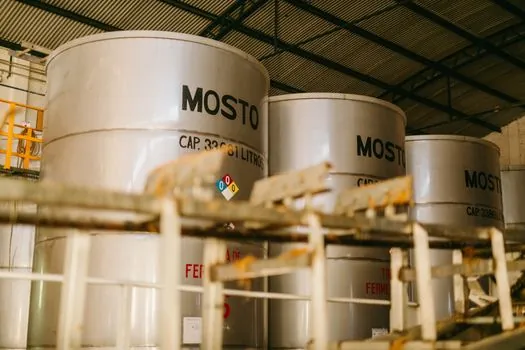
The 2026 API Storage Tank Conference & Expo runs 19-22 October 2026 in the API's own program, with the STI-SPFA Cold Storage/Cryogenic Tank Fundamentals Course scheduled as a paid pre-conference session on the same week, listed at $495 [S1]. For project engineers this is a useful signal: API 650 governs welded atmospheric and low-pressure tanks, while API 620 covers large, low-pressure refrigerated tanks including flat-bottom and dome-roof designs used for LNG and similar cold service, and is the more directly relevant standard for field-erected cryogenic storage. The dedicated cold-storage fundamentals course is a faster way to bring a new project engineer up to speed on the 620/650 split than a self-study read of the standards themselves.
For buyers with a 2027 plant start-up, attending the cold-storage course in October 2026 is one of the lower-cost ways to validate a tank spec before it is welded.
For Whom This Matters, and For Whom It Does Not
The 6-month lead time is the right answer for: industrial gas distributors ordering a standard vacuum-insulated tank with an ambient vaporizer for LIN, LOX, LAr, or LCO2 service; small LNG peak-shaver stations; and any site with an existing steam or hot-water utility that can support a steam-heated vaporizer. It is the wrong answer for: large-scale LNG import terminals that need open-rack vaporizers, submerged combustion vaporizers, or seawater-heated ORVs, where the project schedule is dominated by civil works and water intake; for any system with BOG compression; and for liquid hydrogen projects, which are still in a separate, longer-cycle supply chain. [S3]
If a quote is coming in at 6 months, verify the scope carefully. A 6-month delivery for a tank, vaporizer, PRV, and metering skid without rotating equipment is consistent with [S6]. A 6-month delivery that includes a cold pump or a BOG compressor is not consistent with the 1-2 year range published for rotating-equipment systems in the same source, and the gap usually means either a missing line item or a vendor booking with an incomplete datasheet.
Verification Points and Trackable Signals

Three signals are worth tracking through Q4 2026 and Q1 2027. First, the US cryogenic vaporizer segment is forecast at 4.2% CAGR through 2031 [S2], so vendor capacity, not demand collapse, is the constraint; expect lead-time slip rather than price slip if capacity tightens. Second, the API 2026 conference program will publish any draft revisions to API 620 and API 653 around 19-22 October 2026 [S1], which is the cleanest public marker for cold-storage tank standard changes heading into 2027. Third, the lighting equipment and electric lamps type question, in this context the electric vaporizer, is increasingly relevant for liquid hydrogen pilot projects, and any 2027 capacity announcements for electric immersion vaporizers will shift the small-flow end of the market off ambient-only designs.
For a project locking a PO in October 2026, the defensible assumption is 6 months for a skid without rotating equipment, 12-24 months for anything with a cold pump or BOG compressor, and 24+ months for a field-erected API 620 LNG tank. Confirm scope, confirm the code path (ASME VIII-1 U-stamp, PED 2014/68/EU, or GB/T 150), and lock the vaporizer type against peak flow at minimum design ambient before the datasheet goes out, because the 4-8 week engineering cycle is the only part of the schedule a buyer actually controls.
For the relevant spec sheets and selection criteria, see lead screw.
Background reading: Specifying MCC Spare and Space Units for Future Starters.