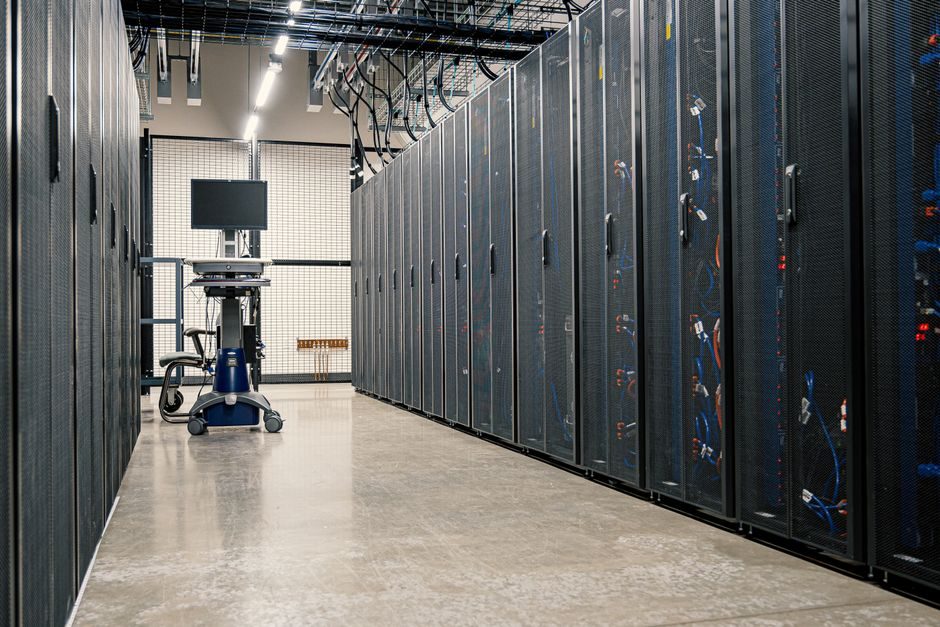
As of 2024–2025, the United States holds the largest operational data-center floor stock in the world, with Northern Virginia (Ashburn/Loudoun County), the Dallas–San Antonio corridor, the Phoenix metro, Chicago, the Research Triangle (North Carolina) and the Pacific Northwest (Hillsboro/Quincy) routinely cited as the densest US clusters; the FLAP-D designation (Frankfurt, London, Amsterdam, Paris, Dublin) plus secondary hubs in Stockholm, Copenhagen/Malmö, Zurich, Geneva, Milan, Madrid, Lisbon and Brussels/Antwerp frame the European map [S1].
China remains the second-largest market by IT load, with Inner Mongolia (Hohhot/Ulanqab), Ningxia (Zhongwei), Guizhou (Guiyang), Gansu and the Yangtze River Delta (Suzhou/Shanghai) acting as state-pushed hyperscale corridors, while Japan, Singapore, Australia (Sydney/Melbourne), India (Mumbai/Chennai), the UAE (Dubai/Abu Dhabi) and Saudi Arabia (Riyadh/Dammam) round out the leading Asia–Middle East tier; the US Data Center Operations & Maintenance Service market was estimated at $40 billion in 2023 and is forecast to reach $75 billion [S3].
Hyperscale Anchors: Virginia, Phoenix, Dallas and the FLAP-D
The Ashburn–Loudoun County–Prince William corridor in Northern Virginia, fed by a 230+ kV transmission backbone and dark-fiber rings from multiple carriers, has become the single largest concentration of hyperscale cloud capacity in the world; Phoenix's Goodyear–Buckeye–Mesa belt, the Dallas–San Antonio corridor, and Quincy/Wenatchee (hydro-powered Pacific Northwest) complete the US Tier-1 ring [S1].
In Europe the FLAP-D cities — Frankfurt, London, Amsterdam, Paris and Dublin — dominate by interconnected power capacity; Frankfurt in particular is constrained by regional grid limits that effectively cap new builds, which has pushed operators into Berlin, Munich, Hamburg, Düsseldorf, Vienna, Zurich, Geneva, Madrid (Aragón), Barcelona, Milan, Lisbon, Athens and a fast-growing Nordic cluster around Stockholm, Oslo, Copenhagen and Malmö that exploits cool-air free cooling (PUE bands of 1.1–1.3) [S2].
China's "East Data, West Compute" and PUE Bands
Chinese policy consolidates new build in eight national hubs — Guizhou (Guiyang), Inner Mongolia (Hohhot/Ulanqab), Ningxia (Zhongwei), Gansu, Anhui (Wuhu/Hefei), Sichuan/Chongqing, Shaanxi (Xi'an) and Hebei — under the "East Data, West Compute" framework, with PUE caps that have been tightened in 2024–2025 for new builds; operators are required to use air-side economisation, high-voltage DC distribution and waste-heat recovery in cold-climate sites [S2].
The Green Data Center market, segmented by PUE 1–1.5, 1.5–2, and >2, shows the >2 segment shrinking as hyperscale operators push toward the PUE 1–1.5 band; the Air-Conditioning, Power-Backup, Storage & Servers, Network and Security-Appliances sub-markets all have to be specified against that target, and PUE reporting under the EU Energy Efficiency Directive (recast) and the Chinese GB/T 32910 series is now standard procurement language [S2].
Workforce, Power Capacity and Where the Bottlenecks Sit
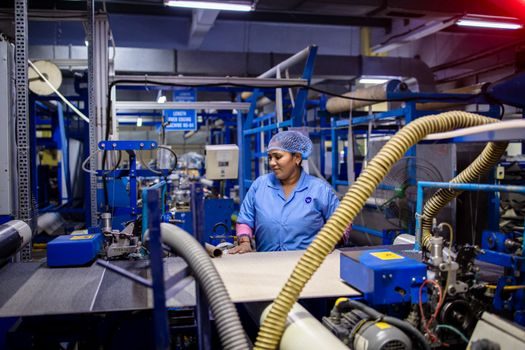
The United States leads in operational workforce — the US Data Center Operations & Maintenance Service market was estimated at $40 billion in 2023 and is forecast to reach $75 billion — but the binding constraint is utility power: the largest active US campuses draw 300–1,000 MW each, which is forcing operators to co-site with utilities and increasingly to sign 10–20 year Power Purchase Agreements (PPAs) that pull new wind, solar and nuclear baseload onto the same interconnect [S3].
Outside the US, the same constraint shows up as grid-deferral lists in Frankfurt, Dublin, Amsterdam and Singapore, and as substation build-outs in Mumbai, Chennai, Osaka, Tokyo, Seoul, Sydney and Auckland; the global PV manufacturing base, now concentrated in China and projected by the IEA to reach 1.5 TW annual cell capacity by 2035, is the principal supply lever for new hyperscale PPAs, and that trend is detailed in IEA-linked coverage of module/cell pricing bands.
Design Standards, Liquid Cooling and the IT-Load Outlook
For 2024–2025 builds, the technical envelope is converging on: Uptime Institute Tier III/IV certification, TIA-942-B Rated-3/4 cabling, ASHRAE TC 9.9 A1–A4 (now extending toward A5 liquid-cooled envelopes), EN 50600 series for European builds, and the EU Energy Efficiency Directive (EEC) reporting template; cooling architecture has moved from 12–18 kW/rack air-cooled to 30–70 kW/rack rear-door heat exchangers and 100–200+ kW/rack direct-to-chip or full-immersion liquid cooling for AI training clusters [S2].
This is reshaping the PLC and pressure-sensor content of the white-space — pump skid and CDU instrumentation, coolant flow-meter strings, and rack-level data logger panels are now core line items, alongside the conventional pressure transmitter arrays on chilled-water headers; a separate set of industrial valve specifications (ASME B16.34, API 6D on coolant-loop isolation) rounds out the bill of materials on the mechanical side.
Where the New Floor Space Is Going: 2024–2026 Signals
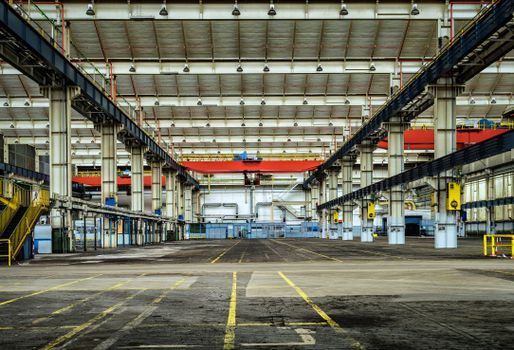
The clearest forward signals are: (1) US secondary-market expansion into Reno, Salt Lake City, Las Vegas, Indianapolis, Columbus, Atlanta and Des Moines, driven by 200–400 MW utility-build campuses; (2) Nordic re-investment in Sweden (Stockholm/Boden), Norway (Oslo), Denmark (Esbjerg/Kolding) and Iceland (Reykjanes) where free-cooling PUE is below 1.2; (3) India scaled-up builds under the IT Hardware PLI scheme in Mumbai, Chennai, Hyderabad, Bangalore, Pune and Noida; (4) Saudi Arabia's Dammam and Riyadh zones, with operator roadmaps targeting 1.5+ GW by 2030; and (5) Brazil (São Paulo/Campinas) and Mexico (Querétaro) for Latin American hyperscale [S1][S3].
The oil & gas roller conveyor spec cut is a useful parallel read on how zone-classified manufacturing floor design is specified when a data-center mechanical skid is built next to or inside an industrial plant; for the AI-training tier specifically, the supply chain for high-grade electrical steel and copper busbar (covered in carbon steel spec guides) is becoming a procurement constraint on transformer lead-times in 2025–2026.
Limits, Failure Modes and What the Data Will Not Show
Three limits the analyst data will not fix on its own: first, MW available is a more honest proxy for "capacity" than sq ft of white space — published floor-space numbers in the US/EU are inconsistent because lease vs owned vs gross-vs-net area is rarely normalised; second, latency-sensitive AI training shifts the geography toward power-rich-but-cool sites (Boden, Reno, Phoenix, Inner Mongolia, Western Australia) rather than the legacy FLAP-D; third, water-stress exposure in Phoenix, Las Vegas, Dallas, Madrid, and parts of India (Chennai/Mumbai) is now a material capex line for evaporative and adiabatic cooling, which is why operators are pivoting to closed-loop liquid cooling [S2].
Operational reliability bands across hyperscale cohorts are tracked at 99.99%+ (Tier III-class) for cloud, with AI training pushing toward Tier IV dual-feed designs; the cooling-side bottleneck is increasingly coolant flow-meter drift, since per-rack flow telemetry at 100–200 kW with ±2% accuracy is now a procurement requirement rather than a feature.