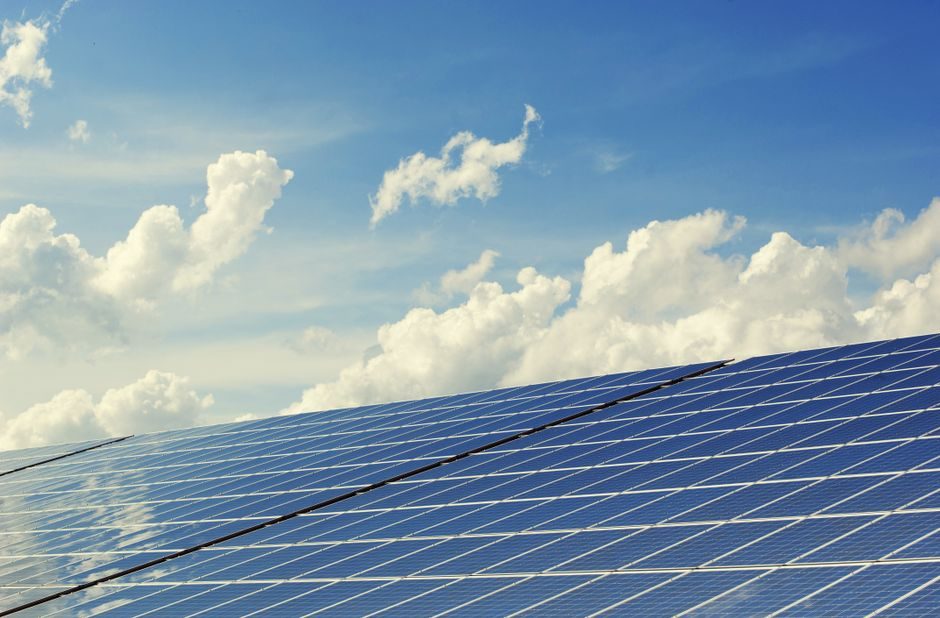
IEA projects global photovoltaic module production capacity will exceed 1.5 TW by 2035, while its 2024 clean-energy manufacturing roadmap restructures capacity data around China-anchored polysilicon, wafer, cell and module value chains [S1].
China held the world's top rank for new and cumulative installed PV capacity for seven and five consecutive years respectively through end-2019, per China Photovoltaic Industry Association figures cited in late 2020 [S2]. That installed-base dominance tracks upstream: CBCIE's January 2026 dataset shows 2025 capacity for monocrystalline silicon, photovoltaic glass, silicon carbide and silicone DMC, with China the leading geography across all four [S5].
Where Capacity Sits: China-Anchored Mono-Si and Glass
CBCIE's January 2026 capacity dashboard tracks 2025 output for monocrystalline silicon in China, China photovoltaic glass, and global silicon carbide by country, alongside a silicone DMC line for 2024 — the four data series that anchor any country-by-country PV manufacturing read [S5]. Mono-Si remains the dominant cell feedstock: c-Si monocrystalline and polycrystalline together drive the building-integrated PV (BIPV) market that MarketsandMarkets sized at USD 12.49 billion in 2024 and projects to USD 27.41 billion by 2029 at a 17.0% CAGR [S4].
The IEA's 2024 clean-energy manufacturing report — the source behind the 1.5 TW module figure — frames the global market by combined clean-energy manufacturing scale rather than PV alone, so any country breakdown must be read with that scope caveat [S1]. CBCIE's narrower feedstock datasets give the more granular country split that plant engineers and procurement teams actually use [S5].
Selection Criteria: Which Capacity Number to Read First
For procurement or project-finance work, three data tiers matter and they do not reconcile cleanly. Tier 1 is IEA's 1.5 TW module nameplate by 2035 — a global aggregate useful for demand-mix modelling [S1]. Tier 2 is CBCIE's annual mono-Si, glass and silicon carbide capacity, which is the working dataset for 2025 country splits [S5]. Tier 3 is the MarketsandMarkets 17.0% BIPV CAGR through 2029, which is end-market demand rather than supply [S4].
Engineers specifying module BOMs read CBCIE first, since mono-Si and glass prices track those series directly. EPCs modelling 2030 GW deployment read IEA's roadmap, and rooftop/BIPV integrators read MarketsandMarkets' end-market curve. Mixing the three without flagging the tier produces the classic "PV capacity" confusion — nameplate module GW, polysilicon tonnes, and installed GW are three different units.
Who This Profile Is For — And Who It Is Not
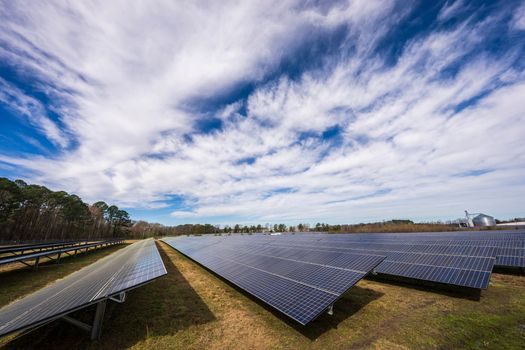
The China-dominant, mono-Si-centric profile suits module OEMs, EPCs sizing 2026–2028 project pipelines, and procurement teams negotiating wafer and glass supply [S1][S5]. It is the right read for anyone whose cost line is polysilicon, wafer, cell, glass, or backsheet — the layers where Chinese capacity sets the marginal price.
Off-grid and microgrid work in Southern Africa — a region studied for PV-vs-coal trade-offs [S6] — is again end-market demand, not a feedstock-supply question, so the country-capacity split matters less than tariff and PPA structure.
Comparison: The Four Country-Capacity Lenses
Four lenses dominate any country-by-country PV manufacturing read, and they rank differently against the criteria a process engineer actually cares about. [S1]
Monocrystalline silicon capacity: China 2025 series is the tightest country breakdown, and the cost driver for p-type and n-type PERC/TOPCon cell lines [S5]. PV glass: China 2025 capacity again dominates, with global volumes roughly an order of magnitude lower outside China [S5]. Silicon carbide: the only series in the four where non-Chinese geographies (US, EU, Japan) carry meaningful share for power-electronics substrates rather than PV modules — important for inverter BOM, not for module BOM [S5]. Silicone DMC / encapsulant: 2024 China data, relevant for module encapsulant and potting compound rather than cell output [S5].
On cost, mono-Si and glass are both Chinese-dominant, with global ex-China capacity priced at a structural premium. On temperature and process envelope, mono-Si ingot growth (Czochralski) is energy-intensive and concentrated where power is cheap, while glass capacity tracks flat-glass cluster geography. On lead time, both run on 12–18 month expansion cycles visible in CBCIE's annual series, with silicon carbide running 24–36 months because of substrate crystal-growth tooling. On corrosion and purity, mono-Si 6N/9N purity and glass iron-content specs are unchanged across the country split — geography does not relax the spec.
Use Cases: Tying Capacity Reads to a Real Project
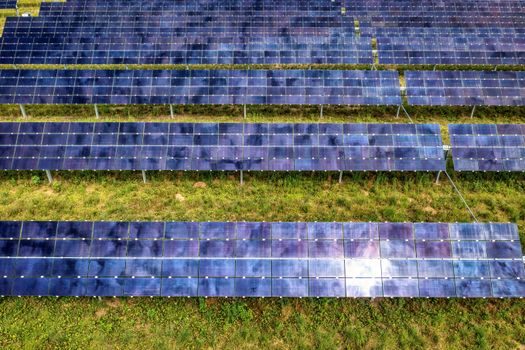
A 500 MW ground-mount EPC tendered in 2026 reads IEA's 1.5 TW 2035 figure for bankability context [S1], CBCIE's 2025 mono-Si series for wafer pricing leverage [S5], and MarketsandMarkets' BIPV curve only if the scope includes a rooftop or facade carve-out [S4]. A Chinese module OEM exporting to the EU reads the same three sources in reverse: IEA for whether EU local-content rules will bite, CBCIE for domestic cost stack, MarketsandMarkets for whether the EU rooftop segment is growing fast enough to absorb premium modules.
Earlier academic work on Andalusian grid-connected PV siting [S3] and South African PV-vs-coal central-grid economics [S6] remains a baseline for site-selection and grid-mix studies, but neither addresses country manufacturing capacity — they answer where to build and what to displace, not who supplies the modules. The 2013 EPIA market outlook [S7] and 2017 probabilistic-forecasting review [S8] sit in the same historical layer.
Limitations and Failure Modes of the Capacity Data
IEA's 1.5 TW figure is a 2035 projection, not a 2025 measurement, and the 2024 report frames it inside a broader clean-energy manufacturing scope rather than a PV-only chapter [S1]. CBCIE's 2025 series is measurement-grade for the four tracked commodities, but the dataset is China-weighted and the global totals for each material are stated alongside, not normalised [S5]. The MarketsandMarkets 17.0% CAGR is a 2024–2029 projection for BIPV only, not utility-scale ground-mount, and is sensitive to construction-cycle assumptions [S4].
Wind-PV-thermal hybrid optimisation work [S9] is operationally useful for storage sizing but is a generation-mix question, not a manufacturing-capacity question, so it should not be cited as a country split. Forecast-uncertainty ranges for PV output [S8] are a separate, well-developed literature that intersects with capacity only at the curtailment-and-firming margin.
Standards, Sources and Sourcing Discipline
No IEC or ISO standard governs country-level manufacturing capacity reporting; the data is trade-association and analyst-aggregated, with IEA, CPIA, CBCIE and MarketsandMarkets as the four sources cited here [S1][S2][S5][S4]. For module-level electrical and mechanical specs, IEC 61215 and IEC 61730 remain the operative qualification standards, but they are not the right reference for production-capacity questions.
Procurement teams that need a country split for 2026 contracting should pull CBCIE's 2025 series as the working dataset, cross-check IEA's roadmap for 2030–2035 direction, and layer MarketsandMarkets' BIPV curve only if the project scope includes a building-integrated segment. The two earlier China-specific reads [S2] and the historical Andalusian siting study [S3] remain useful for context but are dated; treat them as background, not as the 2026 contracting baseline.
Trackable signals to watch next: CBCIE's January 2027 series for 2026 mono-Si and glass capacity, the IEA's next clean-energy manufacturing roadmap update for any revision to the 1.5 TW 2035 module figure, and any quarterly MarketsandMarkets BIPV revision to the 17.0% CAGR assumption set in the 2024 base year [S1][S5][S4].
For component-level specifications, see pressure transmitter, flow meter, and industrial valve.
For related coverage, see Plastic Pallet Buying Guide 2026: Footprint, Load, Material and Sourcing.