
Data center cooling manufacturing is governed by three converging rule sets: ASHRAE TC 9.9 thermal/fluid guidelines (recommended 18–27 °C / 64.8–80.6 °F inlet, A1–A4 classes), EPA SNAP refrigerant restrictions under the AIM Act mandating an 85% HFC phasedown by 2036, and UL/IEC/ICT safety certification for CRAC, CRAH, CDU, and immersion hardware [S1][S2][S3].
Cooling costs total 25 percent of a data center's energy budget, and achieving efficient heat removal is the key objective to meeting PUE and WUE standards [S4].
ASHRAE TC 9.9 Thermal and Fluid Window
ASHRAE's recommended server inlet temperature window is 18–27 °C (64.8–80.6 °F), with classes A1–A4 covering increasingly aggressive operating envelopes used to qualify servers, CRAC/CRAH units, and rack-level CDU assemblies [S1].
Humidification is optional in most deployments; ASHRAE's own guidance states the recommended minimum is generally unnecessary for modern datacom loads, so humidifier skid QA programs can be scoped accordingly rather than treated as default scope [S1]. Manufacturers qualifying CDU and immersion cooling skids against A1–A4 typically publish the supported inlet temperature and dew-point range as the binding thermal contract with the operator.
Refrigerant Compliance: EPA SNAP and the AIM Act HFC Phasedown
The EPA's Significant New Alternatives Policy (SNAP) program now lists 70 substances as prohibited or restricted, with R-134a and R-410A both flagged; the AIM Act mandates an 85% HFC phasedown from historic baseline by 2036, with the 2025/2026 compliance step already restricting high-GWP refrigerants in CRAC and ICT cooling infrastructure [S3].
California Title 24, Part 6 layers additional rules on top of SNAP, requiring economizer logic, humidification controls, fan-power limits, and containment strategy documentation for any "space-conditioning system primarily serving" a computer room [S3]. For QA managers, the practical implication is that incoming CRAC/CRAH units must ship with refrigerant logs, leak-test certificates, and a SNAP/GWP compliance row on the nameplate rather than as a separate addendum.
UL, IEC, and CSA Safety Certification of Cooling Hardware
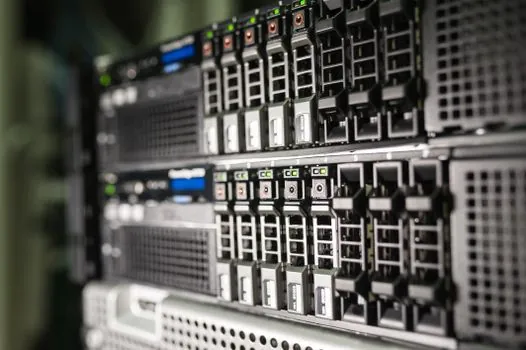
UL's safety certification scope for IT-equipment cooling covers UL 60950-1 / UL 62368-1 for ICT equipment, UL 484 for room air conditioners, UL 1995 for heating/cooling equipment, and the IEC 60335-2-40 / IEC 62368-1 family for international builds, with CSA equivalents in Canada [S2]. Immersion cooling dielectric fluids additionally fall under UL 746C / UL 94 flammability ratings and IEC 60079 for any deployment near hazardous-location boundaries [S2].
Manufacturing quality programs that bundle UL/IEC/CSA marks on a single subassembly shorten hyperscale procurement cycles, because the operator's safety audit no longer has to fork into separate documentation streams. For liquid cooling, ASHRAE's second-edition Liquid Cooling Guidelines add a pH 7–9 window and a consistent benzotriazole (BTA) corrosion-inhibitor residual as the water-side QA baseline that QA managers should write into the supplier's incoming-material inspection plan [S7].
Water Quality and Corrosion Control on the Cooling Loop
Garratt-Callahan's water-treatment guidance for data centers flags four QA failure modes on the cooling loop: corrosion, scale formation, microbiological fouling (including Legionella risk on open towers), and particulate infiltration, all of which degrade heat-transfer surfaces and force PUE upward [S4]. Dow's open-cooled coolant data sheets add long-term fluid-stability and corrosion-protection claims that QA labs verify with ASTM D1384 (corrosion in coolants) and ASTM D4340 (aluminum heat-transfer corrosion) bench tests [S5].
The 2026 operator-side framework from Erunwas groups water-quality parameters into conductivity, pH, hardness, silica, dissolved oxygen, and microbial count, each with an actionable limit and sampling cadence, so incoming-makeup-water and recirculating-loop QA can be specified on the same datasheet [S8]. Suppliers that ship pre-mixed coolant with a published ASTM-test report and a 12-month fluid-life projection consistently pass hyperscale FAT (factory acceptance testing) on first submittal, while suppliers that ship concentrate-only typically require a second round of site-water compatibility testing.
Comparing the Three Main Cooling Approaches Against QA Criteria
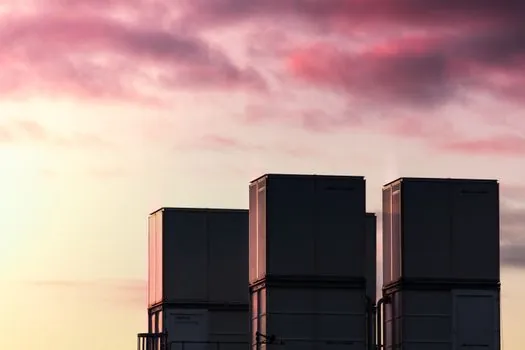
Three cooling architectures dominate new builds: air cooling (CRAC/CRAH + hot/cold aisle), rear-door heat exchangers and in-row CDUs (water-cooled air), and direct liquid cooling (cold plate or single-phase/two-phase immersion). On four QA-relevant criteria they line up as follows [S6][S7][S9]:
Air cooling: lowest manufacturing complexity, ASHRAE A1 only, no EPA SNAP refrigerant concern if DX is eliminated in favor of chilled water, water-side QA limited to cooling-tower chemistry.
Water-cooled air (RDHX/in-row CDU): medium complexity, ASHRAE A1–A3, refrigerant charge drops sharply (lower SNAP exposure), but the closed loop now demands ASHRAE pH 7–9 and BTA inhibitor control plus ASTM D1384/D4340 verification [S5][S7].
Direct liquid / immersion: highest manufacturing complexity, ASHRAE A4-capable, refrigerant often eliminated entirely, but the dielectric fluid itself becomes a UL 746C/UL 94 and IEC 60079 flammability certification target, and a separate QA batch test per fluid lot is standard practice [S2][S7]. For a deeper look at the sensor and instrumentation layer that monitors these loops, see the data logger specification map and the flow meter selection guide, both of which feed the QA data historians that auditors now expect to walk through on-site.
Operational Telemetry and PUE/WUE Reporting
Operator-facing reporting frameworks now require CRAC, CRAH, CDU, and tower skid telemetry at sub-minute resolution, with the pressure transmitter loop on the cooling-water header typically sampled alongside the flow meter on the makeup-water line so WUE (liters per kWh) can be calculated in real time [S4][S5].
The US Department of Energy's Best Practices Guide ties this telemetry to PUE and WUE KPIs, and to MERV-rated filtration on the air side, with ASHRAE's filtration guidance recommending MERV 8 minimum for datacenter HVAC and MERV 11–13 where outdoor-air economizers run [S1]. For QA managers, the deliverable is no longer just a passed FAT, it is a unit that ships with a published telemetry schema (BACnet, Modbus, or Redfish) and a signed map of which physical sensor drives which PUE/WUE numerator and denominator.
Failure Modes and Audit Findings in 2025–2026 Builds
The most common audit findings across recent builds fall into four buckets: refrigerant nameplates missing the SNAP GWP disclosure, water-side chemistry logs absent for the trailing 90 days, dielectric-fluid certificates of analysis not on file per immersion skid, and UL/IEC marks on subassemblies that are valid individually but not listed as a system combination [S2][S3][S7].
Closing these gaps at the manufacturing stage is cheaper than retrofitting in the field; the corrective action for missing fluid CoAs is typically a site drain, flush, and refill of the immersion tank, which on a 1 MW deployment can run into seven figures in lost compute capacity. Manufacturers that pre-empt these findings with a per-unit compliance binder (UL/IEC marks, SNAP refrigerant row, ASHRAE class, ASTM water-test report, fluid CoA) consistently clear hyperscale supplier onboarding on the first audit cycle, while those that compile the binder on demand typically need a follow-up visit.