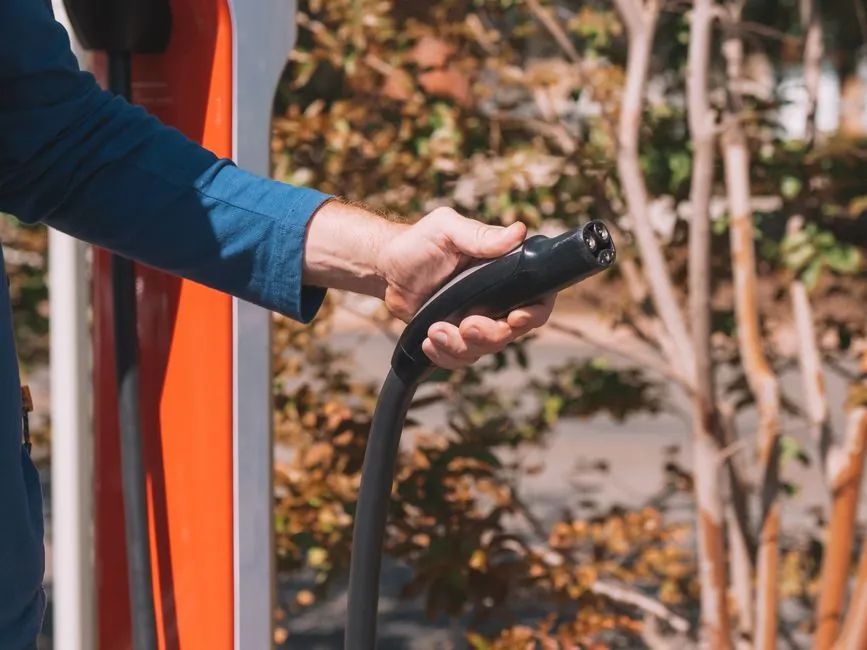
For an EV charging brand entering market in 2026, the practical question is not OEM vs ODM as a label, but who owns the design IP, the certification file, and the firmware roadmap [S3]. Get that wrong and you either overpay for a commodity platform or underbuild for a market that will not wait 12 months.
The scale is concrete: IEA Global EV Outlook 2025 records more than 5 million public chargers worldwide, with over 1.3 million public charging points added in 2024 alone [S2]. That expansion is what pulls distributors, utilities, gas-station chains, and energy brands into OEM/ODM contracts in the first place, and it dictates the lead-time math below.
Definitions That Actually Matter on a Purchase Order
OEM in the strict sense means the factory manufactures to the buyer's specification, bill of materials, and quality requirements; the buyer owns the design and the engineering risk [S3]. In EV charging, "OEM" is more commonly used to mean a factory standard product relabeled with the buyer's brand, which is closer in practice to ODM and is what most charging brands actually buy [S3].
ODM means the factory owns the design, R&D, and base certification, and offers the platform for configuration: logo, enclosure color, connector type, display skin, and software branding [S3][S5]. A third hybrid path called guided OEM, where the buyer starts from the factory's reference platform and requests specific modifications (dual-connector support, 4G modem, OCPP 2.0.1), is where most mid-volume distributors actually land [S5].
Cost, Lead Time, and MOQ: The Numbers Behind Each Path
ODM unit economics: MOQ 50-200 units for a 7kW-22kW AC wallbox, 20-50 units for DC fast chargers, branding NRE $500-$3,000, lead time 4-8 weeks after first sample approval [S5]. The factory's existing UL/CE/ETL file is extended to the new SKU rather than rebuilt [S3].
True OEM economics: custom enclosure tooling $15,000-$50,000, custom PCB design and prototyping $20,000-$80,000, certification per standard $8,000-$60,000, lead time 10-16 weeks for first batch plus 3-6 months of pre-production engineering [S5]. At sustained volume above 2,000 units/year, OEM unit cost runs 10-25% below ODM; below roughly 1,500-3,000 units/year per SKU, ODM wins on total cost every time [S5].
Certification is the hidden line item: a DC fast charger sold into the EU needs CE, EMC Directive compliance, RED (if wireless), and CHAdeMO or CCS protocol certification, and each retest after a design change can run $5,000-$15,000 [S5]. Change the enclosure or swap a power module on an ODM platform and you can trigger a full recertification, so the silkscreen logo area has to sit outside the regulatory label zone from day one [S5].
Decision Matrix: OEM, ODM, and Guided OEM Side by Side
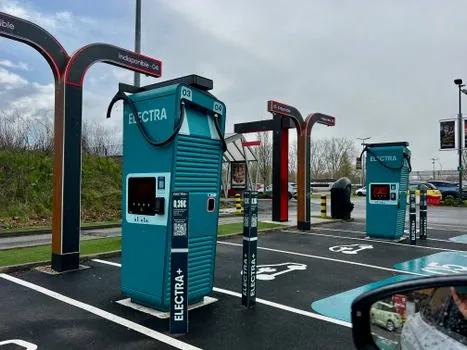
The comparison below uses the four criteria that determine total landed cost and time-to-revenue: design ownership, MOQ, first-batch lead time, and upfront NRE [S3][S5].
OEM (true): design ownership with the buyer, MOQ 200-500 units, first-batch lead time 10-16 weeks, upfront tooling and NRE $15,000-$80,000+, certification responsibility on the buyer, differentiation potential high, time-to-market slow, best fit for established brands and large volumes [S5].
ODM: design ownership with the factory, MOQ 50-200 units AC / 20-50 units DC, first-batch lead time 4-8 weeks, upfront NRE $0-$3,000, certification responsibility on the factory, differentiation potential low to moderate, time-to-market fast, best fit for new entrants and fast SKU expansion [S3][S5].
Guided OEM hybrid: starts from the factory's reference platform, modifications such as dual-connector support, 4G modem, or OCPP 2.0.1 are scoped per request, sits between the two on NRE and lead time, and is the most common mid-volume path [S5]. For context on how spec-first selection works on a different product line, see the spec-anchored walkthrough in this capping machine selection guide.
Who ODM Is FOR and Who It Is NOT For
ODM is the right path for distributors, gas-station chains, utilities, and energy brands entering EV charging; for buyers who need UL/CE-certified hardware fast against NEVI-style site-commitment deadlines; for businesses whose differentiation is distribution, service, or software integration rather than power electronics; and for volumes from a few hundred to a few thousand units per year [S3][S5].
ODM is the wrong path when the buyer's competitive moat is a proprietary enclosure, a custom power module, or a firmware feature the factory platform cannot host; when unit volume is sustained above the 1,500-3,000 units/year breakeven; or when the buyer wants to own a UL file outright rather than extend a shared one [S3][S5].
Specification, Safety, and Compliance: The Real Engineering Gates

A charger can look correct on a data sheet and still fail in the field, which is why specification fit, safety compliance, reliability, manufacturing quality, customization strategy, and supply-chain execution are the first things an experienced ODM/OEM program locks down [S1]. Compatibility must be the first checkpoint: battery voltage range and charging limits, connector and protocol on the vehicle side, local grid and plug habits, and the actual use case (home, workplace, fleet, retail) [S1].
Compliance must be designed in, not added at the end. The required areas are electrical safety (leakage, grounding, insulation), EMC/EMI control, materials (flame and heat resistance), and local market standards that decide whether the product can be sold at all [S1]. A European market project may require Type 2 connectors and a different rated current, phase type, and protection package than a North American one, and that is decided in the first engineering review, not after the sample is built [S1].
Failure Modes and Constraints Buyers Should Plan Around
The recurring failure pattern in ODM projects is a label change without engineering depth: wrong connector, weak documentation, poor app integration, unstable firmware, inconsistent batches, delayed certification, and no spare-parts pipeline, with the local brand carrying the consequence [S2]. On the OEM side, the recurring failure is underestimating certification cost by 2-3x and discovering the firmware scope after the tooling is committed [S5].
Volume, timeline, and capital constraints decide the path more than philosophy: OEM/ODM is most attractive when demand is uncertain, speed matters, capital is constrained, or the buyer lacks a mature manufacturing and QA base [S6]. For buyers evaluating a different industrial line where spec-fit, materials, and certification also drive the decision, the same selection discipline shows up in additive manufacturing material sizing and in this 2026 raw-material sourcing map.
Standards, Certifications, and Sourcing Checklist
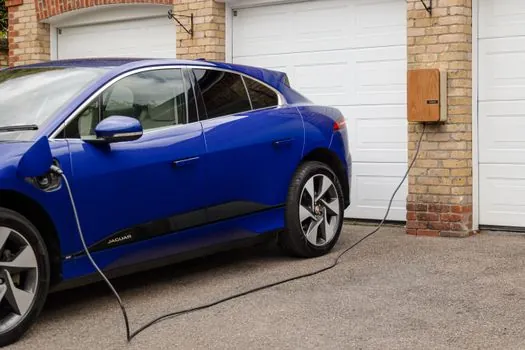
Before signing a purchase agreement, the checklist that protects the local brand covers seven areas: product range across AC chargers, DC fast chargers, connectors, cables, adapters, sockets, and storage; market fit on connector type, grid condition, power rating, installation style, and language; customization scope (logo, color, enclosure, packaging, app or platform integration, accessories); compliance support (certificates, test reports, safety standards, export experience); software readiness (OCPP, remote monitoring, billing platform); production reliability (factory capacity, quality control, spare parts, repeatable assembly); and after-sales support (technical documents, training, fault diagnosis, replacement parts) [S2].
For OEM specifically, the buyer must clarify who owns the certification file, who pays for retests after a design change, and who is on the hook for firmware bugs and redesign [S3][S5]. For ODM specifically, the buyer must verify that the silkscreen branding area sits outside the regulatory label zone, that the platform's OCPP version is current, and that spare-parts supply is contractually defined before the first container ships [S2][S5].
The next node to track is the 2026 expansion of public DC fast-charging rollouts, where ODM platforms with OCPP 2.0.1 and ISO 15118 plug-and-charge support are being specified for NEVI and EU AFIR-style tenders; a verifiable signal in the next quarter is the share of OEM inquiries that include dual-connector CCS/CHAdeMO or NACS configurations versus single-connector AC wallboxes.
The underlying component specifications are covered under total station, and weather station.