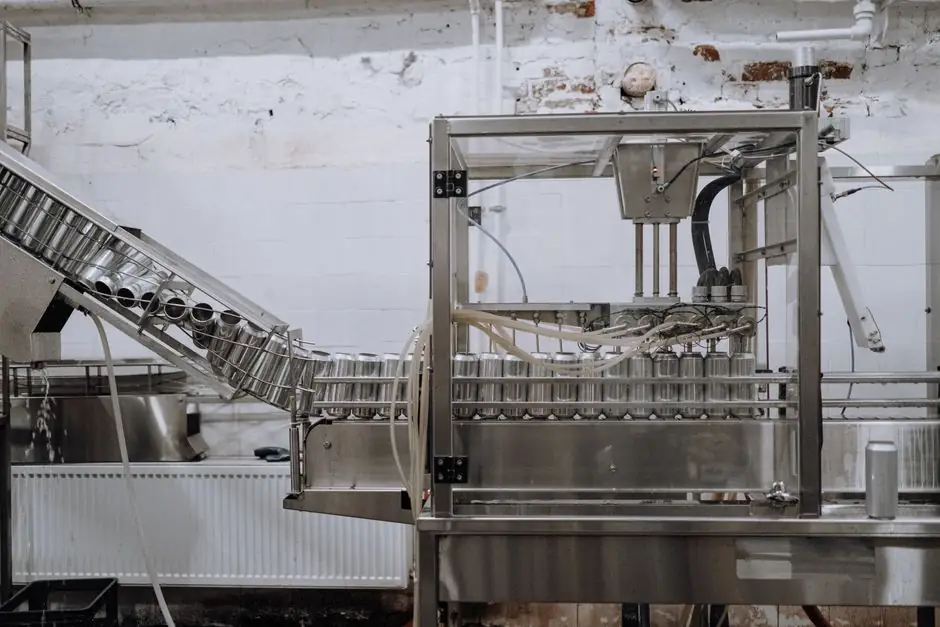
Eight manufacturers listed 12 laser-integrated production-line platforms in a single directindustry.com index, covering U-rib cleaning, sheet-metal blanking-and-bending (LPBB), ALU-series storage-plus-laser cells, and JWD-SM01 wire harness machines rated at 1,000 p/h throughput [S1].
Design choices split into five recurring stations: line-laser positioning, laser cutting, laser cleaning, laser marking, and laser welding, each with its own laser class, optics, and integration contract. SL Laser's positioning-laser catalogue illustrates the spread: PL30-F red (up to 10 mW), PL30-F green (up to 50 mW), PL-ABPH600 red (up to 200 mW), and PL-ABPH600 green (up to 100 mW), all focusable, all line/cross/dot configurable [S2].
Positioning stations: line-laser selection by power and optics
Line-laser positioning modules are spec'd in the 10-200 mW range, with red diodes handling short indoor cells and green 50-100 mW units covering woodworking, stone, and concrete cells where daylight and dust suppress red contrast [S2]. Higher-power 200 mW red units (PL-ABPH600) extend line length on long saw benches and pre-assembly tables; 50 mW green covers the same cells with better visibility, not longer throw.
Selection rule of thumb from the same catalogue: pick a focusable unit whenever the working distance changes between stations, because a fixed-focus projector defocuses as the substrate or table moves. Line, cross, and dot optics are typically user-swappable, which lets one projector serve multiple jigs in a job-shop cell rather than buying three separate heads [S2].
Cutting stations: multi-head layout and ALU-type storage cells
Kaiping-style multi-head cutting layouts dominate fibre-laser blanking cells because two or four heads on one gantry roughly double throughput without doubling floor space, and a multi-head cutting design is the named engineering lever in the directindustry Kaiping entry [S1]. The ALU series couples that gantry to a tower storage system, automatic material handling, scrap evacuation, and the laser interface so a blank leaves the rack, gets cut, and lands in a sorting bin with no operator touch [S1].
For through-thickness and cut-quality control, a laser cutter upstream of a press brake pairs cleanly with an LPBB blanking-and-bending system, where the same sheet is laser-cut, sorted, and fed into a robotic bender, removing a buffer and one forklift move per part [S1]. The non-destructive, belt-supported cutting variant also published in the same index lets thin-gauge and pre-coated sheet run without micro-scratch marking that would otherwise fail paint-line QA.
Cleaning and surface-prep stations: pulsed vs continuous
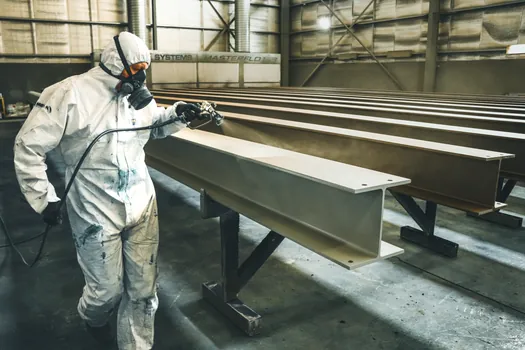
Two cleaning regimes coexist in 2026 catalogues: continuous-wave 1500 W units (LC-CLEAN CW 1500W) for heavy rust and thick paint, and pulsed 300 W heads (LC-CLEAN P 300W) for oxide and thin coatings where heat input has to stay low [S3]. The U-RIB cell in the directindustry index uses a dedicated cleaning conveyor with a positioning mechanism that aligns U-ribs, feeds them through the laser cleaning station, then returns them to the loading station, a five-step sequence that has to keep pace with the downstream welding cycle [S1].
Practical spec anchor: the 300 W pulsed class is the conservative pick for coated automotive and aluminium electrolyzer parts, the 1500 W CW class is the pick for ship plate, heavy structural steel, and rail. Running pulsed at 1500 W damages substrate metallurgy; running CW at 300 W is too slow to be economic on heavy plate.
Marking stations: integration contract, not just a laser marker
LC-MARK PRO is documented as the line-integrated variant of LC-MARK Basic, with the express purpose of permanent high-speed marking on moving parts, accepting line PLC triggers, encoder feedback, and reject-signal handshake [S3]. LC-FIBER PRO is the chain-productivity variant of the same family, optimised for high-speed mark-on-the-fly in continuous-flow cells. Both sit downstream of a welding or cutting station so each part carries a traceable ID by the time it reaches the palletiser.
Integration checklist from the LC Lasers page: footprint matched to conveyor height, extraction and fume routing, Class 1 enclosure with interlocked doors, Ethernet or fieldbus trigger from the line PLC, and a documented MTTR for the optics stack, because a marker that fails twice a shift is a bottleneck regardless of its mark quality. For warehouse-side traceability that often pairs with marking, an inkjet vs laser coding map is the usual next decision.
Welding and joining: galvo heads, multi-kW sources, and safety class
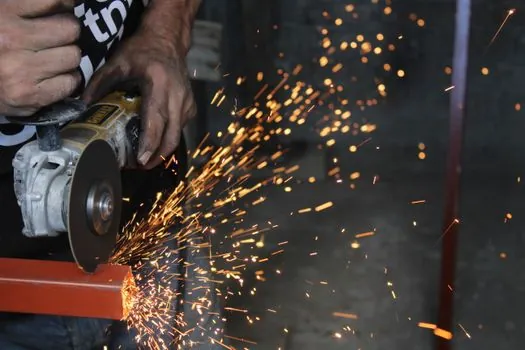
Galvo-scanner welding (LC-WELD GALVO) is the standard pick for high-speed seam welding on small parts because the scanner moves the beam, not the part, so the upstream conveyor does not have to stop and start [S3]. For larger seams the same vendor runs CW fibre-laser welding heads, with the LC-WELD PRO marketed as the high-quality / heavy-duty tier and LC-WELD NEO as the compact-cell tier.
Safety classification is non-negotiable: any Class 4 open-beam station has to be wrapped in a Class 1 cabin (LC CABIN in the same product family) with interlocked doors and a keyed bypass, otherwise the line cannot pass European and North American machine-safety audits. Where a laser screed or floor-prep workflow is the line's reference datum, the same cabin rules apply to the alignment laser as to the processing head.
Selection criteria: throughput, footprint, laser class, and integration bus
Four decision criteria cover most 2026 cell selections: (1) throughput in parts-per-hour, anchored to a documented value such as JWD-SM01 at 1,000 p/h for wire harness machines [S1]; (2) footprint, set by the gantry travel plus tower-storage footprint in ALU-type cells; (3) laser class at the operator interface, Class 1 with interlocks versus Class 4 with PPE; and (4) integration bus, where EtherCAT, PROFINET, and Ethernet/IP are the dominant line-PLC choices and the laser head has to expose the right gateway.
Comparison across the main line types in the directindustry index: sheet-metal LPBB cells win on tonnage throughput but lose on part-mix flexibility; electrolyzer laser welding-and-cutting lines win on single-product repeatability but lock the capex to one chemistry; composite parts cells (tab forming, winding, assembly, HIPOT) win on vertical integration but require dust-controlled rooms. Where part-mix matters more than volume, the laser profiler feedback loop and a quick-change optic head recover flexibility without re-buying the gantry.
Limitations and failure modes
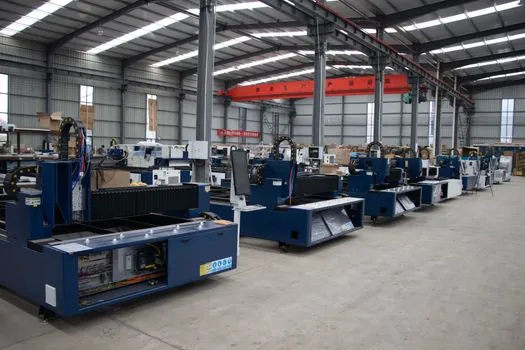
Three failure modes recur across 2026 laser-line audits: focus drift on positioning lasers mounted near vibration sources, nozzle and lens contamination on cleaning stations in oily cells, and thermal lensing on CW welding heads pushed past 4 kW without water-cooled mounting brackets. SL Laser's positioning-laser line addresses the first by offering focusable optics that operators can re-set against a target plate [S2].
Throughput-vs-quality trade-off is the second hard limit: pushing a multi-head cutting head past its rated feed forces dross and edge burr, which then forces secondary deburr stations that cancel the throughput gain. The third limit is operator skill on galvo programs; galvo welding is a force multiplier only when scan paths are pre-engineered, not written at the cell. For plants standardising their upstream and downstream handling, an industrial Ethernet OEM vs ODM decision map is often the gating decision before the laser head is even quoted.
Trackable signals for the next six months: new Class 1 cabin SKUs from the major welding vendors (the LC CABIN pattern), revised IEC 60825 laser-class guidance affecting open-beam cells, and continued replacement of 1500 W CW cleaning heads with mid-power pulsed heads on coated-steel lines. For spec-driven sourcing, the directindustry index remains the broadest public cross-vendor catalogue of laser-integrated production lines in 2026, and SL Laser's positioning-laser line is the cleanest published spec anchor for line, cross, and dot projection up to 200 mW.