
Polypropylene resin capacity expansion is being reshaped by Industry 4.0: digital twins, AI process control, and inline spectroscopy are now table stakes for new C3-C4 cracker-to-pellet lines, with the synthetic resin market tracked at US$91.77Bn in 2025 and projected to reach US$129.50Bn by 2033 at a 4.4% CAGR [S3].
Independent sizing from The Business Research Company puts the broader polypropylene-plastic materials and resins market at US$144.67Bn in 2026, growing to US$190.71Bn by 2030 at 7.2% CAGR, which captures compounded resin value including compounding and converting [S2]. IndustryARC's narrower resin framing sees the segment reaching US$110.61Bn by 2030 on a 4.1% CAGR [S1].
Scope: what "Industry 4.0" means on a PP line
Industry 4.0 inside a polypropylene plant collapses into four physical layers: smart field instrumentation on reactors, extruders, and pelletizers; an OPC-UA / MQTT data spine; edge analytics for melt index, MFR, and isotacticity; and an MES/ERP layer tying production orders to grade recipes. Injection molding, which held the largest share of PP resin processing in 2024, has become the proving ground for closed-loop control [S1].
The polypropylene volume itself splits into homopolymers and copolymers (block and random), with injection molding, extrusion, blow-molding, and thermoforming as the dominant conversion routes [S1]. Each route carries a different sensor footprint: extrusion demands melt-pressure and melt-temperature transmitters on the die; thermoforming adds sheet-thickness gauges; injection molding now runs AI-driven fill simulation before tooling is even cut [S1][S5].
Selection criteria: where digital spend is actually landing
Three criteria separate a credible Industry 4.0 PP investment from a marketing slide: data granularity, closed-loop latency, and grade-changeover speed. Granularity means per-reactor telemetry at sub-second cadence, not a DCS rollup. Closed-loop latency for an extruder die profile controller must sit in the 50–200 ms range to be usable; anything slower is monitoring, not control. Grade-changeover speed, measured in minutes of off-spec transition, is the most-cited KPI in newer PP compounding plants and is the metric that ties Industry 4.0 spend back to margin. [S1]
Hardware choices on the plant floor are consolidating around standard IIoT gateways feeding historians such as OSIsoft PI or open-source alternatives, with edge controllers running model-predictive control for the extruder. Simcon's Cadmould AI Solver, released in March 2026, runs design exploration for injection molding engineers up to 1,000x faster than numerical solvers, which shortens the front-end work that feeds downstream process tuning [S5]. A wider field-instrument perspective on what those loops can read is captured in the pressure transmitter reference, where 4–20 mA HART and Ethernet-APL converge in new builds.
Who Industry 4.0 is for, and who should not force it
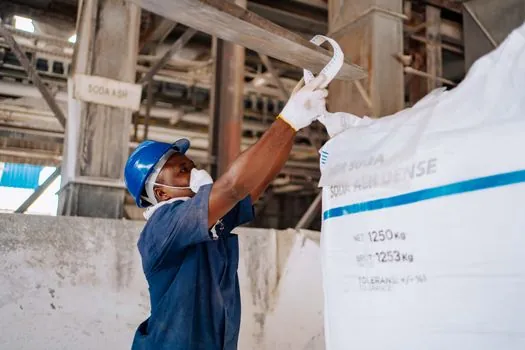
Industry 4.0 pays back fastest for multi-grade producers running 8–24 grade changes per week, converters serving automotive OEMs that require per-batch MFR and ash certificates, and resin producers supplying thin-wall food packaging where off-spec rate is a regulatory and brand issue [S3][S1].
It is a poor fit for single-grade, single-line commodity homopolymer producers running flat-out on long campaigns: the closed-loop gains evaporate when the process is already stable for weeks, and the cybersecurity and OT-IT integration tax is real. Small compounding shops under 10 kt/yr face the same hurdle: capex per tonne of capacity is harder to amortize than a 400 kt/yr integrated PP line. The packaging end-use segment, which held the largest PP resin share in 2024, sits in the middle: digital only where grade proliferation and regulatory traceability justify it [S1].
Comparison: how the digital layers stack against decision criteria
A spec-driven comparison of the four digital layers used in PP plants today lines them up against four decision criteria, the way an engineer would score them on a P&ID review:
1) Field instrumentation: must be HART or Ethernet-APL with intrinsic safety rated to ATEX/IECEx zone 1. Strength: highest data fidelity. Weakness: highest unit cost per I/O point.
2) Edge / control layer: typical hardware is an industrial PC with IEC 61131-3 soft-PLC, running 50–200 ms loops on the extruder. Strength: deterministic. Weakness: vendor lock on libraries.
3) Historian and analytics: OSIsoft PI or open-source alternatives with OPC-UA ingest. Strength: cross-batch traceability. Weakness: requires data-engineering headcount most converters do not have in-house.
4) AI / digital twin layer: simulation tools like Cadmould AI Solver for injection molding push fill-time exploration 1,000x faster than legacy CFD [S5]. Strength: cuts engineering time per mold. Weakness: model drift on filled-recycled feedstock where rheology shifts batch-to-batch.
On a pure-payload PP homopolymer line, layers 1 and 2 carry 70–80% of the value. On a multi-grade copolymer line with recycled feedstock, layers 3 and 4 are what the project is really buying. Reactor-grade control in PEEK or POM compounding lines uses the same layer model, which is why the spec pattern repeats across engineering thermoplastics.
Real use cases on the plant floor
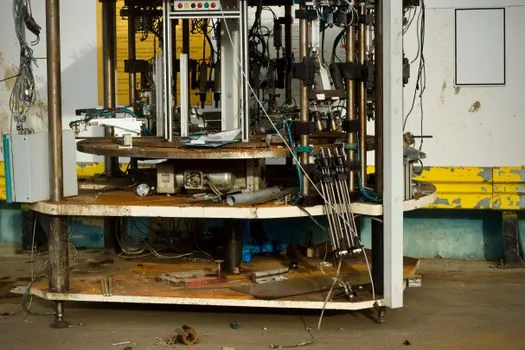
Inline rheometry on the extruder die now feeds back to the screw-speed profile every 100–200 ms, holding MFR within tighter bands and trimming off-spec transition on grade changeover. Inline NIR spectroscopy on the pelletizer line streams isotacticity and additive concentration into the historian, so a lot can be released to packaging without waiting on a lab GPC run. AI-assisted injection molding simulation is being used to compress mold-trial cycles from days to hours [S5]. Plastic leak-detection systems from suppliers such as Airtect, deployed by Quality Mold Shop and Mobile Manifold Repair, are being specified on hot runners and machine nozzles to catch material leaks that would otherwise scrap a shift [S5].
Broader case studies in the converting side, including wrapping and packaging lines, mirror the same sensor spine; a spec-driven look at downstream e-commerce wrapping is in the wrapping machine selection for e-commerce fulfillment map, where line-level OEE and changeover data feed the same MES.
Limitations, failure modes, and what the data still does not show
Closed-loop control on PP extruders breaks down when feedstock is a recycled-content blend with shifting rheology; the model drifts and the loop chases a moving target. Cybersecurity is a real failure mode: OPC-UA on flat plant networks is a known exposure, and segmentation between OT and IT is a project on its own. Inline NIR calibration drift over weeks is a maintenance burden, not a one-time install. Industry 4.0 also demands a workforce with data-engineering and OT-IT crossover skills, which most resin producers are still building in-house rather than buying [S1][S3].
Comparable ambiguity exists across related categories, as the measuring instruments 2026 spec sheet shows for adjacent field-instrument markets.
Sourcing, standards, and trackable signals
Field instrumentation on a PP line typically cites ATEX 2014/34/EU or IECEx for zone classification, IEC 61131-3 for control programming, and ISA-88 / ISA-95 batch-control models for recipe handling, with OPC-UA as the data spine. Public sizing for the PP segment is taken from IndustryARC (US$110.61Bn by 2030, 4.1% CAGR) [S1], The Business Research Company (US$144.67Bn in 2026, 7.2% CAGR to US$190.71Bn by 2030) [S2], and DataM Intelligence (US$91.77Bn in 2025, 4.4% CAGR to US$129.50Bn by 2033) [S3], with Asia-Pacific the dominant region across all three series [S1][S3].
Two signals worth tracking: the next wave of AI-assisted molding simulation releases (Cadmould AI Solver and follow-on tools) and the cadence of OPC-UA / Ethernet-APL device announcements at upcoming K and Fakuma shows, since both correlate with how fast PP converters move from monitoring to true closed-loop control. Material-flow designs across adjacent converter segments, including the synthetic resin compounding chain, are converging on the same IIoT backbone, so progress here is a useful proxy for adjacent plant-floor digitalization.