
U.S. data center construction will require between 349,000 and 499,000 additional workers in 2026 alone, and licensed journeyman electricians sit at the top of every operator's hard-to-fill list, per the Associated Builders and Contractors workforce model cited in March 2026 reporting [S4]. The constraint is no longer power or land; it is people who can pull 480 V switchgear, terminate medium-voltage cable, and commission UPS strings on a hyperscale schedule.
U.S. data center construction is projected to clear $52 billion in 2026, with electrical systems alone running 45 to 70 percent of total project cost on AI campuses where a single GPU rack now draws 120 to 140 kW, up from 10 to 14 kW a decade ago [S2][S3]. That density jump, multiplied across thousands of racks per hall, is what makes the electrician count non-substitutable by general construction labor.
The 2026 headcount gap, by source
Three independent workforce models converge on the same order of magnitude, which is the only useful sanity check for any single number. ABC's trade group model puts 2026 construction hiring need at 349,000, with an upper-bound shortfall of 499,000 workers if AI campus schedules hold [S4]. McKinsey's earlier analysis, re-cited across 2026 coverage, frames the AI-infrastructure ask as 130,000 additional electricians, 240,000 construction laborers, and 150,000 supervisors between 2023 and 2030 [S2]. TranSearch's June 2026 brief puts the global data center workforce gap at roughly 300,000 by 2030 and the unfilled U.S. data center position count near 340,000, with only about 15 percent of applicants meeting qualification bars [S3]. The Uptime Institute 2024 Global Data Center Survey, referenced in 2026 operator briefings, shows 53 percent of operators reporting difficulty finding qualified candidates, up from 38 percent in 2018, with the Uptime follow-up flagging 51 percent struggling specifically to fill mid-level electrical and mechanical operations roles [S3][S5].
Data center job postings themselves surged 64 percent between 2023 and 2025, against only 4 percent growth in postings across the broader economy, which is the cleanest single ratio showing the demand spike is data-center specific, not a generic construction cycle [S3].
Where the electricians actually go: pay, retirement, and mobility
Compensation has rerated hard, which is the market's blunt admission that supply is the binding constraint. Skilled-trades wages are up roughly 30 percent over four years per Randstad data cited in June 2026, electrician-related openings climbed about 18 percent over the same window, and total comp for data center electricians in high-demand U.S. markets now runs $240,000 to $280,000, against roughly $42,000 for first-year apprentices [S2]. Regional spreads remain wide: Northern Virginia journeyman electricians report base pay above $120,000, while first-year apprentices in the same market still start near the $42,000 figure [S4].
The demographic side is the harder problem. About 41 percent of the U.S. construction workforce is on track to retire by 2031, nearly 20 percent of workers are already over 55, and the construction-industry retirement-to-replacement ratio is running at roughly 5 to 2, so for every five tradespeople exiting, only two enter [S2][S4]. Turnover sits at 68 percent overall and 73 percent for specialized trades, and replacing a highly skilled position can cost 213 percent of that role's annual salary once recruiting, training, and lost productivity are tallied [S4]. Skilled trades have low geographic mobility, so a single hyperscale ground-breaking in Northern Virginia, Phoenix, Dallas, or Atlanta can drain the local electrician pool almost overnight, and 40 percent of current data center professionals tell DataX Connect they plan to leave their roles despite the rising pay, widening the gap on the operations side as fast as construction closes it [S3][S5].
What data center electrical work actually demands
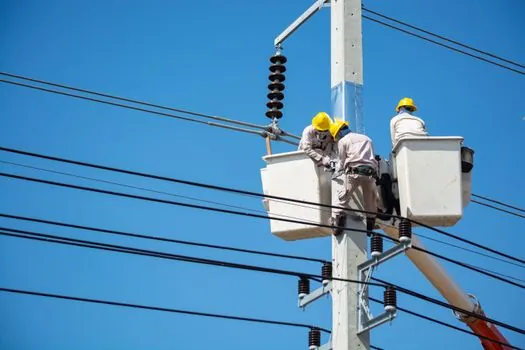
The 120 to 140 kW per rack figure is the operational reason a generic construction laborer cannot backfill an electrician on a data center site: the busway, switchgear, busbar ampacity, and short-circuit coordination studies on a 60 MW to 100 MW campus are a different class of work from commercial office buildout [S2]. The hardest-to-fill roles named in June 2026 reporting are journeyman electricians, electrical engineers, high-voltage commissioning engineers, mechanical and electrical project managers with hyperscale experience, and critical-facility operations leaders, none of which compress into a short training course [S3].
For owners, the cost of that specialization gap shows up as schedule. Contractor backlogs on data center work now run nearly 11 months, against about 8 months in other commercial sectors, and a 60 MW campus delay works out to roughly $14.2 million per month in lost revenue, which is the figure project finance teams are now using to justify prefab and automation spend that would have looked extravagant two years ago [S3][S4]. On the process side, the same pressure transmitter and flow meter commissioning scopes that once took a week per unit are being folded into factory-built skid packages so site labor is limited to terminations and megger checks, and a related dry-type transformer sourcing shift in 2026 tracks the same prefab logic moving up the medium-voltage chain.
Decision criteria: training, prefab, automation, or poach
Operators are converging on a four-lever mix, and the trade-offs are concrete enough to compare. The table below lines the levers against the 2026 numbers each one actually moves. [S3]
1. Apprenticeship and training pipelines. The most durable fix and the slowest: ABC's apprenticeship programs and the electrical union's joint apprenticeship committees are the main feeders, and first-year apprentice pay around $42,000 with zero student debt is the recruiting pitch that scales regionally. Time to first productive year on a hyperscale site is typically 3 to 4 years, so this lever does nothing for 2026 backlogs and only materializes for the 2028 to 2030 build cycle [S2][S4]. 2. Prefabrication and modular assembly. Skid-built MV switchgear, bus duct, and UPS strings cut on-site electrical labor hours per MW materially; the Schneider Electric February 2026 brief frames prefab IT-room, cooling, and power modules as a direct response to the 439,000-worker U.S. construction shortfall and the more-than-half of data center sites already reporting staffing-driven disruption [S5]. 3. Automation and digital twins. Advanced simulation software is being used to model power, cooling, and full data center behavior before site work begins, which compresses engineering rework and lets smaller electrical teams handle larger campuses; this lever scales with engineering headcount, not electrician headcount, so it is bounded [S5]. 4. Poaching, wage inflation, and widened hiring criteria. Digital Realty and peers cited in August 2026 reporting are explicitly widening hiring criteria and pulling from adjacent trades; this is the fastest lever and the most expensive, since it drives the 30 percent four-year wage spike and the $240,000 to $280,000 total comp figures that are now baseline in tight markets [S1][S2].
The honest read: levers 1 and 2 are the only ones that change the 2027 to 2030 trajectory, while levers 3 and 4 are what owners are using to keep 2026 schedules from sliding. Operators that treat workforce as a capital project, not an HR problem, are the ones whose 60 MW phases actually hit mechanical completion on the date the power utility promised the interconnect.
Constraints, failure modes, and what can still go wrong
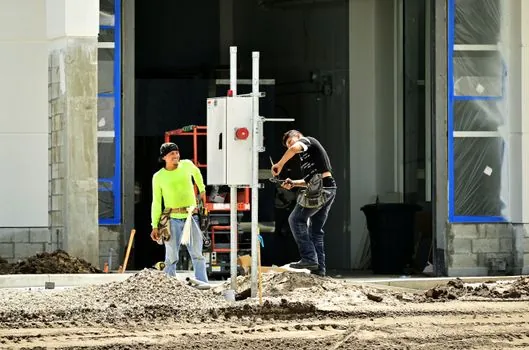
The first failure mode is treating prefab as a silver bullet: factory-built MV assemblies still need the same licensed electricians on site for landing, torquing, and ground-fault testing, so prefab shifts labor up the value chain rather than removing it, and it requires shop capacity that the medium-voltage industrial valve and switchgear supply chain does not currently have at hyperscale volumes [S5]. The second is geography: even with $280,000 total comp, electricians with hyperscale experience are not moving to Loudoun County, Texas, or Phoenix in the numbers the buildout requires, and H-2B and TN visa pipelines do not cover journey-level electrical work at the volumes needed. The third is the operations cliff: DataX Connect's 40 percent intent-to-leave figure among current data center professionals hits at the same time new campuses come online, so the commissioning teams that finish 2026 builds are the same people the 2027 builds need to staff [S3][S5].
For owners, the practical decision tree is: lock apprenticeship and prefab commitments now for 2028 delivery, accept 2026 to 2027 cost inflation as the price of speed, and instrument every site with the kind of real-time data logger and pressure sensor telemetry that lets a smaller crew monitor what a larger crew used to walk down, so the electrician headcount per MW trends down even as total MW shipped trends up.
Trackable next signals: the Q1 2027 ABC workforce update will reset the 349,000 to 499,000 range against actual 2026 hires, and the Uptime Institute 2026 Global Data Center Survey, due in mid-2027, will show whether the 51 to 53 percent hard-to-fill operator figure breaks above 60 percent or bends down as prefab and apprenticeship cohorts scale.