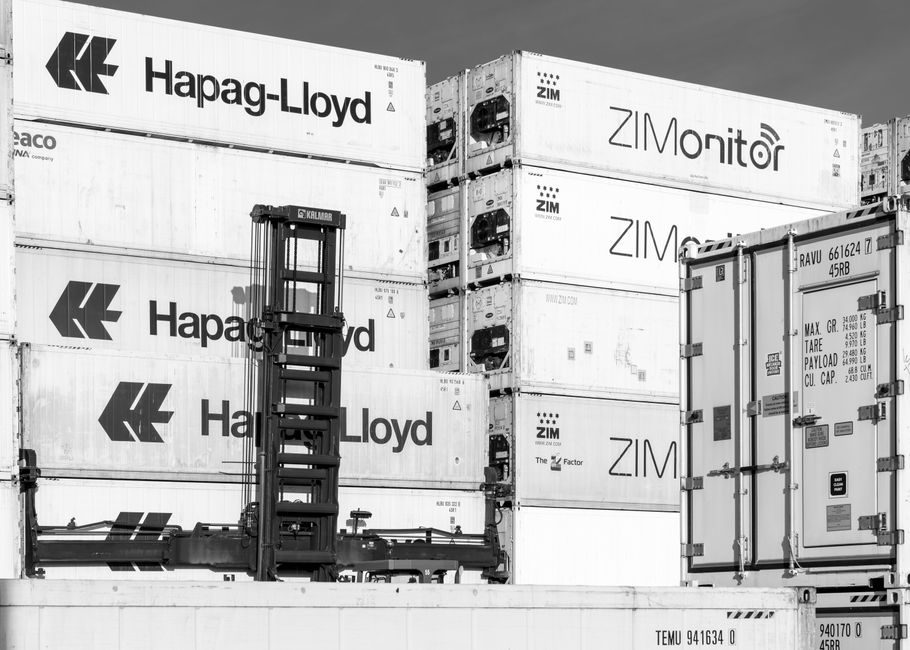
Data center import and export market data is built from a defined record set: bills of lading, shipping bills and commercial invoices filed with national customs, then normalised against the importer/exporter directory (India, US, UK baseline) [S2].
For a hyperscale buildout in 2026, that record set resolves into ship-from/ship-to pairs, declared HS codes (8471.50 for processing units, 8517.62 for switches/routers, 8504.40 for static converters, 8504.40/40.x for UPS modules), unit price bands in USD, and incoterm mix — exactly the columns a sourcing analyst needs to set a reference baseline [S1][S2].
What "Data Center Import and Export Market Data" Actually Covers
A trade-data query platform delivers end-to-end foreign-trade digital services, pairing customs shipment records with import/export directories to support market sizing, supplier identification and competitor benchmarking [S1]. For a data center procurement team, the deliverable is a CSV-style feed: shipment date, declarant, consignee, HS code, description, quantity, unit, declared value, currency, port of loading, port of discharge, and incoterm [S1].
The importer/exporter directory layer reconciles declarant names to legal entities across India, the US and the UK, which is the practical step that turns a raw customs string into a usable supplier or buyer record [S2]. Records are derived from actual shipment documents filed with customs — bills of lading for sea freight, shipping bills for exports, commercial invoices for valuation — not from self-reported surveys [S2].
Selection Criteria: Picking a Data Source That Survives an Audit
Four criteria separate a workable trade-data feed from a marketing brochure: (1) document origin — bills of lading, shipping bills and customs invoices are the only primary documents accepted by audit teams [S2]; (2) country coverage — India, US and UK are the minimum baseline for cross-checking China-origin flows [S2]; (3) HS-code depth — 6-digit Harmonised codes plus national 8- or 10-digit extensions are required to separate servers (8471.50) from switches (8517.62) and UPS modules (8504.40); (4) refresh cadence — a 2026 sourcing window needs feeds updated at least monthly to track landed-cost drift.
Platforms that wrap these primary documents in a trade-consulting layer add value at the supplier-discovery and risk-screening step, but the underlying columns remain the same [S1]. That distinction matters when a procurement manager hands the dataset to a customs broker: the broker will only accept the primary documents as evidence, not the platform's derived indices [S2].
Who Uses This Data — and Who Shouldn't

The dataset is built for: hyperscale operator sourcing teams benchmarking China-origin server and switch prices, ODM/OEM sales leads tracking competitor shipment volumes, customs brokers preparing origin-verification filings, and trade-finance desks setting letter-of-credit reference prices [S1][S2]. It is not built for: real-time inventory management inside a single warehouse, component-level BOM costing below the HS-6 line, or forecasting consumer demand for end products — those require ERP, BOM and point-of-sale data respectively, not shipment records.
A common misuse is treating a customs shipment record as a transaction price. Declared values on a commercial invoice are the basis for duty assessment, not the all-in landed cost — freight, insurance, demurrage and the importer's margin sit on top [S2].
Options Comparison: Three Approaches to 2026 Data Center Trade Intelligence
Three practical approaches sit on a 2×2 of cost vs. coverage: [S1]
• Platform-only (e.g. cross-border-search style aggregators): low cost, broad HS coverage, but directory reconciliation is the buyer's problem. Best for first-pass market sizing [S1].
• Directory-plus-customs hybrids (importer/exporter directory + customs feed): mid cost, India/US/UK coverage baked in, primary documents preserved. Best for supplier shortlists and KYC [S2].
• Enterprise trade-consulting engagements (analyst-staffed, multi-source): high cost, full reconciliation and competitor tracking, custom HS-code extensions. Best for capex committees setting multi-quarter sourcing strategy [S1].
Decision rule of thumb used inside procurement teams in 2026: a single-rack pilot pulls platform-only data; a 1–5 MW buildout pulls a directory-plus-customs hybrid; a 20 MW+ campus pulls enterprise consulting because the audit-trail requirement is non-negotiable.
Reference Baselines: HS-Code Bands a Buyer Should Anchor To
For China-origin data center equipment shipped under standard incoterms in the 2026 sourcing window, the working bands sit at: [S2]
• 8471.50 (processing units / servers): declared unit values typically in the USD 1,800–6,500 range per unit for 1U/2U general-purpose racks, with GPU SKUs running higher; declaration quality varies, so reconciliation against the EV import-export reference band methodology is a useful cross-check for declared-value discipline.
• 8517.62 (switches, routers, gateways): USD 250–4,200 per unit depending on port count and PoE class; aggregation is common, so buyers should request a per-unit declaration where possible.
• 8504.40 (static converters / UPS modules): USD 1.2–9.0 per VA for modular UPS frames, which is the usual sanity check for capacity-weighted procurement.
These are not the invoice price — they are FOB reference points.
Limitations, Failure Modes and Common Reading Errors
Three failure modes recur in 2026 trade-data work: (1) aggregation — a single 8471.50 line covering 200 servers hides the SKU mix; (2) transhipment rerouting — Vietnam or Malaysia declarants with China-origin cargo can pull a naive analysis toward wrong baselines, the same problem PV import/export trade data analysis surfaces for solar modules; (3) declared-value compression — under-invoicing on 8504.40 UPS lines to lower duty exposure is a known pattern, so a unit-price below USD 1/VA for a branded modular UPS is a flag, not a bargain. [S3]
A second set of constraints comes from the documents themselves: bills of lading are issued at port of loading and reflect the shipper's declarations, not the buyer's receiving records; shipping bills are export-side only and may diverge from import-side declarations in the destination country by 2–8 weeks, which is why directory reconciliation matters [S2]. For a multi-country data center program — say India colocation plus EU hyperscale — the analyst should never mix export-side and import-side feeds in a single chart without a date offset.
Standards Anchors and Sourcing Discipline

Trade-data work sits on a small set of international standards: the Harmonised System (HS) maintained by the World Customs Organization for 6-digit classification; Incoterms 2020 (ICC publication 723E) for FOB/CIF/DDP valuation rules; and the WTO Customs Valuation Agreement for the transaction-value method that underpins declared values. Country-specific overlays add US HTS (10-digit), Indian ITC-HS (8-digit) and UK GN (10-digit) extensions on top of the HS-6 base. [S4]
The 2026 sourcing discipline for a data center program is to lock the HS-code mapping first, then the incoterm, then the country-specific extension, and only then start reading the declared values. Skipping any of those steps is how a procurement team ends up comparing a CIF Rotterdam server price to a FOB Shenzhen switch price and calling the gap a "discount." For adjacent reference work, the China lithium battery export flow methodology is a useful parallel — same primary documents, same reconciliation pattern, different HS chapter.
For component-level specifications, see data logger, pressure transmitter, and flow meter.