
Deformed rebar in 2026 is a commodity-grade carbon-steel bar with transverse ribs (lug spacing typically 0.5–0.7 × nominal diameter) that locks into concrete via mechanical bond rather than smooth-surface adhesion [S1][S2].
Cross-border mill quotes from Chinese producers cluster in the US$200–400/tonne FOB band for HRB400 in 12–25 mm diameters with 25-tonne minimum order quantity, while smaller-diameter stock (6–10 mm) and higher-grade HRB500/GR75 carry step-up premia of 8–18% [S4][S5].
Grade Map: Chinese GB, US ASTM and UK/EN Designations
HRB335, HRB400 and HRB500 are the three workhorse Chinese GB/T 1499.2 grades in current mill production, with HRB400 as the default structural choice and HRB500 reserved for seismic columns, high-rise transfer beams and heavy foundations [S2].
ASTM GR40 (40 ksi / 276 MPa yield) and GR60 (60 ksi / 414 MPa yield) cover the same duty range for North American projects, while BS 4449 G460B plus EN 10080 B500A/B/C cover UK and EU specifications; cross-grade equivalence is approximate, not identical, and substitution always needs engineer sign-off [S2]. For deep dives on selecting rebar versus plate stock, see Deformed Rebar vs Steel Plate: Spec Cut for Concrete Rebar vs Plate Selection.
Diameter, Length and Standard Stock Range
Mill-stock diameters run 6, 8, 10, 12, 14, 16, 18, 20, 22, 25, 28, 32, 36, 40 and 50 mm, with 6 m, 9 m and 12 m cut lengths standard from Hebei and Shandong mills; 50 mm is a special-order item, not a stock item, and usually needs 200-tonne MOQ [S5].
For estimating rebar tonnage on a slab or beam, multiply total linear metres by nominal mass (12 mm = 0.888 kg/m, 16 mm = 1.578 kg/m, 20 mm = 2.466 kg/m, 25 mm = 3.853 kg/m) and add 7–10% for laps and wastage.
2026 Price Band and What Moves It

China-domestic mill offers and export FOB quotes both report a 200–400 USD/tonne range for HRB400 deformed bar, with most spot deals landing at 230–310 USD/tonne for 12–25 mm and freight extra [S4].
The four big cost drivers in order: (1) billet and scrap input cost — HRC scrap in the 280–320 USD/tonne band keeps the floor firm; (2) grade premium — HRB500 carries roughly 8–14% over HRB400 because of higher Mn/V microalloying; (3) diameter — ≤10 mm runs 5–12% above mid-range 16–25 mm because of conversion yield; (4) order size — 25-tonne MOQ is standard, and lots below 25 t typically add 6–10% in consolidation fees [S4][S5].
For buyers running continuous tonnage, framing the deal around a rebar coupler and rebar bender package with the mill often unlocks 4–7% Volume discount versus piece-part procurement.
Surface, Coating and Traceability Adders
Standard deformed bar ships as black (hot-rolled mill scale) finish; galvanized, epoxy-coated and bright (pickled) finishes are available on request and typically add 80–180 USD/tonne, 120–220 USD/tonne and 30–60 USD/tonne respectively over the black-bar reference [S1].
For marine wharves, chemical-plant bund walls and chloride-exposed decks, specify epoxy-coated to ASTM A775 at 175–300 µm film thickness; do not substitute galvanized for epoxy in submerged splash zones — the zinc layer sacrifices faster in chloride-rich wet-dry cycling [S1]. Mill test certificates to EN 10204 3.1 are the minimum commercial norm, and seismic-grade lots should be supplied with full chemistry, tensile, bend and charpy-impact traceability from each heat [S1].
Selection Criteria: Matching Bar to Project

For cut-and-bend packages on site, a single rebar cutter rated to 32–40 mm handles 95% of stock-list diameters; undersizing a 50 mm shear because "we only have a few" is a false economy — bar count rarely justifies the bottleneck on a 30-day pour cycle. If the slab design uses crossed-roller mat panels, a crossed-roller-guide mat-bending jig is more accurate than field-bent loose bar for crack-control layers above 200 mm slab thickness.
Procurement Risks and Failure Modes
Substituting HRB335 in lieu of HRB400 to save 8–12% per tonne is the single most common procurement error — at the same design moment, deflection and crack-width serviceability often fail long before ultimate limit, and the structural cost of a redesign dwarfs the steel saving. [S1]
Second: grade-mix lots. Some consolidators mix 20-tonne HRB400 with 5-tonne HRB335 to fill a container; mill tag and stencil must be cross-checked against the MTC at receiving, and a 2-bar-per-50-tonne tensile spot-check is cheap insurance on a US$50,000-plus lot [S4]. Third: lug profile. GB/T 1499.2 mandates a transverse rib height of ≥4% of nominal diameter, but some export-only stock uses a thinner pattern compliant with a different regional code; bond strength in concrete can vary 15–25% between patterns, so pin the standard on the PO, not just the grade.
Trackable Signals for the Next Quarter
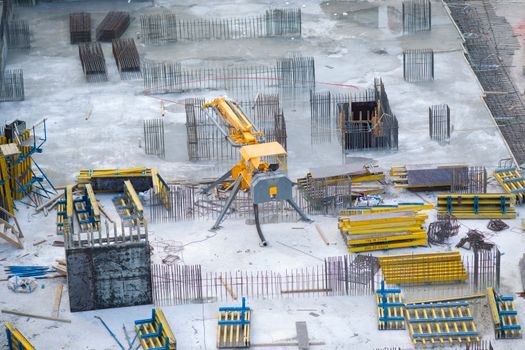
Two indicators to watch into Q3 2026: China domestic spot price for 20 mm HRB400 at Tangshan and the LME steel-scrap reference — a 5–8% scrap move typically pulls rebar FOB quotes 3–5% within four to six weeks, so procurement teams running July–September pours should lock tonnage before mid-July [S3].
Second signal: mill energy-cost surcharge. Hebei producers have flagged that any Q3 coal or power tariff change above 8% will trigger a rebar quote adjustment of roughly 2–4% — small in absolute terms but enough to swing a 1,000-tonne package by 4,600–9,200 USD on a 200–400 USD/tonne base [S4].