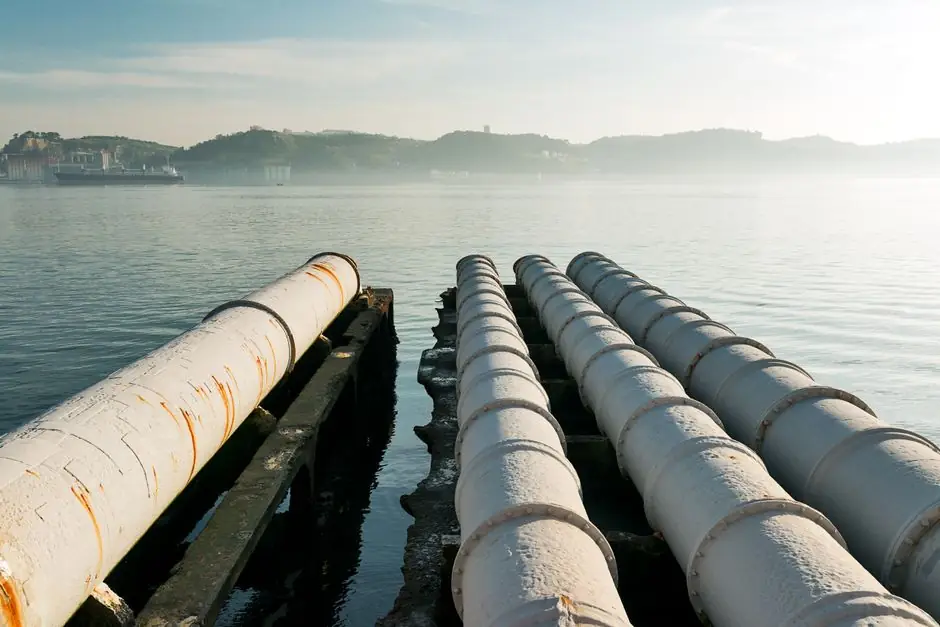
Seawater reverse osmosis (SWRO) with energy recovery in 2026 produces water at €1 to €3 per cubic meter over a 15-year life cycle on solar-assisted systems, versus €3 to €6 per cubic meter for diesel-driven thermal or membrane systems at smaller scale, with the 100 m³/day class hitting the floor at roughly €1 per cubic meter on a €450,000 capital base [S1].
The same 2026 cost band confirmed across vendor guides: $0.50 to $5.00 per cubic meter for seawater desalination, driven by feed TDS (32,000 to 38,000 ppm for ocean intakes versus 1,000 to 10,000 ppm for brackish), output quality (drinking water under 500 ppm TDS, versus below 10 ppm for pharmaceutical or semiconductor use), and energy price [S4][S5].
Where the €/m³ number actually comes from
The €/m³ figure is a levelised cost, not a utility bill. Elemental Water Makers breaks it down for 2026: a 5 m³/day solar unit costs €3 per cubic meter over 15 years (€70,000 capex plus €1,500/year OpEx), a 20 m³/day system lands at €1.5 per cubic meter (€120,000 capex plus €3,000/year), and a 100 m³/day plant hits €1 per cubic meter (€450,000 capex plus €12,500/year); economies of scale alone cut per-unit cost 70% between the smallest and largest class [S1].
A different anchor point sits in the Middle East: Israel’s Sorek B plant contracted at $0.41 per cubic meter, and Gulf state modelling projects water production costs rising from $0.20 per cubic meter in 2021 to $0.33 per cubic meter by 2045 as energy and brine handling costs accrue [S3][S6][S9]. Industry data document the per-cubic-meter price of desalinated water falling from $0.75 in 2012 to $0.41 in current contracts, such as the Sorek B plant, which is contracted to produce water for $0.41 per cubic meter [S3].
Cost driver ranking: energy, then capex, then pre-treatment
Energy is the dominant lever. Conventional SWRO consumes 7 to 10 kWh per cubic meter; with modern energy-recovery devices (ERDs: pressure exchangers or turbochargers) that drops to 3 to 6 kWh per cubic meter, and ERD payback runs 1 to 3 years on systems above roughly 10,000 GPD [S1][S5]. Brackish water RO is a different animal at 0.5 to 1.5 kWh per cubic meter, a 4 to 10x reduction against seawater, which is why inland brackish sites under 10,000 ppm TDS get specified first whenever hydrogeology allows [S2][S5].
Capex distribution on a turnkey SWRO skid breaks down roughly: high-pressure pump 15 to 25%, RO membranes 20 to 30% (FILMTEC SW30XHR-class elements, replaced every 3 to 7 years), pressure vessels 10 to 15% (fibreglass composite standard, stainless for harsh service), pre-treatment 15 to 20%, controls and instrumentation 10 to 15%, frame and housing 5 to 10%, and installation 10 to 20% of equipment cost [S5]. Pre-treatment alone, multimedia filtration plus ultrafiltration plus chemical dosing, can hit 20 to 25% of total project cost on biologically active intakes [S5].
Capital cost tiers by capacity in 2026 USD
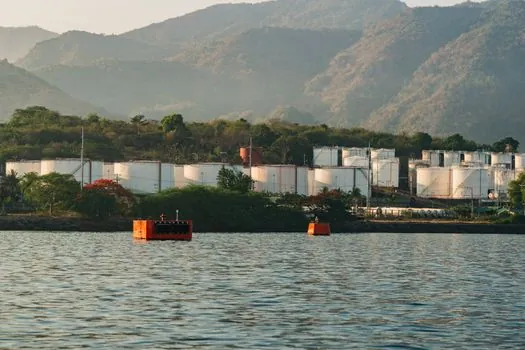
Vendor pricing for 2026 published equipment only (not installed cost): portable and marine units of 100 to 500 GPD run $3,000 to $15,000; small commercial 1,000 to 5,000 GPD at $15,000 to $60,000; mid-size industrial 10,000 to 50,000 GPD at $60,000 to $350,000; large industrial 100,000 GPD and up at $500,000 to $5,000,000 plus [S5][S7].
Two-pass RO for sub-10 ppm TDS output costs 40 to 60% more than single-pass at the same flow, driven by a second membrane bank and a second booster pump stage, a fact that matters for pharmaceutical, semiconductor, and high-pressure boiler make-up where the online water analyzer downstream will reject anything over spec [S5].
Operating cost model: energy at $0.12/kWh US commercial
At the US commercial average of $0.12/kWh, daily energy cost for a 10,000 GPD SWRO with ERD runs $55 to $110, versus $110 to $220 without it; a 100,000 GPD SWRO with ERD runs $550 to $1,100 per day [S5]. Over a 10-year operating life, energy cost for a 10,000 GPD system accumulates to $200,000 to $800,000, often more than the original equipment cost, which is why ERD selection and high-efficiency pump pairing are the single highest-ROI decisions on a new plant [S5].
Hannah Ritchie’s working figure of 3.5 kWh per cubic meter for current-generation RO yields $0.45 per cubic meter at US average electricity, and California rates push that higher [S2]. For site selection, the practical rule: every additional kWh per cubic meter above 3.0 adds roughly $0.12 per cubic meter at $0.12/kWh, so a plant spec’d without ERD effectively pays a hidden $0.60 to $1.20 per cubic meter penalty against a best-in-class unit. On the energy-source side, solar-assisted SWRO eliminates fuel volatility and lands at €1 to €3 per cubic meter on a 15-year basis, while diesel-driven units add €2 to €3 per cubic meter in fuel exposure and grid-connected units add €1.50 to €2.50 per cubic meter in power costs alone [S1].
Process options compared: SWRO, BWRO, thermal, and solar-thermal
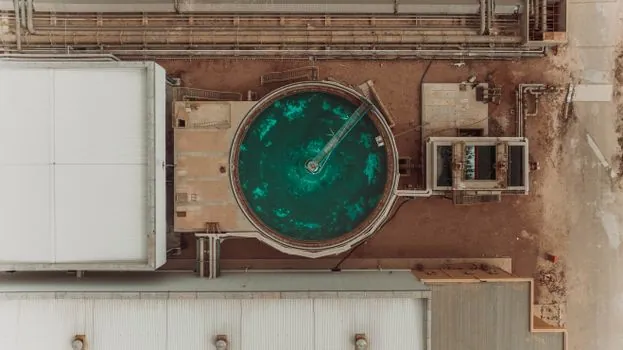
Four technology lanes cover nearly every 2026 spec. SWRO with ERD is the workhorse: 3 to 6 kWh/m³, $0.50 to $2.00 per cubic meter all-in at scale, fits any seawater TDS, and dominates new builds. BWRO applies where feed TDS is 1,000 to 10,000 ppm: 0.5 to 1.5 kWh/m³, $0.20 to $0.80 per cubic meter, but cannot produce potable water from ocean intakes without upstream dilution. Thermal desalination (MSF, MED) is the legacy Gulf lane: 3 to 5x the energy intensity of RO, $0.80 to $2.50 per cubic meter all-in, but tolerant of high-TDS brine and able to co-generate with power plant waste heat. Solar-thermal and small-scale solar-RO hybrids target islands and resorts: €1 to €3 per cubic meter over 15 years on 5 to 100 m³/day units, with capex recovered against €5 to €10 per cubic meter trucked-water costs in Curaçao- and Belize-class sites [S1][S2][S3][S6].
Decision rule of thumb used by EPC firms in 2026: if feed TDS is under 10,000 ppm and grid power is under $0.10/kWh, BWRO wins on €/m³; above 10,000 ppm feed or anywhere with a marine intake, SWRO with ERD is the default; thermal only stays in the spec when the client already owns a heat source or the feed is above 45,000 ppm TDS (tail brine, produced water) [S5][S6].
Brine disposal, monitoring, and the hidden OpEx line
Brine concentrate disposal is the line item most projects under-budget at FEED stage. Outfall-diffuser compliance under local maritime authorities typically requires continuous conductivity meter logging at the mixing zone, with TDS and temperature telemetry to the regulator, and most EPC scopes now carry a brine-line flow measurement station sized for 1.5 to 2.0x the permeate flow. For inland BWRO sites, deep-well injection cost stacks at $0.05 to $0.30 per cubic meter of permeate; for coastal SWRO, modern outfalls land at $0.02 to $0.10 per cubic meter, but marine-environmental impact assessments frequently add 6 to 12 months to permitting [S1][S6].
On the electrical side, a midsize 100,000 GPD SWRO plant draws continuous load in the 200 to 600 kW range depending on feed TDS and ERD efficiency, and the intake pumps plus high-pressure pump motors are usually metered by a clamp meter during commissioning acceptance tests, with a target power-quality harmonic distortion under IEEE 519 limits at the PCC. Plant-level electricity meter accuracy at 0.2S class is now the default on EU-funded sites to satisfy subsidy reporting. None of these are optional: a 2024 review of long-term economic sustainability found that under-investment in brine handling and energy monitoring is the leading cause of cost drift from modelled $0.20/m³ toward realised $0.33/m³ by 2045 [S9].
Limits, failure modes, and what the €/m³ number does not cover
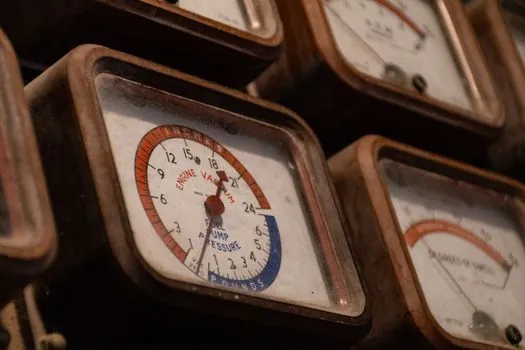
The published €/m³ range excludes three real costs: intake and outfall civil works (often 15 to 30% of installed cost on greenfield sites), concentrate disposal over the life of the plant, and membrane replacement at 3 to 7 year intervals (RO membranes alone are 20 to 30% of equipment cost) [S5]. Energy price exposure is the second hidden risk: a $0.05/kWh swing in power tariff moves a 4 kWh/m³ plant by $0.20 per cubic meter, larger than the entire 15-year O&M line on a well-run plant.
Failure modes that consistently move cost above the 2026 band: biofouling on surface seawater intakes without UF pre-treatment (flux decline of 30 to 50% within 6 months, chemical clean-in-place every 4 to 8 weeks), scaling on BWRO with hardness above 400 ppm CaCO₃ without antiscalant dosing, and high-pressure pump seal failures on systems operating above 1,000 psi without scheduled vibration monitoring, a problem class covered in detail in condition-monitoring frequency spec practice. For a process engineer sizing a 2026 spec, the defensible target is €1 to €3 per cubic meter on a 15-year levelised basis for SWRO at 50 to 100 m³/day with ERD and grid or solar power, and that range holds only when pre-treatment, brine handling, and membrane replacement are all budgeted at design stage.