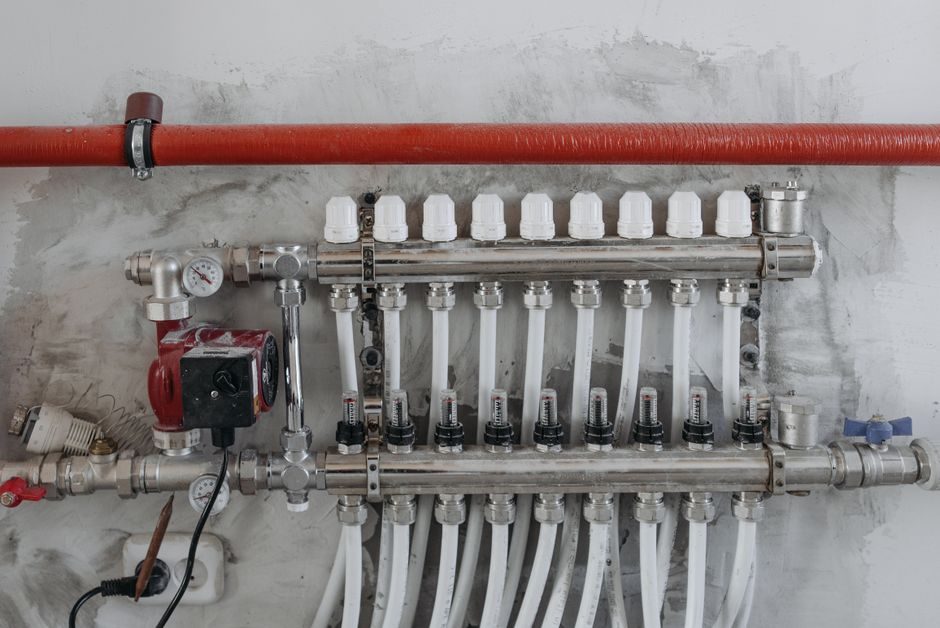
Modern pressure reducing valves are overwhelmingly diaphragm-actuated control valves — the two categories are not separate families, and specifying them correctly hinges on the working envelope, not on a label [S4][S1].
For maintenance reagent skids, the decision typically reduces to four numbers: inlet pressure, setpoint pressure, minimum controllable flow, and chemical compatibility of the wetted elastomer — all of which the datasheet must confirm before purchase [S3][S2].
Where the Two Categories Overlap — and Where They Diverge
A standalone diaphragm valve in maintenance reagent service usually operates as an on/off or isolation device, while a pressure reducing valve uses the diaphragm as the sensing element that modulates outlet pressure to a setpoint — the BERMAD IR-420-R datasheet explicitly describes its product as "a hydraulically operated, diaphragm actuated control valve that reduces higher upstream pressure to lower constant" downstream value [S4]. In other words, the diaphragm is the actuator/sensor, and the body geometry decides whether the valve isolates, regulates, or sustains.
Spirax Sarco's BRV71 lists identical hardware under three functions — "pressure-reducing, pressure-control, temperature control" — with DN 15-200 mm, PN up to 40 bar (580.2 psi), and 0-400 °C media range, demonstrating how one cast body serves both pressure reduction and temperature control duties when paired with the right pilot [S1]. The downstream selection question therefore becomes: which pilot/trim/sensor package is mounted on the diaphragm body.
Spec Comparison: Diaphragm Valve vs Pressure Reducing Valve for Reagent Service
Pressure class: standalone process diaphragm valves used for reagent isolation commonly sit in the PN16-PN40 band, with the BRV71 reaching 40 bar and the BERMAD WW-748 pressure-sustaining unit capped at 25 bar (362.6 psi) [S1][S2]. A dedicated PRV body such as the BERMAD IR-172-50-3W-Xt is intentionally low-pressure — 0.2 to 10 bar (2.9-145 psi) — because it relies on a flexible engineered plastic PES body and a hydraulic pilot, not a metal pressure boundary [S3].
Size envelope: maintenance reagent skids are usually small-bore, so the relevant sizes are DN 15-50 mm for the BERMAD IR-series (DN 40-80 mm) and DN 15-100 mm for the BRV71 — a diaphragm valve sized for a chemical skid rarely matches the DN 600+ waterworks diaphragm bodies sold for pump-battery manifolds [S1][S2][S3].
Media compatibility: for reagent service, the wetted elastomer and body material dominate the spec. PES plastic bodies with EPDM/PTFE diaphragms (IR-172-50-3W-Xt) handle many acids, caustics, and chlorides at low pressure, while stainless or carbon-steel flanged bodies (BRV71) suit higher-pressure, higher-temperature reagent water, glycol, or polymer solutions [S1][S3]. When the line fluid is a chemical reagent, confirm the elastomer compound against the supplier's chemical-resistance table, not the generic datasheet headline.
Selection Criteria for Maintenance Reagent Skids
Inlet/outlet pressure ratio: pick a self-actuated pressure reducing valve when the desired pressure drop ratio is 5:1 or higher and the setpoint is stable — the BRV71's published 40 bar maximum against a typical 3-8 bar setpoint on reagent day-tanks satisfies this comfortably [S1]. For low-pressure drop ratios where a small trim change drives the outlet across a wide band, a simple pressure reducing valve with a proportional pilot (current-to-pressure) is faster to commission than a hydraulic pilot chain [S6].
Power and signal availability: hydraulic-pilot PRVs such as the BERMAD IR-172-50-3W-Xt are line-pressure driven, require no external power, and are field-adjustable with a paddle-type flow pilot — attractive for unmanned reagent rooms [S3]. Pneumatic-pilot bodies (BRV71) need a clean, dry instrument-air supply, which is not always present on a maintenance skid [S1]. Electric or electro-hydraulic pilots add accuracy but also add I&E cost; the trade-off is documented in Pneumatic Valve Actuator Pricing 2026: Cost Drivers, Torque Tiers, and Selection Logic.
Maintainability: BERMAD's WW-748 lists "In-line serviceable – Easy maintenance" and "Protected diaphragm" as headline features, because diaphragm failure is the dominant wear item on this geometry [S2]. For reagent service, a top-access diaphragm design reduces the chance of disturbing downstream fittings during a rebuild — the IR-series datasheet's "Simple In-Line Inspection and Service" line reflects the same priority [S3].
Use-Case Map: When to Choose Which
Reagent day-tank isolation with occasional sampling: a manually or solenoid-operated on/off diaphragm valve sized to the skid DN is sufficient, with elastomer selected for the reagent — over-specifying a PRV here adds cost and tuning burden without benefit [S1][S3].
Reagent feed to a low-pressure analyser or scrubber requiring stable flow: a self-actuated pressure reducing valve (BERMAD IR-172-50-3W-Xt class) holds setpoint within the pilot's accuracy band, with DN 40-80 mm and 0.2-10 bar range covering most analyser loops [S3].
Steam-heated reagent tracing or hot-water blanket: the BRV71's 0-400 °C envelope and 40 bar ceiling suit the steam-supply side, while the reagent-side block valve can be a small diaphragm valve in a compatible alloy [S1]. The temperature-control benefit comes free when a PRV holds saturated steam pressure, because steam temperature is a direct function of pressure at saturation.
Pump-battery protection on the reagent circulation loop: a pressure-sustaining diaphragm valve (WW-748, 0.5-25 bar, DN 40-900 mm) prevents surge on pump start/stop and is sized far above skid-class PRVs [S2]. Do not substitute a small PRV body here — the geometry, port area, and surge duty differ fundamentally.
Failure Modes and Spec Pitfalls to Audit

Cavitation on high pressure drop: PES/plastic PRV bodies (IR-172-50-3W-Xt, 0.2-10 bar) handle low pressure drop by design; pushing them into high differential service causes diaphragm erosion and distortion, which the OEM flags explicitly as a prevented failure mode [S3]. For higher differential reagent service, specify a metal-body diaphragm valve with a cavitation-resistant trim, or stage two PRVs in series.
Elastomer incompatibility: diaphragm-actuated valves concentrate failure risk in the elastomer — a single chemical reagent attack on the diaphragm can pass fugitive reagent past the seat and into the pilot circuit, which is why datasheets pair the elastomer compound with each media rating [S1][S3]. Audit the chemical-resistance chart, not the headline "media: for chemicals" line.
Setpoint drift on worn pilots: a self-actuated pressure reducing valve drifts when its pilot spring or seal wears, and on reagent skids this drift may go undetected for weeks. Specify a valve with field-accessible pilot calibration (BERMAD IR-series offers "Easy flow and pressure setting with wide setting range") and log setpoint at each PM interval [S3].
Standards, Sourcing, and Cost Anchors
Flanged diaphragm bodies in this class are commonly rated to ASME B16.34 / EN 12266 for pressure-temperature envelope and tested per API 598 or equivalent — confirm on the manufacturer's data sheet for each PN class, since the same body can carry different ratings with different flange standards [S1]. For hazardous-area reagent rooms, pair the pneumatic-pilot BRV71 with a safety relief valve sized per API 520/521 upstream, so overpressure from a failed PRV cannot damage downstream reagent vessels.
Cost framing for budgeting: small PRV bodies (DN 15-50, plastic, hydraulic pilot) sit in the entry tier; flanged metal-body diaphragm PRVs (DN 50-200, pneumatic pilot) sit one tier higher; engineered waterworks-class pressure-sustaining valves (DN 100-900) carry the highest unit cost but the lowest installed cost on large mains. The cost-tier logic in Pressure Relief Valve Price 2026: Cost Drivers, Tiers, and Total-Cost Map translates directly, because the body, trim, and pilot architecture are comparable.
Two trackable signals for the next buying cycle: (1) whether the reagent skid OEM publishes a tested PRV/isolation pairing rather than a generic P&ID, because the elastomer-and-pilot compatibility is the highest-risk interface; and (2) whether the pneumatic-pilot BRV71 datasheet gains a low-pressure variant — the current 0-40 bar envelope forces a separate low-pressure model on reagent-only sites [S1].