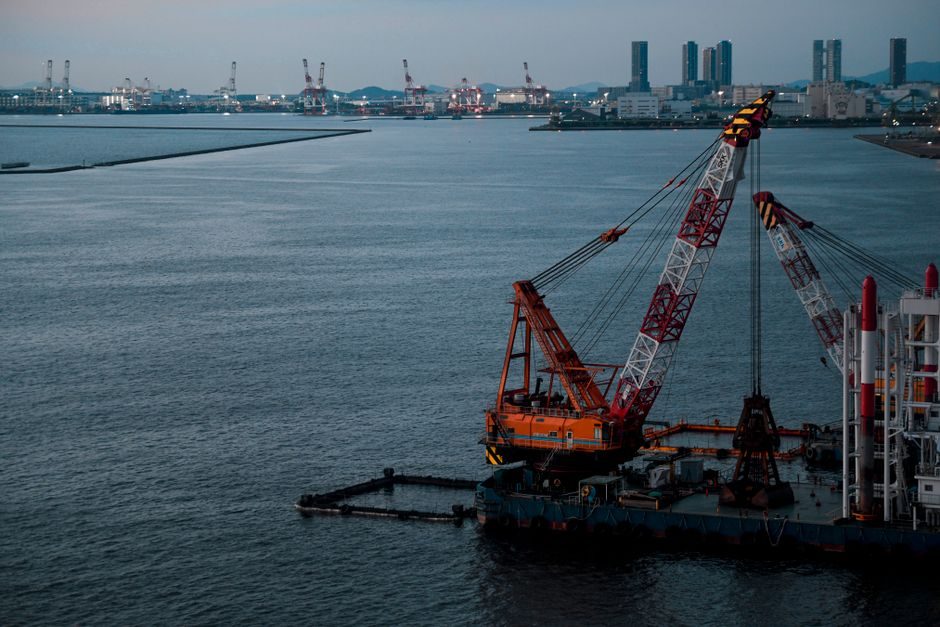
Specifying a diaphragm wall grab (also called a diaphragm wall bucket grab or hydraulic trench grab) starts with three binding dimensions: groove width, groove depth, and the hydraulic circuit pressure of the carrier rig — a SINOMADA SG60 100 m unit lists 350–1500 mm groove width, 100000 mm (100 m) groove depth, 33 MPa working pressure read on a pressure transmitter, 92 t operating weight and 298 kW rated power at the CE-certified attachment tier [S5].
The global supplier pool is narrow but heavy: only 2 manufacturers and 7 products were listed in the dedicated diaphragm wall grab category on DirectIndustry as of 2026-06-07, while a parallel search of the diaphragm wall grab product class surfaces the same family of rope-suspended and Kelly-bar mounted trench grabs from European, Korean and Chinese OEMs.
Working Principle and Machine Class
A diaphragm wall grab is a hydraulically actuated clamshell bucket hung either from a crane rope (rope-suspended / "cable grab") or locked into the Kelly bar of a rotary drilling rig; the jaws are closed by hydraulic cylinders fed from a diaphragm pump power pack on the carrier, and the closed bucket is lifted out of the trench with the spoil trapped inside [S6]. For deeper panels, the machine is mounted on a carrier whose base machine and mast can be found in the rotary drilling rig cluster, since the same chassis routinely swaps between CFA, rotary and trench-grab tooling.
Two physically distinct sub-classes dominate: hydraulic grabs, where two opposed hydraulic cylinders drive the jaws and the bucket is latched at the bottom of the trench by dead-weight, and mechanical / rope grabs, where the jaws are closed by a rope-and-pulley trip mechanism on the crane's main hoist. The Chinese term 液压抓斗 (hydraulic grab) is the standard search key used in OEM technical papers describing the underground diaphragm wall hydraulic grab control system [S6].
Sizing Criteria: Width, Depth, Weight and Circuit Pressure
Groove width sets the jaw opening and dictates the structural section of the finished diaphragm wall. The SG60 100 m class spans 350–1500 mm, which covers the common residential / metro panel range (600–800 mm), the heavy civil / cut-off wall range (800–1200 mm) and the dam-core / secant-pile range (1000–1500 mm) [S5]. Groove depth is the second binding parameter: 100 m panels are now routine in deep metro and cofferdam work, and the grab must be long enough (or assembled in sections) to reach the design toe elevation without buckling under self-weight.
Operating weight scales non-linearly with depth: 92 t for a 100 m-class unit [S5] implies roughly 900–1000 kg of steel per linear metre of grab length, a useful sanity check when bidding on a job where the OEM has not published a bare-chassis mass. Working pressure of 33 MPa is the high side of the medium-pressure hydraulics band typical of Chinese-built carriers; Western European grabs are commonly run from 25–30 MPa circuits, and the seal kit specification is the part that fails first if a grab is run on a higher-pressure rig than it was designed for.
Three Grab Types and Decision Logic
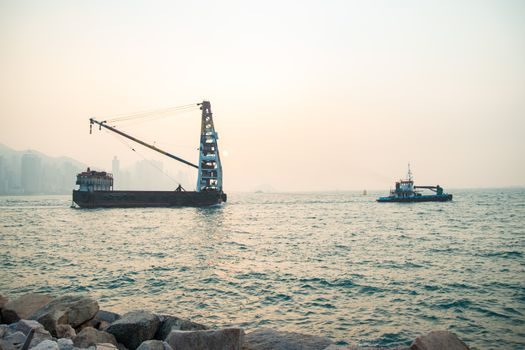
For typical panel work the choice reduces to three configurations, each matched to a different carrier and soil profile. A rope-suspended hydraulic grab is the lightest, cheapest, and best suited to shallow panels in soft-to-medium cohesive soils where the bucket can sink under dead weight between bites. A Kelly-bar mounted hydraulic grab locks into the rotary drive of a drilling rig, which gives better verticality control on deeper panels and in stiffer soils, but requires the carrier to be a true rotary rig rather than a crane base. [S1]
A trench cutter / hydromill is technically a different machine class — it mills the panel with reverse-circulation drums rather than grabbing it — but it is included in the same procurement decision when panel width exceeds ~1200 mm or rock strength is high. A simplified comparison is set out below.
Type — Carrier — Typical panel depth — Soil range — Capex order of magnitude: - Rope-suspended hydraulic grab — Crawler crane — up to ~60 m — Soft to medium clay, silt, sand — low (US$200k–500k) - Kelly-bar hydraulic grab — Rotary drilling rig — 40–100 m — Medium clay to dense sand, weak rock — mid (US$700k–1.5 M) - Hydromill / trench cutter — Dedicated cutter carrier — 40–150 m — Stiff clay to hard rock — high (US$2 M+)
The 92 t SG60 sits in the Kelly-bar hydraulic grab row, with reference FOB pricing of US$770,000 for 1–9 pieces dropping to US$710,000 at 10+ pieces — a non-trivial volume discount worth bidding on for fleet buyers [S5].
Standards, Compliance and Operator Safety
CE marking on the SINOMADA SG60 confirms the attachment has been built to the European Machinery Directive conformity route [S5], and the 1-year warranty plus online-support after-sales service is the floor of what Chinese OEM exporters currently offer on this product class. Rope-suspended grabs additionally fall under the lifting-accessory rules of the crane they are hung from, which in Europe means EN 13000 series for the carrier and the relevant EN 13001 safety-integration parts for the attachment interface.
For deep-panel work above ~60 m, panel verticality tolerance (typically 1:300 to 1:500 of panel depth) is a contractual number that the grab alone cannot meet — it is met by the combination of grab weight, Kelly-bar stiffness on a rigid mast, and the operator's real-time inclination readout. Buyers who specify 1:500 on a 100 m panel are effectively locking themselves into the Kelly-bar hydraulic grab row of the comparison above, and they should expect the carrier base machine to come from the rotary drilling rig supplier cluster rather than the crawler-crane market.
Sourcing, Lead Time and After-Sales
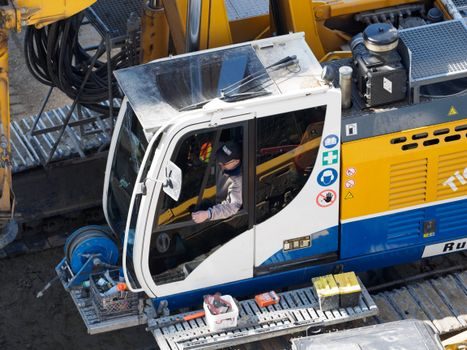
The buyer pool is concentrated: 2 manufacturers / 7 products on DirectIndustry [S1] is a low count for a US$700k+ capital item, and the practical effect is that RFQs go to a small number of Chinese OEMs (SINOMADA and a handful of Wuxi / Shanghai builders) plus 2–3 European/Japanese specialists. For an order of 1–9 units, the published reference FOB is US$770,000 each; for 10+ units, US$710,000 each [S5] — a 7–8 % volume break that, on a nine-figure fleet order, is worth chasing in negotiation rather than accepting on the first quote.
Lead time on a 92 t class grab is typically 90–150 days ex-works China, dominated by heavy-plate cutting, large-diameter pin forging and the hydraulic cylinder boring cycle, and the 1-year warranty plus online-support model means on-site service has to be planned from a regional agent rather than flown in from the factory [S5]. Spare-seal-kit stocking for the 33 MPa hydraulic cylinder and the diaphragm valve trim is the single most common procurement follow-up; the next most common is the jaw-tip re-facing interval, which on dense-sand or gravelly soils can drop to a few hundred panels between re-welds.
Who This Equipment Is — and Is Not — For
A diaphragm wall grab is for foundation contractors building slurry-walled basement perimeters, metro station boxes, deep cut-off walls for dams, and secant-pile retaining walls for shafts and cofferdams; the equipment is NOT for open-cut trenching, for sheet-pile driving, or for small-diameter bored piles, where a standard wheel loader bucket or a small rotary piling rig is a far cheaper tool. [S2]
Buyers who only need a 600 mm wide × 30 m deep panel for a single mid-rise basement should not be buying a 92 t / 100 m class grab; a second-hand rope-suspended unit on a 50 t crawler crane will land the panel at a fraction of the capex and avoid the 33 MPa hydraulic-circuit upgrade on the carrier. Conversely, a buyer specifying 1200 mm × 80 m panels in dense sand has already passed the upper limit of what a pure grab can do efficiently and should be evaluating a hydromill, with the grab kept as a back-up tool for the corner panels where a mill cannot reach.