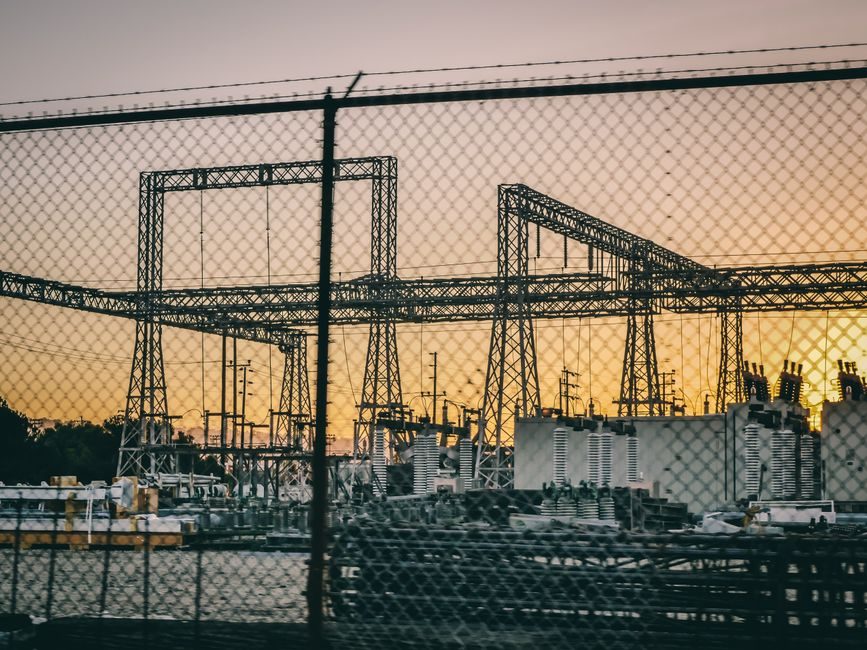
A rotary drilling rig specified for a power-generation project should be selected by pile diameter, depth, ground condition, and emissions tier — not by the MW rating of the turbine or boiler downstream [S1][S3][S4]. The rig's job on these sites is foundation work: wind-tower anchor cages, transmission-line caisson shafts, substation pile caps, and solar-farm tracker-pile grids, all of which demand hole geometries in the 0.3-2.5 m diameter / 10-100 m depth band [S1][S3].
Two distinct rig families compete for this work: large piling-class rotary rigs (SANY SR365R-W10, SR205-C10, TR60 family) with hole diameters of 1,800-2,500 mm and torque-led crowd systems [S1][S3], and down-the-hole (DTH) rotary rigs (RTDrill RTD28, RTD45) sized for water-well and blast-hole work at 95-165 mm diameter [S2][S4]. Picking the wrong class is the single most common spec error on solar and wind EPC packages, and it shows up as under-utilised torque on small rigs or destructive over-torque on the wrong mast.
Decision Blueprint: Piling-Class vs Water-Well Rotary Rigs
Piling-class rotary rigs are built around large-diameter auger or bucket drives, high crowd force, and a 360° crawler platform that handles 1,500-2,500 mm hole work down to 65-100 m. The SANY SR365R-W10 lists 2,200-2,500 mm (87-98 in) diameter capability and 65-100 m depth with remote-controlled operation [S1]. The SANY SR205-C10 sits in the 1,800 mm / 51-64 m band, optimised for civil-engineering piles in smaller-diameter, deeper boreholes [S3]. The TR60 family is a self-erecting hydraulic rotary rig with electronic control integration aimed at faster setup on foundation jobs.
Water-well / blast-hole rotary rigs are an entirely different machine: CAT C13 Tier III / Tier IVf / Tier V diesel, 287-309 kW (390-420 hp) on the RTD28, and 403 kW (548 hp) on the RTD45, with hole diameters of 95-152 mm and 127-165 mm respectively and depths around 30 m [S2][S4]. The RTD45 weighs 24,948 kg (55,000 lb) with a 7.62 m (25 ft) recommended drill pipe and 8 m single-pass depth [S2]. Trying to use a DTH rotary to drill a wind-tower anchor cage is a tooling-class mismatch, not a sizing question.
Spec Bands to Lock Down Before Sourcing
For a power-generation piling brief, four parameters gate the rig choice. Hole diameter sets the torque class: 1,800-2,500 mm work is firmly piling territory and excludes 95-165 mm DTH machines [S1][S3][S4]. Depth sets the mast and main-hoist line-speed: 65-100 m capability on the SR365R-W10 vs 30 m on the RTD45 is a structural difference, not a marketing one [S1][S2]. Engine power must match the emissions regime — CAT C13 Tier III/IVf/V options on the RTD28 cover most regulated jobsites, while larger piling rigs commonly run Stage V / China-IV diesels depending on the export market [S4].
Weight and ground-bearing pressure matter on solar-farm soft-soil work and on wind-tower pad builds where matting is expensive. The RTD28 sits at 24,500 kg (54,013 lb) and the RTD45 at 24,948 kg (55,000 lb) — comparable in the small class — while piling rigs in the SR family exceed 60 tonnes and demand heavier transport permits [S2][S4][S1]. The rotary drilling rig class definitions and historical evolution help separate "rotary" as a drilling method (rotating a bit or auger) from "rotary" as a piling machine class — they overlap but are not identical.
Application Match for Generation Sites
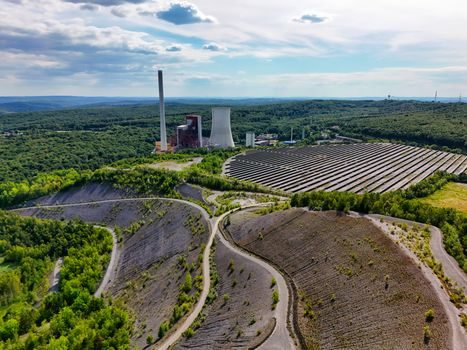
Wind-farm anchor foundations and overhead transmission-line caissons fall to the piling class: 1,800-2,500 mm diameter, 50-100 m depth, hard-rock crowd force, remote-controlled swing for safety around rebar cages [S1][S3]. Solar tracker-pile grids typically use smaller continuous-flight auger drives (1,200-1,800 mm, 6-15 m depth) and the SR205-C10 is sized for exactly this small-diameter / deep-borehole civil-engineering profile [S3].
Substation foundation piling, switchyard cable-duct shafts, and access-road culvert bores fit the same piling class but at the lower diameter / shallower depth end, where a 1,800 mm / 51-64 m rig is the workhorse [S3]. Water-well and blast-hole rotary rigs have a place on generation sites only for specific tasks: deep dewatering bores (95-152 mm, 30 m), geotechnical investigation holes, and quarry / borrow-pit blast holes during site enabling — a different work package, often run by a separate contractor with a rotary hammer or DTH hammer in the tool string [S2][S4].
Selection Criteria and Side-by-Side Comparison
Lining the four representative rigs up against the criteria that actually drive a power-generation EPC decision, the bands separate cleanly. SANY SR365R-W10 covers 2,200-2,500 mm × 65-100 m at the heavy end with remote control and crawler mobility [S1]. SANY SR205-C10 covers 1,800 mm × 51-64 m, diesel-powered, crawler, with civil-engineering / small-diameter flexibility [S3]. TR60 is the self-erecting hydraulic option for sites where rapid mobilisation matters. RTDrill RTD28 covers 95-152 mm × ~30 m at 287-309 kW with Tier III/IVf/V CAT C13 flexibility [S4]. RTDrill RTD45 extends the same class to 127-165 mm × 30.97 m at 403 kW (548 hp) and 24,948 kg [S2].
Cross-class takeaway: a 1,000 MW combined-cycle plant rarely needs a single large rig — it needs a fleet that spans foundation piling, dewatering bores, and cable-duct work, and the decision is which family takes the lead. For wind farms, the lead machine is almost always a piling-class rig in the SR365R / SR205 family; for solar, the SR205-C10 class is the workhorse. The smaller DTH rotary machines belong in the site-investigation and dewatering sub-package, not in the piling contract.
Power, Emissions, and Engine Tiers
Engine power in the DTH rotary class sits at 287-309 kW for the RTD28 and 403 kW for the RTD45 — both figures consistent with 4-6 L Tier IV Final / Stage V diesel packages typical of the class [S2][S4]. Piling-class rigs in the SR family use higher-displacement diesels matched to torque-output and crowd-force demands, with emissions tier selected per destination market; Chinese-built piling rigs exported to Europe and North America are commonly available in Stage V / EPA Tier 4 Final configurations. The power meter on a jobsite generator is often misused to gauge rig fuel flow — a 400 kW rig at full crowd load draws a very different kVA profile than a 400 kW rig in hoist-only mode.
On-Site Constraints: Noise, Reach, and Auxiliary Power
Generation sites impose specific operational constraints. Substation work happens inside energised compounds where boom reach and insulated controls matter; the SR365R-W10's remote-controlled operation is a safety feature as much as a productivity one, allowing the operator off the immediate hazard zone during casing placement [S1]. Solar-farm tracker-pile work spans kilometres of array, so rig mobility (crawler), fast self-erection (TR60), and low ground-bearing pressure outweigh raw torque. Wind-tower pad work happens in remote terrain where 65-100 m depth at 2,500 mm diameter is the actual requirement and the SR365R-W10 is the closest stock match [S1].
Where multiple trades share a site, the rotary encoder on the rotary head and the depth-counter on the main hoist are the two instrumentation points that tell the operator whether the bit is in engineered fill, weathered rock, or competent bedrock — none of which is visible from the cab. Auxiliary power cable runs for the rig's electric-drive options (where offered) must be sized for the inrush of the hydraulic pump soft-start, not just running load; 400 V three-phase at 63 A is a common minimum for the small class.
Standards, Sourcing, and What to Verify on the Datasheet
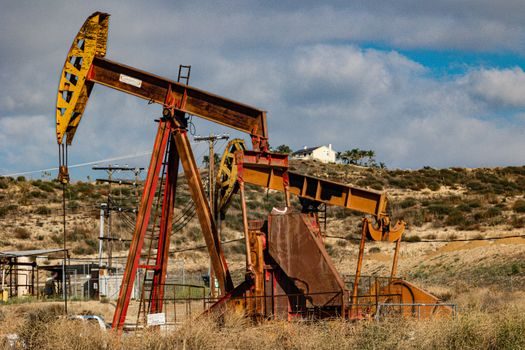
Two non-negotiable verifications on any rotary-rig datasheet for a regulated jobsite: the engine emissions tier (must match the destination market's rule of law, e.g. EU Stage V, EPA Tier 4 Final, China NR4) and the structural / lifting certification of the mast (EN 16228 for rotary drilling equipment is the relevant European standard for foundation-rig safety). For piling work on critical infrastructure, buyers should also confirm manufacturer traceability of the main hoist wire rope, Kelly-bar welds, and crowd-cylinder pressure-test certificates. [S1]
Sourcing clusters for rotary drilling rigs remain concentrated in China (SANY, XCMG, RTDrill supply chain in Zhengzhou, and Hanfa Imp & Exp in the same region), with European and US manufacturers holding the premium piling end. For an EPC sourcing review, the gantry crane suppliers map and the excavator suppliers map provide a parallel read on Chinese OEM cluster structure, while the skid steer loader spec bands article covers the smaller support fleet that typically pairs with a rotary rig on a generation site. Lead times on 2026 orders for SR-class piling rigs run 60-90 days ex-works for standard configurations and longer for non-standard mast lengths; RTD-class water-well rigs are generally ex-stock through the Zhengzhou trading channel.
Limitations and Failure Modes
The most common failure mode is torque-class mismatch: running a 165 mm DTH rotary against a 1,800 mm piling hole, or running a piling rig at 30 m depth on a 95 mm hole where the bit cannot self-stabilise. The second is emissions non-compliance: ordering a Tier III machine for a Stage V jobsite triggers on-site shutdown. The third is mast-length under-spec: ordering a 50 m mast for a 100 m depth requirement, which forces tool-string additions and reduces cycle time dramatically [S1][S2].
Remote-controlled operation on the SR365R-W10 is a productivity and safety feature, but it also requires a trained radio operator and a clear line-of-sight rule on busy sites [S1]. The power mixer reference is unrelated to drilling hydraulics — the term occasionally shows up in mud-system procurement where bentonite or polymer mud is mixed for hole-wall stability in 50-100 m piling work, a separate sub-package. Buyers should treat mud-system mixing and pumping as a standalone line item, not as a rotary-rig accessory.
For a project team that has already locked in pile geometry (diameter × depth × count) and the engine-tier requirement for the destination market, the next node is the mast-certification dossier and the Kelly-bar dimensional drawing from the shortlisted OEM. Trackable signal to watch: any 2026-Q3 OEM announcement of Stage V piling-rig variants for the European wind-farm pipeline, and any movement on the EU EN 16228 enforcement deadlines for rotary drilling equipment on critical-infrastructure sites.