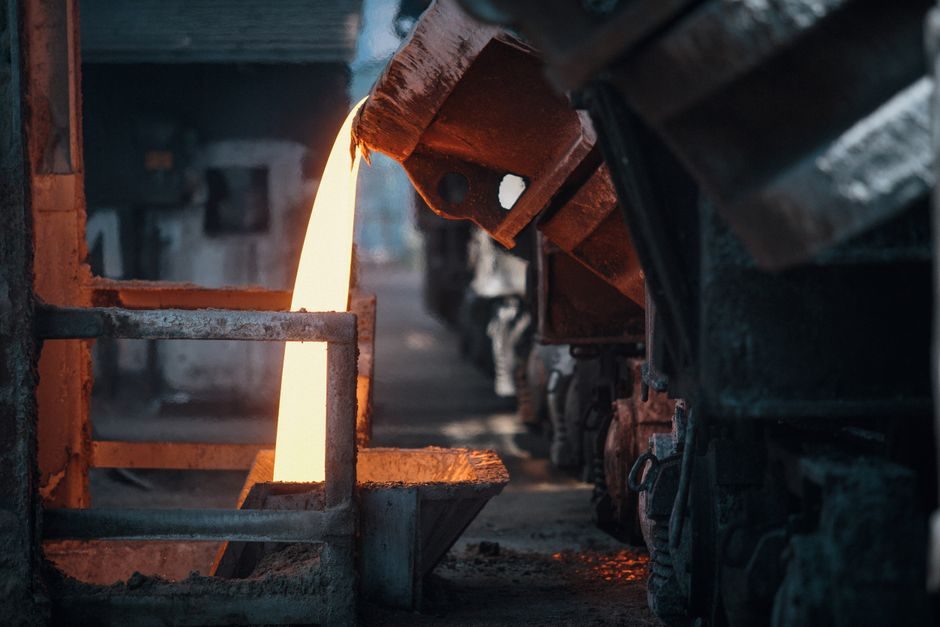
A die weighing 200-2500 kg is installed into a die casting machine by bolting the stationary platen half, hanging the moving half on tie bars, sliding it into the clamp envelope, then torquing the four cap screws to the OEM-rated preload before the first shot [S3][S7].
Three independent suppliers — Master Die Casting (Poland/China, 280-800 ton clamp range), ADAMS Die Cast, and Lamar Tool & Die Casting — list die installation, tryout, and first-article inspection as a single billed work package in 2026 quotations, separating it from production-rate quotes [S3][S6][S8].
Pre-lift checks: rigging, die cart, and clamp envelope
Before the crane takes up load, the operator confirms the die footprint against the die casting die drawing's bolt-pattern dimensions and verifies the platen T-slot length and width exceed the die's clamping flange by at least 10 mm per side to clear thermal growth during tryout [S3][S7]. ELCEE publishes a typical cast weight band of 30-5000 g for gravity dies, with linear-dimension tolerance CT8 under ISO 8062 (CT9 for wall thickness); HPDC cells targeting the same part family use those values as the post-install first-shot gate [S7].
Master Die Casting scopes its clamp capacity as 280-800 ton aluminum die casting machine tonnage classes, and operators should treat the die-set weight as a hard ceiling: oversize dies must be rigged with a swivel eye and spreader bar, never a single-point sling [S3]. PacDie, ADAMS, and Lamar all require an overhead crane with a load chart that exceeds die + rigging weight by at least 25% before the move starts [S2][S6][S8].
Bolting, alignment, and clamp-force verification
Once the moving half hangs on the tie bars, the four cap screws (typically M24-M36, 10.9 grade) are tightened in a star pattern to the OEM-stated torque, which for an 800-ton clamp commonly lands in the 1200-2200 N·m range depending on platen thickness and shim stack [S3]. Lamar Tool & Die Casting lists in-house tool design, die tryout, and CNC machining as adjacent services, meaning the alignment is performed on the same platen that will run production — re-leveling is not an option after the first 50 shots [S8].
Clamp-force verification is the gate that separates a die install from a die ready to run: most NADCA-aligned shops require a hydraulic low-pressure close at 30-50 bar to seat both halves, then a full tonnage pull with strain gauges on the tie-bar nuts to confirm even loading within ±5% of nominal [S7][S8]. The vacuum die casting machine variant adds a vacuum seal test on the die parting line before the first shot, with a target leak rate below 50 mbar/min on a 1 m³ sealed cavity [S7].
Coolant, ejector, and electrical hookup
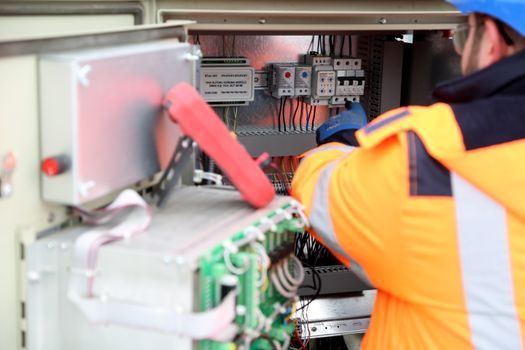
After clamp verification, the operator runs the coolant lines to the die's water-bypass channels, then bleeds air through the highest-point test cock until a steady stream appears; air pockets left in gravity die casting machine dies are the most common root cause of localized hot spots and the resulting solder or cold-shut defects on the first 200 shots [S7]. Ejector pin stroke is set to the drawing's nominal value minus 0.5 mm to keep a positive pre-load against the moving half, then the limit switches are confirmed with the die cold.
Electrical hookup covers thermocouple pairs (typically Type J or K inserted into the die body 5-10 mm below the cavity surface), the die-spray robot interlocks, and any core-pull or slide-position feedback; ADAMS Die Cast and Bian Diecast both require three independent thermocouples per die half before tryout, and the readings must be within ±6 °C across the cavity map before production rate is increased [S1][S6]. Ningbo Zhongxin Die-Casting Mould notes IATF 16949 traceability on the thermocouple wiring looms, so each pair is labeled and bagged per cavity before the install [S4].
First-shot acceptance and when to escalate, not repair
First-article acceptance pulls three samples at 30, 60, and 100 shots; each sample is checked against ISO 8062 CT8 for linear dimensions, then sectioned if the part is safety-relevant [S7]. A magnesium die casting machine cell adds a hydrogen-content test on the first 50 shots because molten Mg tolerates less than 2 ppm dissolved water before porosity forms, and a failed reading means the die is removed, dried, and re-installed rather than re-tryout'd in place [S7].
Worn ejector pin bores, scored slides, or cracked waterline fittings are not field-repaired on a hot die — the die is pulled, the defect is logged on the install sheet, and the moving half is sent to the tool room. A related read for buyers sizing the upstream cell is the magnesium ingot grade map, which gates what alloy feed the die casting machine cell can actually certify on first article.
Trackable signals to watch after install: clamp-force gauge drift beyond ±5% across the first 500 shots, coolant delta-T exceeding 6 °C on any circuit, and ejector-pin stroke growth above 0.3 mm — each of those flags a die that needs to come out, not be cycled further. For shops building out adjacent process cells, the steel-plastic composite pipe installation field guide covers the spec side of the cooling-water loop that feeds the die.