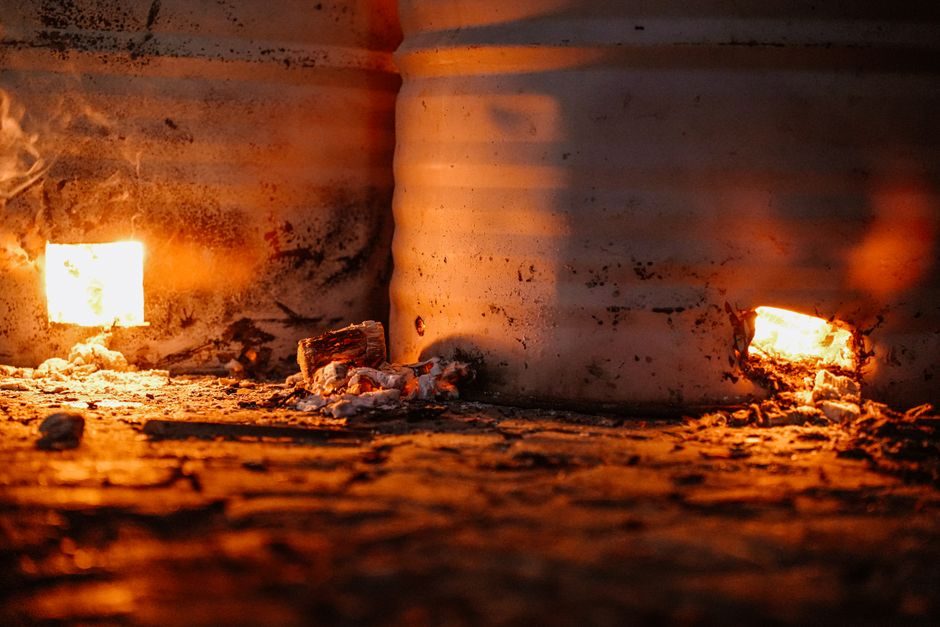
Across a typical 15-20 year service envelope, a heat treatment furnace's landed cost is driven less by the capital line item and more by three operating pillars: electrical or fuel energy per tonne of processed load, refractory and heating-element replacement cycles, and atmosphere or vacuum system upkeep [S1].
SECO/WARWICK and Beacon Machinery both expose the operating-cost levers that procurement teams rarely see on a quotation: ECO-MODE heat recovery, insulation replacement, and heating-system modernization are itemised as separate service lines, not bundled into the new-unit price [S1][S6].
TCO Scope for a Heat Treatment Furnace: What Belongs in the Spreadsheet
TCO analysis captures the full life-cycle cost of an asset: purchase, use, maintenance, support, and disposal, with the framework designed to expose hidden costs that purchase-stage budgets miss [S3]. For a heat treatment furnace, the TCO envelope covers at minimum: capital cost, installation and foundations, electrical and gas utilities, refractory and element replacement, atmosphere or vacuum consumables, controls and instrumentation, scheduled and unscheduled downtime, and decommissioning.
CoSN's TCO guidance, while written for education IT, formalises the same five buckets the USPS SPP manual uses: acquisition, use, maintenance, support, end-of-life [S2][S3]. Translated into furnace terms, the largest avoidable leak in most buy-side models is the use-phase line, because kWh-per-kg and atmosphere m3-per-kg are almost never quoted on a vendor's proposal cover sheet [S1][S6].
Cost Driver #1: Energy Intensity, kWh per kg of Treated Load
Energy is the single largest operating-cost lever for any electric resistance or gas-fired heat treatment furnace, typically running 24/7 in production heat-treat cells. SECO/WARWICK's ECO-MODE heat-recovery service line and energy-management product group exist precisely because kWh per kg of load is the metric operations teams track, not nameplate kW [S1].
Buy-side specs that move this driver: insulation class (ceramic fiber blanket vs. insulating firebrick vs. microporous board), element alloy (FeCrAl vs. MoSi2 for high-temperature zones above 1200 °C), and door/port sealing. Newer atmosphere furnace builds with ceramic-fiber linings routinely cut idle losses versus older brick-lined units, though SECO/WARWICK also sells insulation-replacement retrofits for installed units rather than forcing full replacement [S1].
Cost Driver #2: Refractory and Heating-Element Service Life
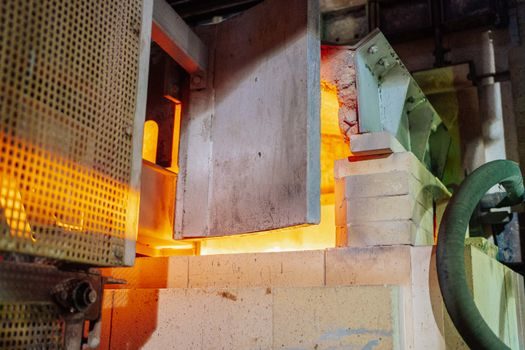
Refractory lining and heating-element replacement are the predictable mid-life capex hits on a heat treatment furnace, and SECO/WARWICK's service catalog treats them as a discrete product family: insulation replacement, upgrade of furnace heating chamber, modernization of heating systems [S1]. Beacon Machinery likewise flags that working-chamber and element assemblies are the maintenance-bound consumables on every model they ship [S6].
The relevant spec gate is cycles or hours between relines, not initial installed cost. Atmosphere furnaces with high carbon potential or endothermic gas generators attack brick and element life faster than neutral-atmosphere units, which directly lengthens the amortisation window for refractory capex and should be carried as a higher mid-life line in any TCO model [S1][S6].
Cost Driver #3: Atmosphere Gas and Vacuum System Uptime
For atmosphere furnaces (endothermic gas, nitrogen-methanol, argon, hydrogen-nitrogen blends) the atmosphere line is a recurring consumable measured in m3 per kg of load; for vacuum furnaces, the equivalent is pumping-system uptime, leak-rate discipline, and graphite-felt or molybdenum hot-zone replacement [S1]. SECO/WARWICK's product split between Vacuum Furnaces, Atmosphere Furnaces, and Controlled Atmosphere Brazing of aluminum explicitly segments the catalog by which operating-cost axis the buyer will pay into [S1].
Vacuum metallurgy builds shift the operating-cost centre from gas consumption to power, water cooling, and hot-zone life. Atmosphere builds shift it to atmosphere gas, generator maintenance, and quench-oil or pressurized-gas quench systems. Aluminum holding furnace and brazing builds shift it to flux, fixturing, and precise temperature uniformity, all of which are different lines on a TCO sheet even when the nameplate kW looks similar [S1].
Vacuum vs Atmosphere vs Aluminum Furnace: A TCO Comparison
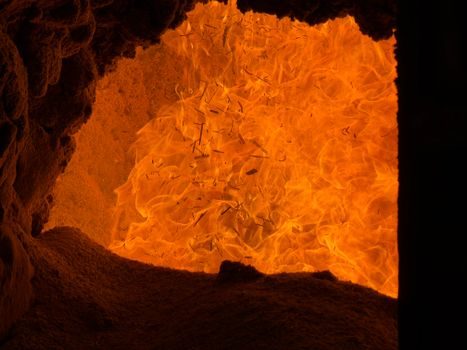
The three furnace families that dominate the SECO/WARWICK and Beacon Machinery catalogs differ enough in cost structure that they should not be compared on purchase price alone [S1][S6]:
- Vacuum furnace: high capital, low atmosphere cost, moderate refractory life, sensitive to leak rate and hot-zone consumables. Best fit for tool steel, aerospace alloys, and bright-surface parts where decarburisation is unacceptable.
- Atmosphere furnace: moderate capital, high atmosphere gas OPEX, shorter refractory cycles when endothermic gas is used. Best fit for high-volume case hardening, carburising, and carbonitriding where throughput beats atmosphere cost.
- Aluminum holding furnace / CAB: lower peak temperature (typically below 750 °C), longer refractory life, but tight uniformity spec drives controls cost. Best fit for die-casting cell integration and aluminum heat-treat lines [S1].
Decision criterion mapping: choose vacuum when atmosphere gas logistics, safety, or decarb-free surface quality dominate; choose atmosphere when throughput and per-part cost dominate; choose aluminum-class when integration with a melt or casting cell and tight temperature uniformity dominate [S1][S6].
Installation, Maintenance, and Hidden Capex That Move the Number
CoSN's framework is explicit that TCO captures costs beyond purchase price, including support and maintenance, and the USPS SPP manual is explicit that TCO "exposes the hidden costs easily overlooked during budget planning" [S2][S3]. For a heat treatment furnace, the routinely-underbudgeted lines are: foundation and pit civil works, transformer and bus-duct upgrades, atmosphere exhaust and combustion venting, water-recirculation skids, and spare-element inventory held on site.
SECO/WARWICK's spare-parts and modernization service lines exist because most fleets run 20+ years, and the lifetime operating cost of these hidden lines typically exceeds the original capital line over the asset's full service life [S1]. Buy-side teams that refuse to accept line-itemised spare-parts and modernization quotes upfront end up with un-budgeted mid-life capex; teams that insist on them get a defensible 20-year TCO number on day one [S1][S3].
Signals to Track Through 2026: Retrofitting Beats Replacement
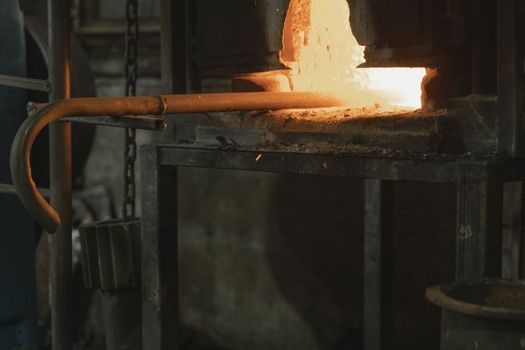
Two trackable signals through 2026-07-27: first, SECO/WARWICK's continued promotion of ECO-MODE heat recovery and insulation-replacement retrofits signals that vendors are selling operating-cost reduction as a service, not just new units [S1]. Second, Beacon Machinery's model-by-model customization posture and SECO/WARWICK's second-hand furnace line both point to a market where mid-life retrofit and used-equipment routes are being treated as first-class TCO options, not fallback purchases [S1][S6].
For a parallel buy-side view on lifecycle cost drivers in adjacent capital equipment, see this slewing drive TCO breakdown and this riser cutting machine TCO map. For a spec-first comparison of how a heat treatment furnace sits next to a crucible furnace in a foundry cell, see the cupola furnace reference for the melting-side counterpart.