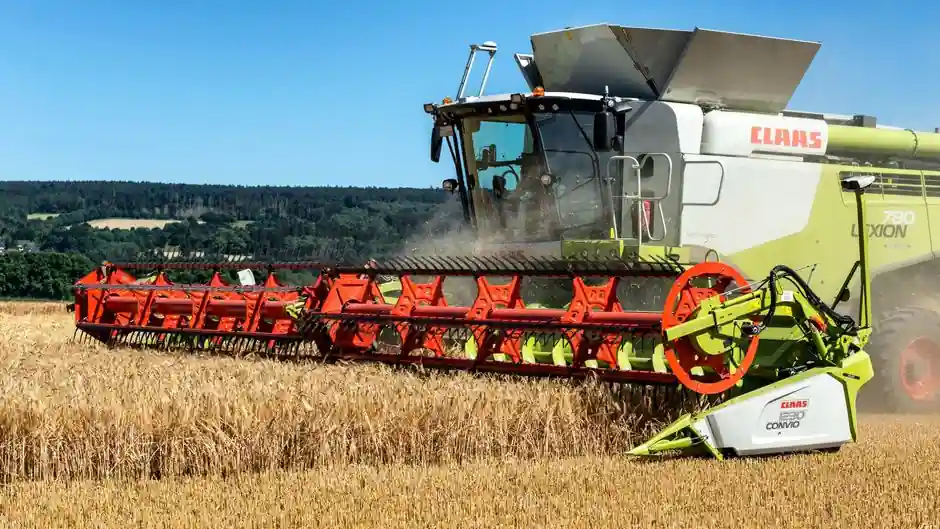
Specifying a die casting die for tractors, harvesters, and sprayers in 2026 hinges on four binding numbers: tolerance band, mold steel hardness, cycle life, and alloy fit. A380 and A356 aluminum grades dominate load-bearing tractor castings, with 300 MPa tensile strength verified on A380 transmission parts, while AZ91D and AM60B magnesium alloys cover weight-critical housings [S4].
The agricultural segment prices its tooling per-shot rather than per-piece, so buyers must treat steel grade, verified HRC, and a documented shot count as non-negotiable line items. Reject any die quote that omits these three data points, because mold life below 50,000 shots is uneconomic for seasonal farm-equipment production runs [S4].
Alloy and Part-Family Fit: A380, A356, ADC12, AZ91D
Part families cited in active 2026 mold catalogs include tractor gearboxes, harvester drive shafts, tiller transmission housings, pump bodies, and frame components. ADC10, ADC12, A360, 6061, and 6063 are the additional aluminum grades, and AZ91D plus AM60B magnesium alloys are offered for weight-critical housings [S4].
For context on the broader process envelope, the die casting reference page walks through the cold-chamber and hot-chamber architectures that downstream die selection must respect. A common cross-spec mistake is to specify an aluminum-grade mold steel for a zinc hot-chamber run, or vice versa, so alloy-driven die selection must precede steel selection [S4].
Tolerance and Precision Ladder: ±0.005, ±0.006, ±0.02, ±0.03 mm
Selection by tolerance band is the cleanest sourcing gate. HEYA gearbox molds hold ±0.005 mm, the agricultural transmission line holds ±0.006 mm on gear teeth, shaft mounting holes, and housing seams, Frezer CE/ISO 9001 multi-stage molds hold ±0.02 mm with Ra1.6 surface finish, and Smart Mold tractor-component dies are quoted at ±0.03 mm [S4].
Mold steel hardness scales with the precision target: 54-56 HRC for ±0.006 mm agricultural transmission dies versus HRC >45 for the Liushi multi-cavity tractor tool. Both tiers sit well above the HRC 38-42 range typical of low-end commodity cast dies, which is why the agricultural segment prices its tooling per-shot rather than per-piece [S4].
Frezer-brand CE and ISO 9001 certified multi-stage die casting molds for agricultural machinery parts are quoted at a 5-8 working day lead time, 45,000-100,000 die-casting cycles, MOQ 1 set, and 2000 set/month capacity. Tighter precision commands a longer build cycle, with Liushi at 30-45 days versus Frezer at 5-8 days for the looser ±0.02 mm tier [S4].
Cycle Life and Seasonal Economics: 50k, 100k, 135k+ Shots
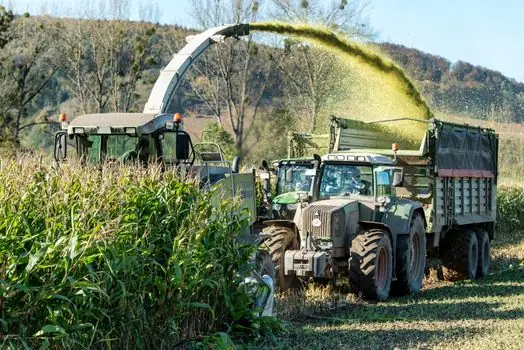
Mold life claims in the agricultural mold segment cluster at three breakpoints: 50,000-100,000 shots on Liushi multi-cavity tractor molds, 45,000-100,000 die-casting times on Frezer CE/ISO 9001 multi-stage dies, and 135,000+ cycles on the agricultural transmission line where the supplier claims 4-6 days of seasonal downtime avoidance and 40% lower mold procurement cost versus standard options [S4].
For tiller and harvester transmission housings running two peak seasons per year, the 135,000 cycle band is the practical lower bound. The agricultural transmission supplier ties cycle life to a maintenance regime, not just steel grade, so buyers should require a written shot-count log and re-hardening schedule with every quote above 50,000 shots [S4].
Sourcing Gate: Reject Quotes That Omit Steel, HRC, or Shot Count
Active 2026 supplier data shows a clear four-tier decision matrix. Pump bodies, tractor housings, and non-precision brackets: specify Frezer CE/ISO 9001 multi-stage dies at ±0.02 mm, 45k-100k cycles, 5-8 day delivery, MOQ 1 set. Gearbox and frame parts needing tighter fit: specify HEYA HY-1003 at ±0.005 mm, 15-20 day delivery, 200 pcs/week supply, anti-corrosive oil coating [S4].
Heavy-duty agricultural die casting molds for pumps and tractor components from Shenzhen Smart Mold Technology are advertised at ±0.03 mm precision, US$2,500 per set, hot-chamber or cold-chamber die casting, MOQ 1 set. Spray-painted surface treatment alone is a commercial default, not a spec; buyers should request the underlying steel grade and HRC value [S4].
Cross-Reference: Die Steel in the Die Casting Die Family
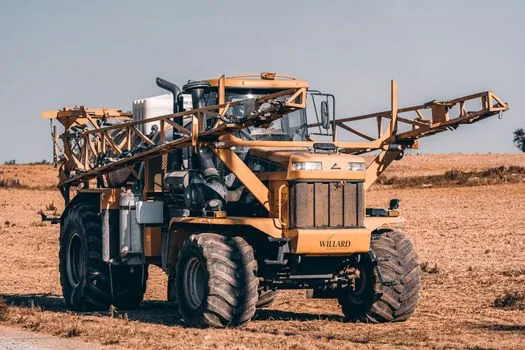
For deeper tool-steel selection, the die casting die reference covers H13, SKD61, and DIN 1.2344 grades that anchor the 50,000-100,000 shot tier. Liushi multi-cavity tractor molds use EPS mold material with HRC >45 and wooden-case packing, 30-45 day delivery, and ISO 9001:2008 [S4].
Buyers comparing mold life claims across Chinese, Indian, and US job shops should normalize on shot count rather than year-of-life, since agricultural dies often run 6-9 months per year with two peak seasons. A mold quoted at "two-year life" without a shot count is uninspectable and should be rejected at the RFQ stage [S4].
Decision Matrix: Mold Tier by Part Family
The 2026 sourcing gate collapses to four cells. Tier 1 (precision, ±0.005 mm): HEYA HY-1003 for gearbox and frame parts, 15-20 day lead, 200 pcs/week. Tier 2 (precision, ±0.006 mm): agricultural transmission line for gear teeth, shaft mounting holes, and housing seams, 54-56 HRC steel, 135k+ cycles [S4].
Tier 3 (mid-precision, ±0.02 mm): Frezer CE/ISO 9001 multi-stage dies for pump bodies, tractor housings, and non-precision brackets, 45k-100k cycles, 5-8 day lead. Tier 4 (commodity, ±0.03 mm): Smart Mold tractor-component dies at US$2,500/set, hot-chamber or cold-chamber die casting, MOQ 1 set [S4].
Surface treatment, lead time, and commercial terms (T/T, L/C, Western Union) sit on top of these four cells. For die life in aluminum cold-chamber work, the broader die casting machine reference confirms the 50,000-500,000 shot window that agricultural dies must hit to amortize per-piece tooling cost [S2].
Trackable 2026 Signals for Agricultural Die Sourcing
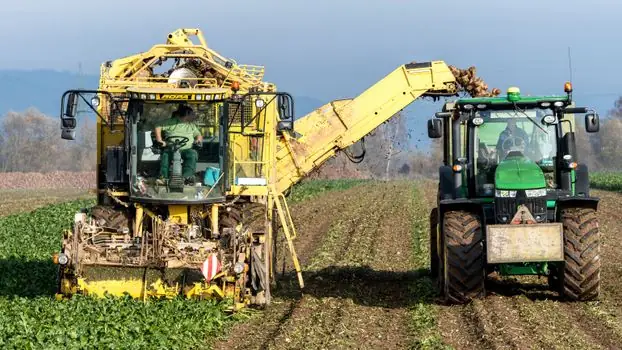
Three signals are worth watching through the rest of 2026. First, published cycle-life claims above 135,000 shots for A380 transmission molds now include a written maintenance regime, not just a steel grade, so future quotes without a shot-count log should be flagged [S4]. Second, HRC >45 is the practical floor for any agricultural mold steel, with 54-56 HRC reserved for ±0.006 mm transmission dies, so any quote below HRC 45 should be rejected at the technical review stage [S4].
Third, EPS mold material with wooden-case packing and ISO 9001:2008 is the documented Liushi baseline, so a credible 2026 quote should list mold material, HRC, tolerance band, cycle life, and lead time in that order. Mold steel hardness scales with the precision target, and buyers who skip the HRC line item are buying on hope, not on a spec [S4].
See also our earlier report, Aerospace die casting die selection: alloy, shot life, gating, and CT-grade gates for.